


NIOME (SN55) is expanding from synthetic genomic intelligence into AI-driven drug development.
In an official update, co-founder and CEO Aldo de Pape outlined plans to build a development engine that helps researchers create treatments for genetic diseases.
The ambition is to make every genetic disease treatable. Instead of developing individual medicines, NIOME wants to provide the technology that helps biotechnology and pharmaceutical companies design and evaluate potential treatments.
From Synthetic Genomes to Genetic Medicine
Developed by the team behind Genomes.io, NIOME (SN55) initially tackled the shortage of accessible genomic data. Real patient genomes are expensive to obtain, heavily regulated, and subject to privacy concerns.
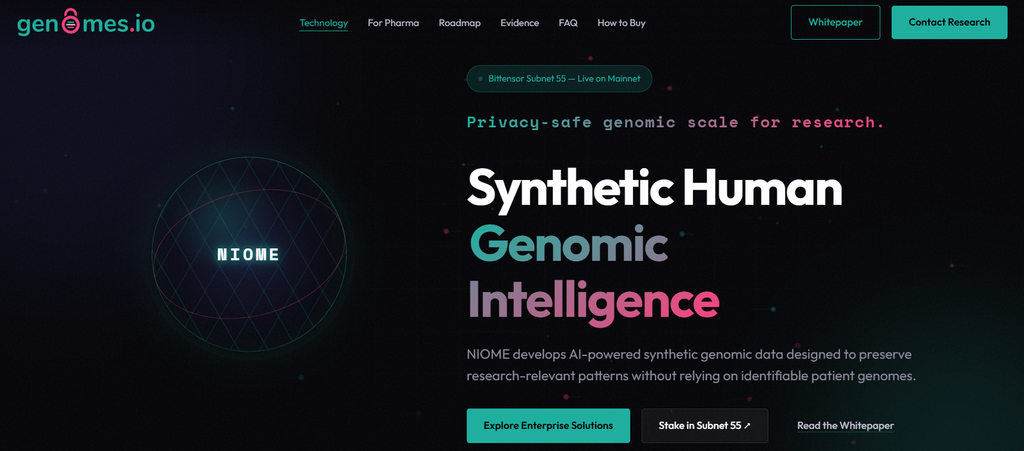
Its solution is high-fidelity synthetic genomic profiles that preserve relevant biological patterns without reproducing anyone’s actual DNA.
Researchers can use these datasets to study CRISPR gene editing, drug responses, and rare diseases.
CRISPR (Clustered Regularly Interspaced Short Palindromic Repeats) is used to make targeted changes to DNA, might affect cells, how people respond to drugs, and how genetic variants contribute to rare diseases.
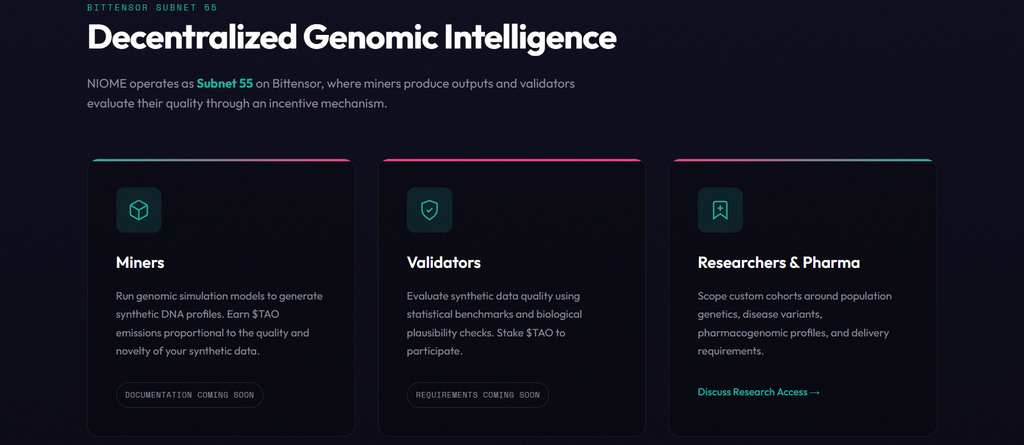
Built on Bittensor, NIOME (SN55) coordinates miners and validators around scientific challenges. The subnet has generated millions of synthetic records, including over 10 million CRISPR-related experiments, and targets tens of millions by the end of 2026.
Introducing Design and Evaluation
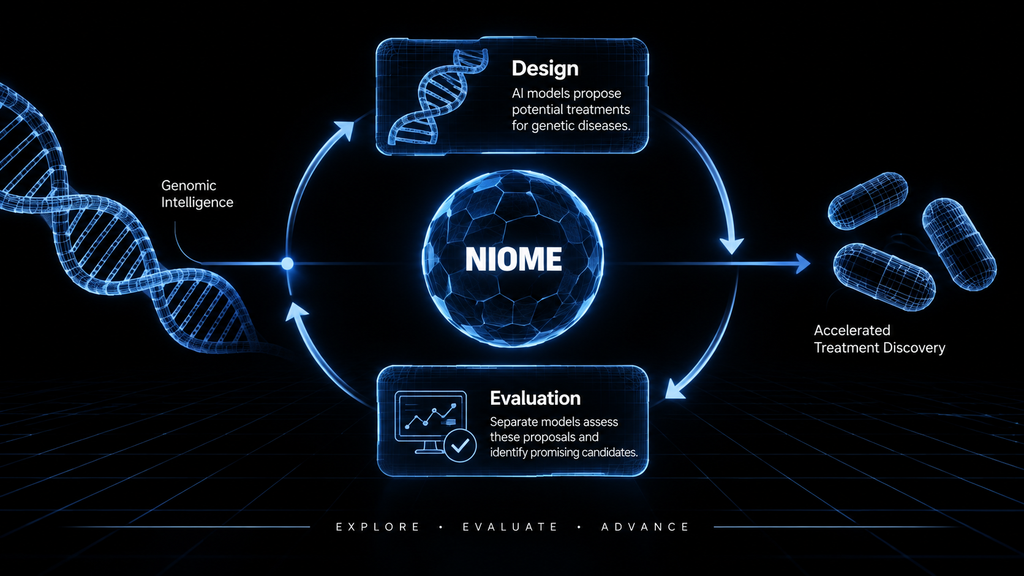
NIOME’s next phase introduces two capabilities:
1. Design: AI models propose potential treatments for genetic diseases.
2. Evaluation: Separate models assess these proposals and identify promising candidates.
Together, they create a feedback loop in which models generate treatments, evaluate their potential, and refine subsequent proposals. This allows researchers to explore more possibilities before committing resources to laboratory testing.
The goal is to make these capabilities available to biotechnology and pharmaceutical companies researching different genetic conditions. NIOME wants to support the development of multiple medicines through one underlying technology platform.
The Commercial Opportunity
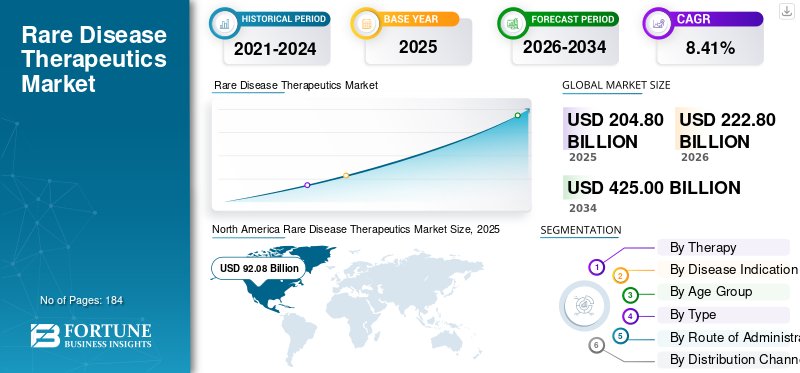
The expansion takes NIOME beyond genomic data and into the drug-development market. Rare-disease therapeutics alone were valued at ~$220 billion in the market estimates referenced alongside the announcement.
Investment in AI-driven drug discovery is also growing. Recently, Isomorphic Labs, the Alphabet-backed DeepMind spinout, secured a $5 billion Series C, highlighting the industry’s interest in AI-powered pharmaceutical research.
NIOME has reported quarterly revenue growth and an expanding client pipeline. The CEO also disclosed preparations for a major equity fundraising round, with discussions involving investors and potential partners already underway.
From Genomic Intelligence to Treatment Development
Scientific validation remains a major hurdle. NIOME must demonstrate that its synthetic datasets capture meaningful biological patterns and that AI-generated treatments produce reliable results.
Its existing challenges include CRISPR experiments involving the HBB gene associated with sickle cell disease.
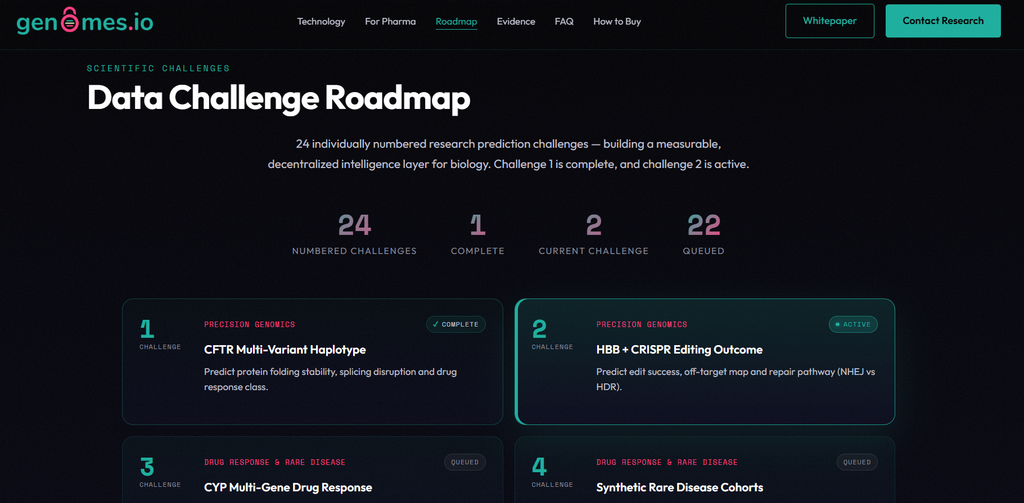
Computational predictions must ultimately withstand laboratory testing, clinical trials, and regulatory approval. NIOME must also convert its technology into sustained commercial partnerships to support its expansion.
The project is moving from making genomic data more accessible to helping researchers act on that information.
Its ambition to make every genetic disease treatable is substantial, but its success will depend on whether its AI models can translate computational insights into viable treatments.
→ Read How NIOME (SN55) Turned Genomic Data Into a Revenue Mine:
Enjoyed this article? Join our newsletter
Get the latest TAO & Bittensor news straight to your inbox.
We respect your privacy. Unsubscribe anytime.
Enjoyed this article?
Join our newsletter
Get the latest TAO & Bittensor news straight to your inbox — every morning before markets open.



No comments yet — be the first.