


A genetic therapy may help some patients more than others, even when they share the same diagnosis. How can researchers account for those differences when designing treatments?
After eight years developing secure genome vaults and analytical tools, Genomes.io is bringing that question to Bittensor through NIOME (SN55), a subnet that creates synthetic genomic profiles while protecting individual privacy.
Identifying a variant linked to a disease gives researchers a place to start. Translating that finding into a candidate with enough evidence to advance can take three to five years and cost tens of millions of dollars per programme. The expense weighs especially heavily on projects for conditions with few patients.
NIOME’s first assignment is Population, one of five stages in Genomes.io’s development process.
The subnet builds synthetic cohorts designed to reflect genetic differences across millions of people. Researchers can use these cohorts to see where a candidate’s predicted effects vary and flag groups that may benefit less from the intervention.
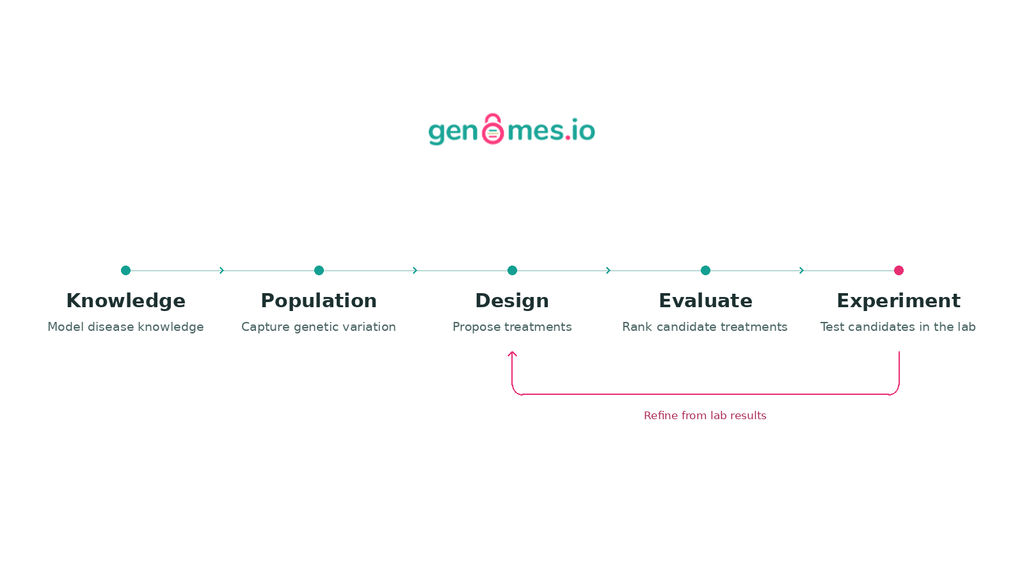
Miners compete to model the effects of genetic changes, and their submissions undergo several rounds of biological validation.
Genomes.io reports that the network has completed ten million simulated experiments involving CRISPR, a gene-editing tool that allows researchers to target specific stretches of DNA.
These simulations explore how changes to DNA might affect cells before researchers test those predictions in the lab.
Its expansion will model drug responses so researchers can compare how proposed treatments might perform before committing resources to laboratory work.
Each programme starts with the biology of the condition. A disorder caused by a specific variant might call for gene editing, while another could be better suited to an RNA therapy.
That flexibility gives the company room to choose the approach that fits the disease mechanism and the needs of patients.
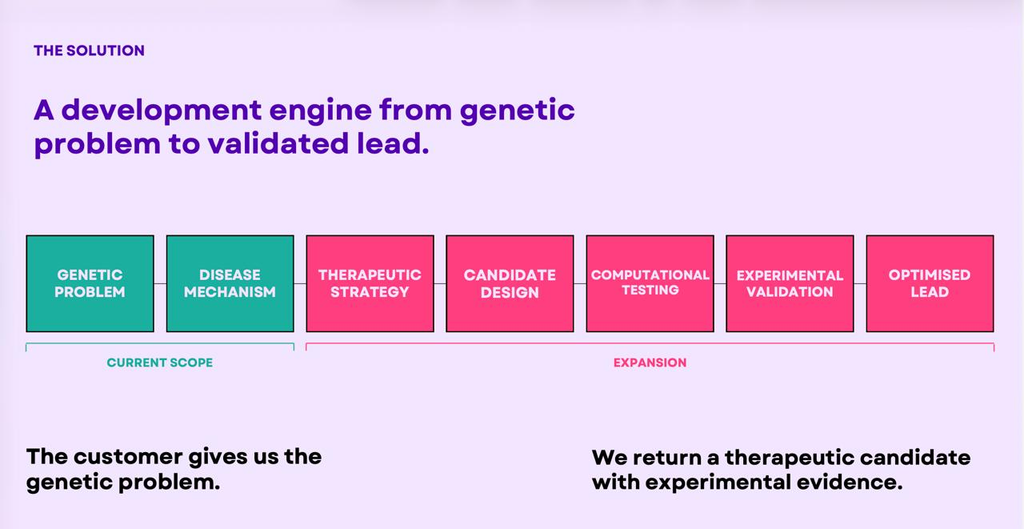
NIOME is adding two stages called Design and Evaluate.
In Design, AI models propose treatments. In Evaluate, separate models assess expected efficacy, safety, coverage and feasibility.
The strongest candidates advance to physical experiments, and results from completed programmes feed back into the models to inform choices made in subsequent rounds.
With NIOME, Genome.io aims to reduce the cost of a programme from roughly $25 million to $2.5 million and bring the timeline down from about four years to one.
More than 1,800 companies are developing nearly 4,500 gene, cell and RNA therapies worldwide.
Whether NIOME can help them will depend on how closely its predictions match laboratory results. If they hold up, one consequence could be that a rare disease with a known cause finally gets a programme of its own.
➛ Read How NIOME (SN55) Bagged a Government Partnership:
Enjoyed this article? Join our newsletter
Get the latest TAO & Bittensor news straight to your inbox.
We respect your privacy. Unsubscribe anytime.
Enjoyed this article?
Join our newsletter
Get the latest TAO & Bittensor news straight to your inbox — every morning before markets open.



No comments yet — be the first.