


BlueTAO has been quietly evolving into the most complete consumer surface built over Bittensor ($TAO), and the latest release closes the gap between what the network can do and what a non-technical user can actually reach. Text-to-video and text-to-music join the existing text-to-image and ChatGPT-style inference, giving the platform four generative modalities under one roof.
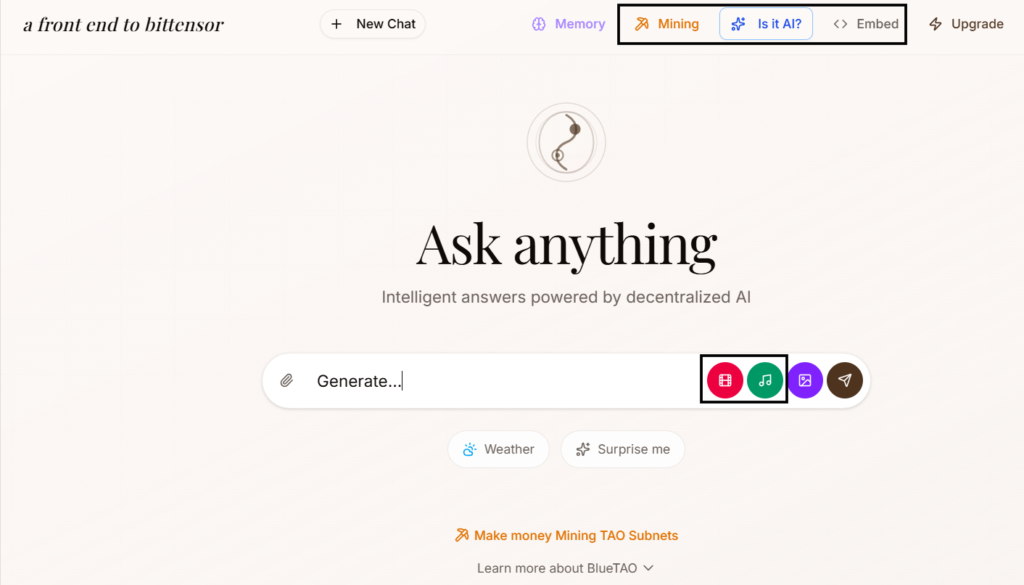
The product also runs a deepfake detection tool through BitMind, a mining-as-a-service walkthrough for six subnets, and an embeddable AI chat widget that businesses can drop onto any website with a single line of code. Under the hood, BlueTAO routes across Chutes, Targon, Desearch, and BitMind, with Zeus and Vocence integrations on the way.
Four Generative Modalities Under One Interface
The core of the update is that BlueTAO now covers the four generative categories users expect from a modern AI product, all powered by Bittensor infrastructure underneath.
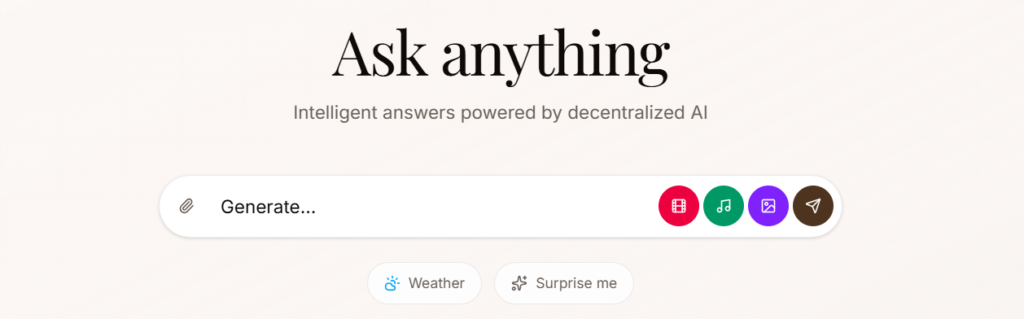
1. Text-to-Video. Generative video from prompts.
2. Text-to-Music. Music generation from text descriptions.
3. Text-to-Image. Image creation.
4. Text Inference. ChatGPT-style chat.
The point is that a user does not need to know which subnet is doing what work. They open BlueTAO, describe what they want, and the platform routes the request to whichever piece of the network handles it best. Bittensor becomes something a user can actually use rather than something they read about.
Two Utility Features That Extend The Product Beyond Generation
Alongside the generative stack, BlueTAO added two features that push the product past being a creative tool into being an operating layer for businesses and curious users.
The utility layer:
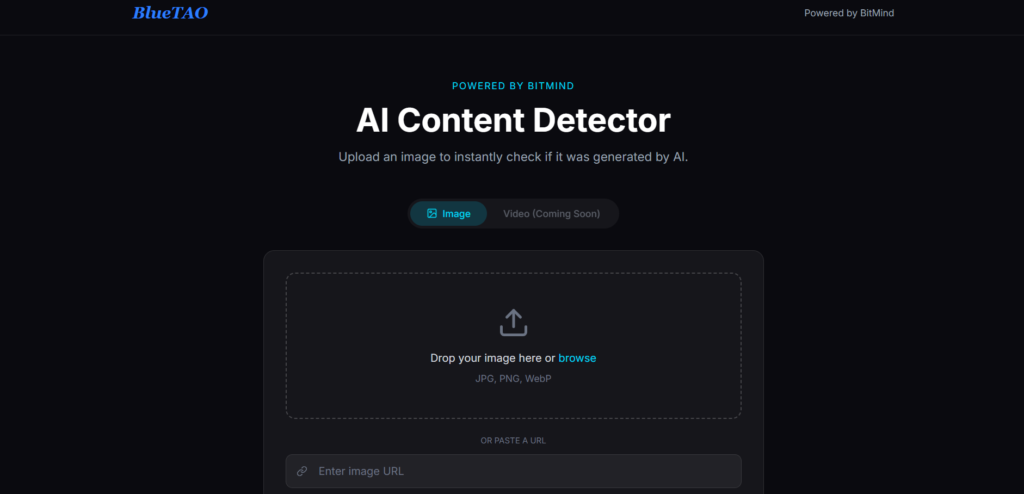
1. Is It AI? Deepfake image detection powered by BitMind, with video detection in the pipeline. Useful for journalists, moderators, and anyone verifying visual content in a world where the line between real and synthetic is blurring.
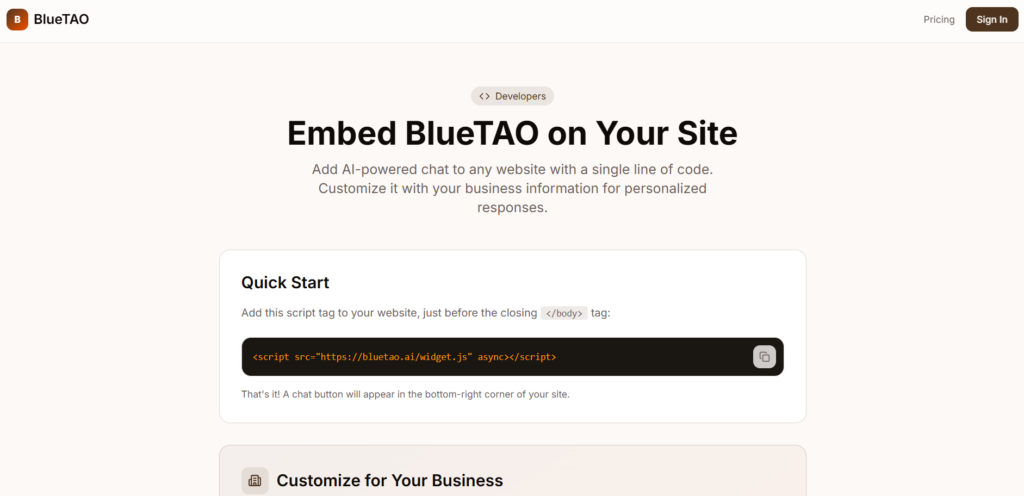
2. Embed BlueTAO. A single line of code drops an AI chat widget onto any website, customizable with the business’s own information for personalized responses. Bittensor-powered AI available to any business without needing to touch a subnet directly.
The subnets currently routed through BlueTAO includes Chutes (SN64) for decentralized inference, Targon (SN4) for compute, Desearch (SN22) for search, BitMind (SN34) for deepfake detection, and Zeus (SN18) and Vocence (SN78) integrations in progress.
Mining-As-A-Service (MaaS) For Anyone Curious
The mining walkthrough is where BlueTAO tackles the biggest onboarding wall Bittensor still has. This means that anyone curious about mining can start with BlueTAO as the guide rather than stitching together documentation across six different projects.
The subnets currently supported for guided mining:
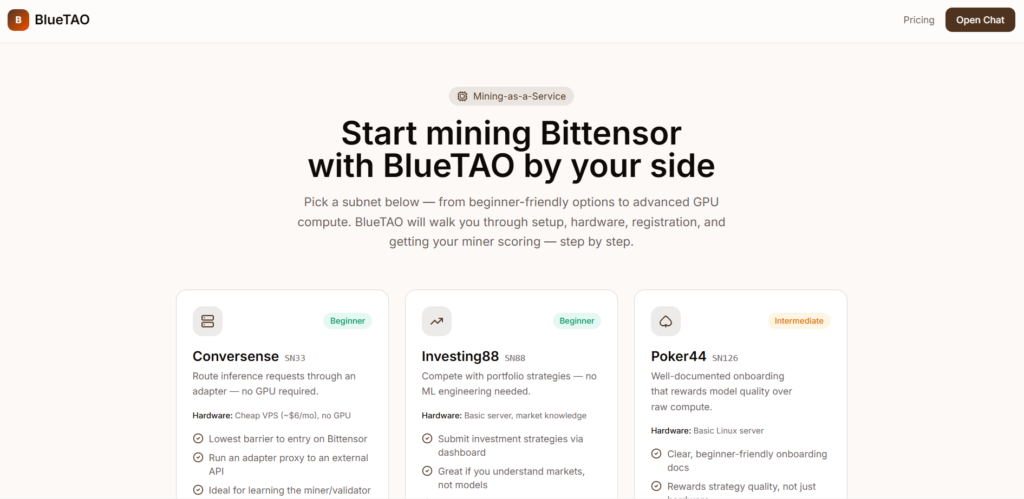
The walkthrough covers subnet selection (from beginner-friendly options to advanced GPU compute), hardware requirements, registration, and getting the miner scoring, all step by step. The user handles their own hardware, but BlueTAO handles the onboarding curve.
Conclusion
BlueTAO is one of the clearer arguments for what Bittensor looks like when the infrastructure gets wrapped in something people can actually use. Four generative modalities, a deepfake detection layer, an embed feature for any website, and a mining walkthrough across six subnets all live in the same product, with more subnet integrations on the way.
For businesses, the embed drops Bittensor-powered AI onto any site without technical lift. For curious users, the mining walkthrough removes the friction that has kept most people watching from the sidelines. The bigger read is that Bittensor’s front-end problem is starting to get solved, and BlueTAO is one of the few products actually solving it.
Enjoyed this article? Join our newsletter
Get the latest TAO & Bittensor news straight to your inbox.
We respect your privacy. Unsubscribe anytime.
Enjoyed this article?
Join our newsletter
Get the latest TAO & Bittensor news straight to your inbox — every morning before markets open.


No comments yet — be the first.