

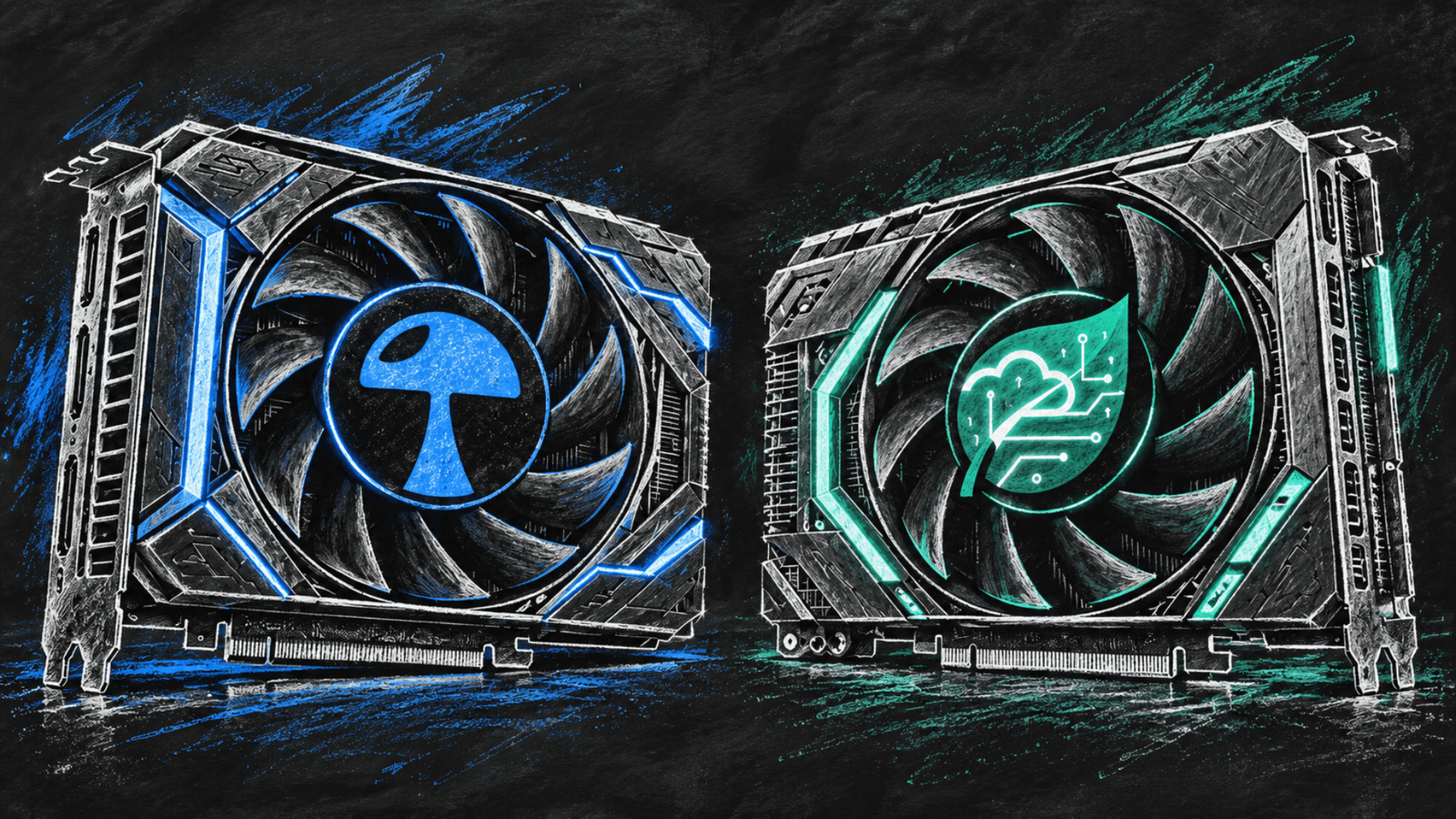
A hands-on evaluation compared Lium (SN51) and Green Compute (SN110) under the same conditions to see how easy their GPUs are to rent with an AI agent and how well the hardware performs once running.
Lium (SN51), the ‘Airbnb of GPU,’ is a decentralized GPU marketplace that connects users with high-performance compute for AI training and inference. Green Compute (SN110) also provides GPU compute, with a focus on running infrastructure using farm biogas and other spare renewable energy sources.
The test, shared by vaNlabs, covered 29 RTX 4090 rentals over roughly 3.5 hours. Claude Code handled the entire process through each provider’s CLI or API, from finding the documentation to renting the GPU, running benchmarks and shutting it down.
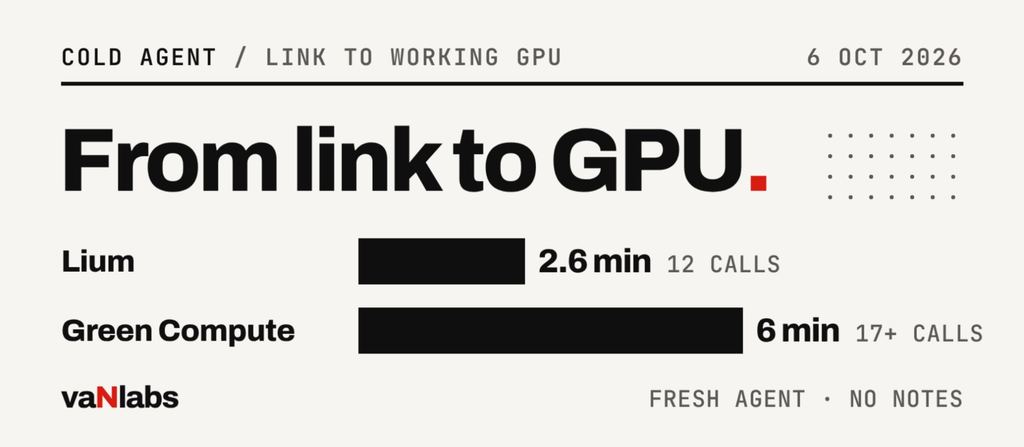
Lium had the smoother agent onboarding experience. A fresh agent reached a working GPU in about 2.6 minutes and 12 tool calls, helped by its CLI, SDK references, llms.txt, OpenAPI spec and other machine-readable documentation.
Green Compute took around six minutes and more than 17 tool calls. Its documentation was harder for the agent to discover, and with no CLI or SDK available, the agent eventually completed the process using raw API calls.
Once the GPUs were running, both performed strongly. Every tested card was a genuine RTX 4090, no VRAM errors were recorded, and all healthy rentals maintained at least 98% of performance during sustained load.
Green Compute was more consistent on availability. It supplied an RTX 4090 in all eight Round 2 attempts at a fixed $0.40 per hour. Lium had no RTX 4090 available in four of eight checks, although other GPU models remained available, and pricing ranged from $0.35 to $0.70 per hour.
Under the pre-set scoring criteria, Lium finished at around 7.9/10, while Green Compute scored 7.5/10. Green Compute’s main deduction came from an API pricing mismatch that showed $0.10 per hour while billing matched the $0.40 website rate. The tester estimated that fixing this could raise its score to about 8.4.
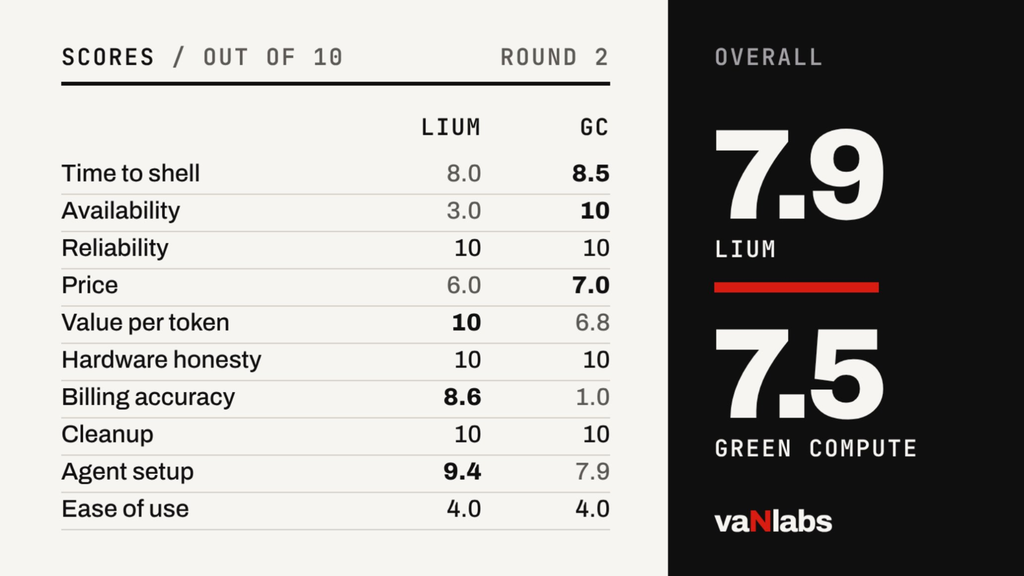
The test points to two different strengths. Lium offered a better experience for autonomous agents trying to discover and rent compute without human help, while Green Compute showed stronger consistency for users who need a specific GPU at a stable price.
The sample was limited to one day and one GPU type, so the results should not be treated as a permanent ranking. The cold-agent test raises an important point for compute subnets on Bittensor. As more demand comes from AI agents, making compute easy for machines to discover and purchase may become just as important as the hardware itself.
Enjoyed this article? Join our newsletter
Get the latest TAO & Bittensor news straight to your inbox.
We respect your privacy. Unsubscribe anytime.
Enjoyed this article?
Join our newsletter
Get the latest TAO & Bittensor news straight to your inbox — every morning before markets open.



No comments yet — be the first.