

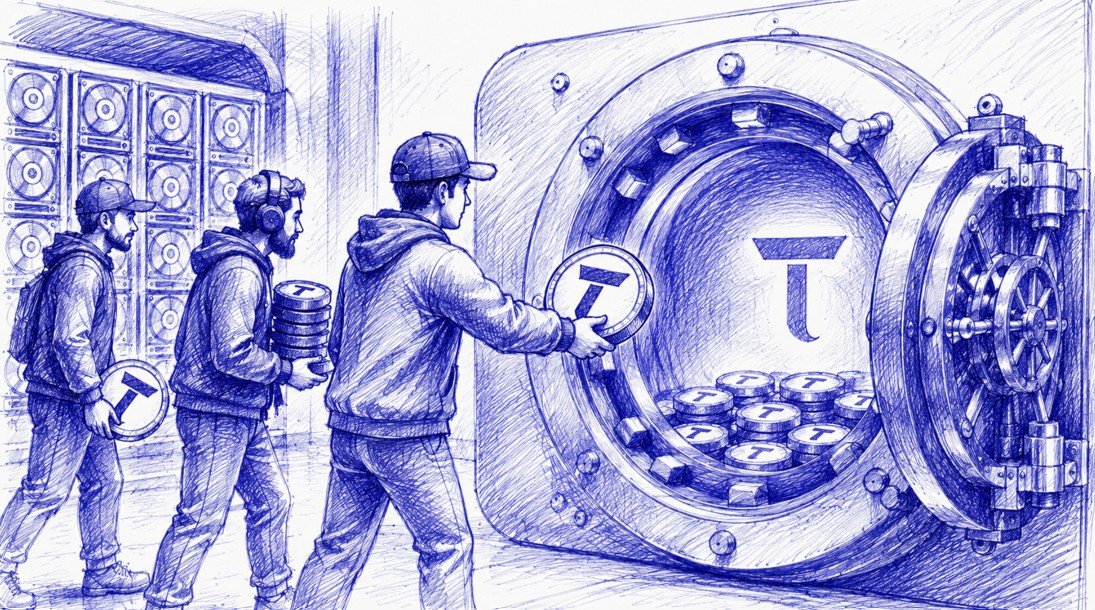
Bittensor rolled out first-class miner collateral, a new primitive that lets subnets require miners to lock capital as part of registering. Registration now splits into two parts: a burn (permanent), and a collateral bond (released as emission arrives).
The change is designed for mechanisms that need real skin in the game from miners, particularly in domains where pure performance scoring can hide risk until something breaks. Enforcement is purely economic with no slashing and no judge, and miners can dispute outcomes by re-registering with the same collateral.
What Just Changed
The old registration model asked miners to burn a fixed amount and start earning. The new model splits that into two parts, one of which is refundable.
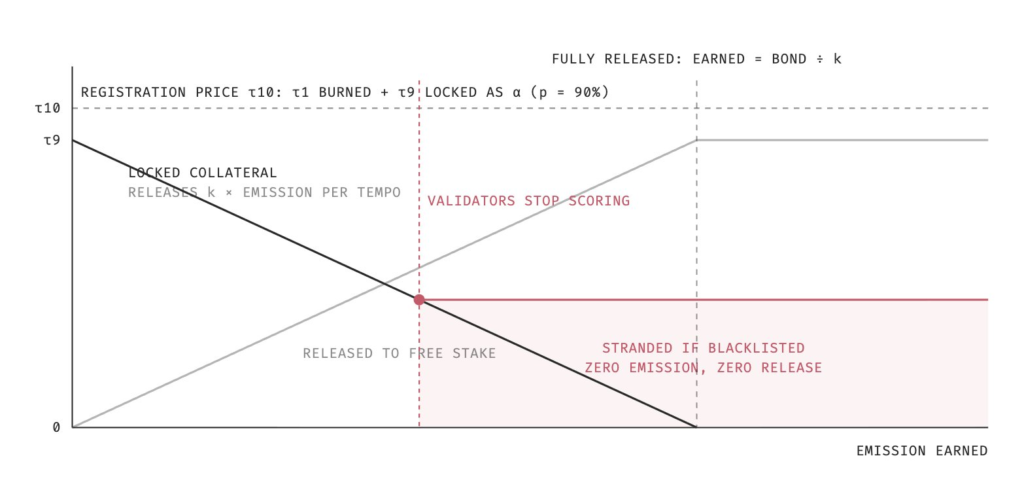
1. THE BURN STAYS: Miners still pay a fixed amount to register, and that amount is gone for good.
2. THE COLLATERAL IS NEW: A separate amount gets locked as a bond that releases gradually as the miner earns emission.
a. The bond stays at risk. As long as a miner is active, part of their capital is tied up in the subnet.
b. The bond strands if things go wrong. If validators stop scoring the miner, emission goes to zero and the remaining collateral is stuck.
The result is a version of Bittensor where miners have to actually commit capital to compete, not just spend it once and start extracting.
Why This Matters
The primitive solves two problems the network has been running into as subnets have gotten more sophisticated.
1. In finance-style subnets, performance metrics can lie: Sortino, Sharpe, and PnL scoring say nothing about the tail risk they have not seen yet. Collateral keeps miner capital at stake long enough for hidden risk to actually surface, which attracts miners who trust their own signal.
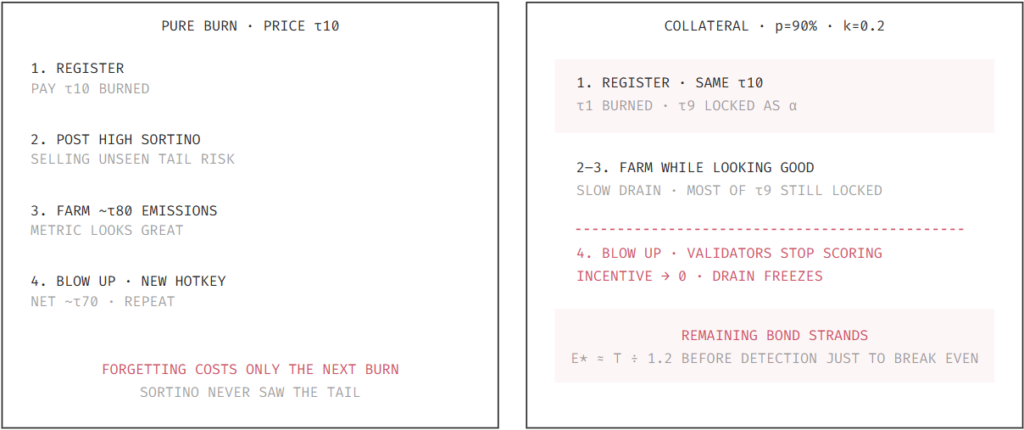
2. In ‘commodity’ subnets, cheaters get caught late: GPU rental and inference networks often detect bad actors only after the damage is done. Under the old model, the worst penalty was losing future emission. With a bond in play, defecting early costs real capital and stretches the break-even time for anyone trying to farm the system.
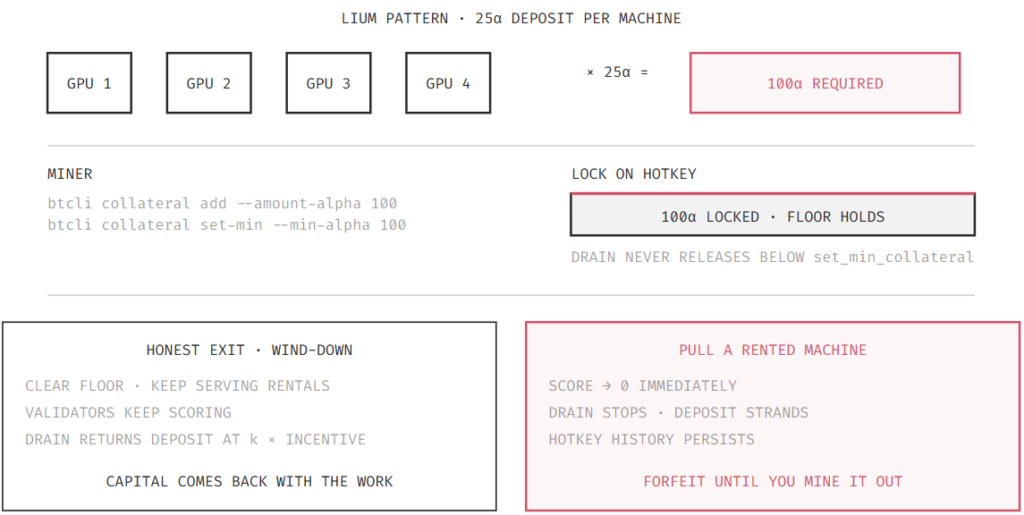
One primitive covers both use cases, which is why the team is calling it first-class rather than subnet-specific.
No Slashing, No Judge
The design deliberately avoids the two things that make most staking systems fragile: automated slashing and human arbitration.
1. Enforcement is purely economic. If validators stop scoring a hotkey, emission drops to zero and the remaining bond strands. That is the entire penalty mechanism.
2. Disputes get mediated natively. A miner who thinks they have been treated unfairly can re-register to the same subnet with the same collateral, which pulls the disagreement back inside Bittensor’s own market.
The absence of slashing means no one has to trust a central authority to make judgment calls. The market decides, the emission stops, and the bond does the rest.
Skin in the Game, at the Protocol Layer
The miner collateral primitive turns Bittensor’s incentive layer into something closer to a real financial system, where the participants who want the rewards also have to carry the risk.
Subnets running mechanisms that need actual commitment from miners now have a tool that enforces it at the protocol level, without needing to invent their own slashing rules or trust structures.
For anyone tracking how Bittensor’s economic design is maturing, this is the kind of low-level change that quietly reshapes what subnets can actually attempt over the next twelve months.
Enjoyed this article? Join our newsletter
Get the latest TAO & Bittensor news straight to your inbox.
We respect your privacy. Unsubscribe anytime.
Enjoyed this article?
Join our newsletter
Get the latest TAO & Bittensor news straight to your inbox — every morning before markets open.



No comments yet — be the first.