Zeus Sells Weather Forecasts for $1M to ONE Client
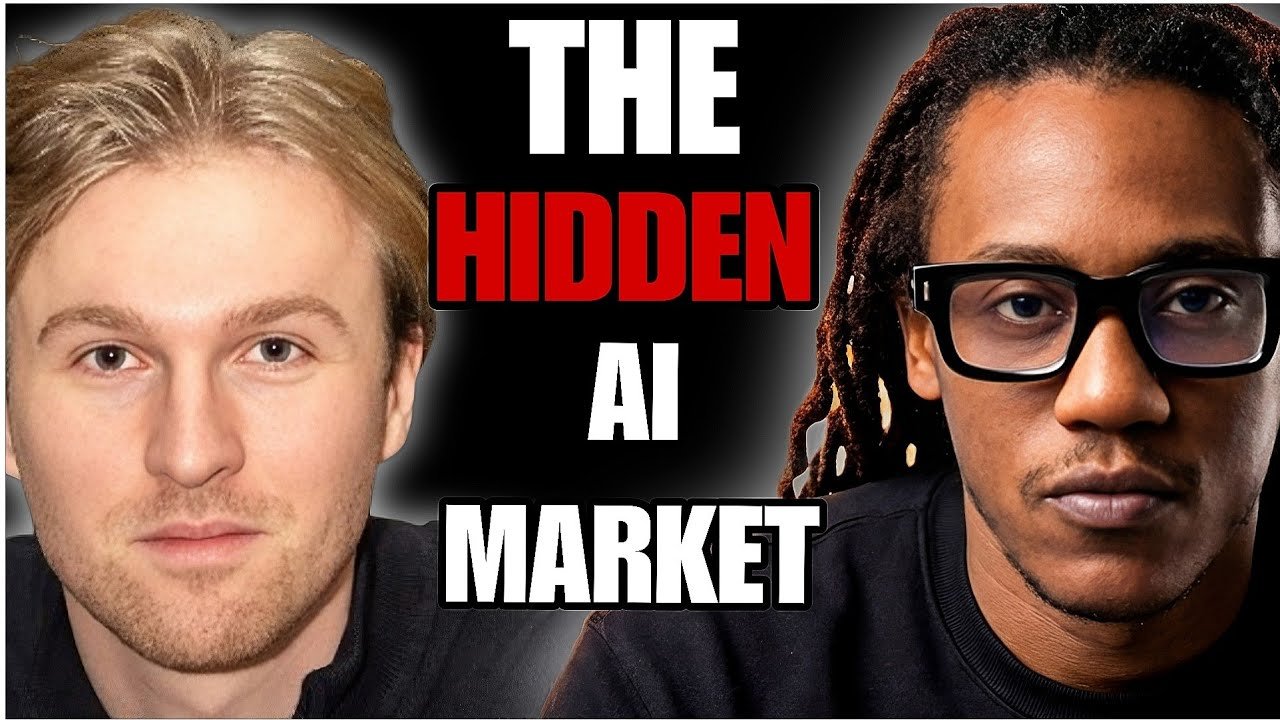
In this interview, Wouter, the founder of Zeus (Subnet 18), walked through how he went from an AI student in Amsterdam to running a weather intelligence subnet on track to do $1M annual revenue from
IA
Ige A
June 12, 2026 · 5 min read
In this interview, Wouter, the founder of Zeus (Subnet 18), walked through how he went from an AI student in Amsterdam to running a weather intelligence subnet on track to do $1M annual revenue from a single enterprise client.
Zeus isn’t a name that gets shouted in Bittensor discussions, but the business model is one of the more interesting on the network.
Here are the nine biggest takeaways.
1. The founder story is basically a Bittensor recruiting ad
Wouter studied AI at the University of Amsterdam, was doing his thesis at KPMG, and had zero interest in crypto. A friend told him, “You study AI, you should try Bittensor.” Within two weeks of getting set up, he was a top miner. At peak, he was mining two subnets solo and pulling 100 TAO a day when TAO was around $750. He dropped out of university and started a mining company. “It was the craziest time ever.” This is the rare case where the meme of “the kid who dropped out for crypto” happened in real life.
2. AI weather forecasting is 1,000x cheaper than the traditional alternative
The numbers are wild. Traditional physics-based weather models, the kind the big national agencies run, cost ~$1M per day in compute to operate. AI-based weather forecasting can do equivalent work for ~$1,000 per day. That gap is the entire business case. Zeus is now beating those legacy models on top of Bittensor.
3. The $1B-per-year waste problem
Most people don’t realize how much money bad weather forecasts cost. In the UK alone, wind electricity worth over $1 billion per year is wasted because windmill operators have to conservatively underbid how much electricity they’ll produce 24 hours in advance; if they overpromise and miss, they get fined. So they leave money on the table. On average, windmill and solar operators lose ~30% of their potential revenue to bad forecasts. Zeus’s pitch is that better forecasts directly recover that money.
4. The exclusivity business model is the innovation
This is the single most important strategic point in the interview. Most weather forecasting companies sell the same forecast to everyone, which destroys the edge for any individual buyer. Zeus does the opposite; they sell exclusivity by region.
“Let’s give it to one person for a shitload of money and they can make even more money.”
One exclusive client in Europe or North America is worth ~$1M in annual revenue. They currently have pilot clients testing the forecasts; if quality benchmarks are met, those convert to paying clients. Realistic timeline: first paying client by end of this year.
5. Why their forecast is better than Microsoft and Google
Wouter gives three concrete reasons:
24/7 model updates vs. competitors who retrain once a year.
5 critical variables (temperature, wind at 100m, etc.) vs. competitors who predict 200 variables. Hyperfocus beats general-purpose every time.
Optimized for client needs, not scientific benchmarks. They actively ask clients which locations and time windows matter, then incentivize miners to focus there.
The kicker: Zeus delivers forecasts 4.5 hours faster than the major models. “People are paying for a minute faster on those other models, and we do it like four and a half hours faster.”
6. The subnet is essentially ungameable
Unlike most AI tasks where miners can learn to game the validation system, weather forecasting is about the future, and you can’t game what hasn’t happened yet. Miners submit a hashed prediction first (so they can’t later see other miners’ answers and copy them), then reveal. Wouter said this directly:
“We literally had miners come up to us in France saying: we tried to game your subnet, we just couldn’t. Which is like the biggest compliment ever.”
7. His take on buybacks-and-burns is refreshingly grounded
Asked whether Zeus would do buybacks and burns once revenue lands, Wouter pushed back on the entire burn meme:
“I think the burn mechanism doesn’t really make a lot of sense. We saw this with Chutes. They did a lot of burning, and now Conviction got introduced — they probably wish they didn’t do that because they could have convicted all that money.”
His preference: buy back into treasury and lock into conviction. Same outcome for token holders, more long-term flexibility for the team.
8. Agentic mining is the next big unlock
Zeus is currently one of the hardest subnets to mine because the quality bar is so high, and top miners are doing serious applied ML work. Wouter wants to flatten that curve by letting agents mine the subnet directly. They’re building scaffolding that provides data sources, knowledge primitives, and a clear path for AI agents to start producing weather forecasts.
“I don’t really care if it’s a magical old lady in China predicting the weather. As long as it’s a good weather forecast, I want to have it.”
The strategic logic: more miners (agentic or human) = better forecasts = more reason for enterprises to pay.
9. The endgame is a fully decentralized weather stack
This is the long-term vision: not just decentralized forecasting, but decentralized ground truth. Zeus is working withWeatherXM, a Web3 project where weather stations are owned by crypto holders, to eventually replace centralized government ground-truth data with verifiable, decentralized sensor data. That closes the loop:
Decentralized data (WeatherXM weather stations)
Decentralized forecast (Zeus miners)
Decentralized verification (Bittensor validators)
“Our end goal is to be that company you are 100% sure of, that the data will never be centralized or owned by government.”
Zeus is one of the quieter subnets in the ecosystem, and the chart reflects that but the business model is unusually well-thought-out.
Hyperfocused vertical, real enterprise demand, a structural advantage over legacy forecasters, a strategically sound approach to tokenomics, and a founder who came in through mining rather than VC.
Wouter’s closing thought is worth keeping:
“If you want to make a quick buck, don’t invest in our subnet. We are here for the next couple of years. If you want to join us there, buy a little bit of alpha, don’t buy too much, and we will make it happen.”
Full conversation here:
Enjoyed this article? Join our newsletter
Get the latest TAO & Bittensor news straight to your inbox.
We respect your privacy. Unsubscribe anytime.
The Daily Dispatch
Enjoyed this article? Join our newsletter
Get the latest TAO & Bittensor news straight to your inbox — every morning before markets open.
Websites store cookies to enhance functionality and personalise your experience. You can manage your preferences, but blocking some cookies may impact site performance and services.
Essential cookies enable basic functions and are necessary for the proper function of the website.
Name
Description
Duration
Cookie Preferences
This cookie is used to store the user's cookie consent preferences.
30 days
These cookies are needed for adding comments on this website.
Name
Description
Duration
comment_author
Used to track the user across multiple sessions.
Session
comment_author_email
Used to track the user across multiple sessions.
Session
comment_author_url
Used to track the user across multiple sessions.
Session
Statistics cookies collect information anonymously. This information helps us understand how visitors use our website.
Google Analytics is a powerful tool that tracks and analyzes website traffic for informed marketing decisions.
Contains information related to marketing campaigns of the user. These are shared with Google AdWords / Google Ads when the Google Ads and Google Analytics accounts are linked together.
90 days
__utma
ID used to identify users and sessions
2 years after last activity
__utmt
Used to monitor number of Google Analytics server requests
10 minutes
__utmb
Used to distinguish new sessions and visits. This cookie is set when the GA.js javascript library is loaded and there is no existing __utmb cookie. The cookie is updated every time data is sent to the Google Analytics server.
30 minutes after last activity
__utmc
Used only with old Urchin versions of Google Analytics and not with GA.js. Was used to distinguish between new sessions and visits at the end of a session.
End of session (browser)
__utmz
Contains information about the traffic source or campaign that directed user to the website. The cookie is set when the GA.js javascript is loaded and updated when data is sent to the Google Anaytics server
6 months after last activity
__utmv
Contains custom information set by the web developer via the _setCustomVar method in Google Analytics. This cookie is updated every time new data is sent to the Google Analytics server.
2 years after last activity
__utmx
Used to determine whether a user is included in an A / B or Multivariate test.
18 months
_ga
ID used to identify users
2 years
_gali
Used by Google Analytics to determine which links on a page are being clicked
30 seconds
_ga_
ID used to identify users
2 years
_gid
ID used to identify users for 24 hours after last activity
24 hours
_gat
Used to monitor number of Google Analytics server requests when using Google Tag Manager



No comments yet — be the first.