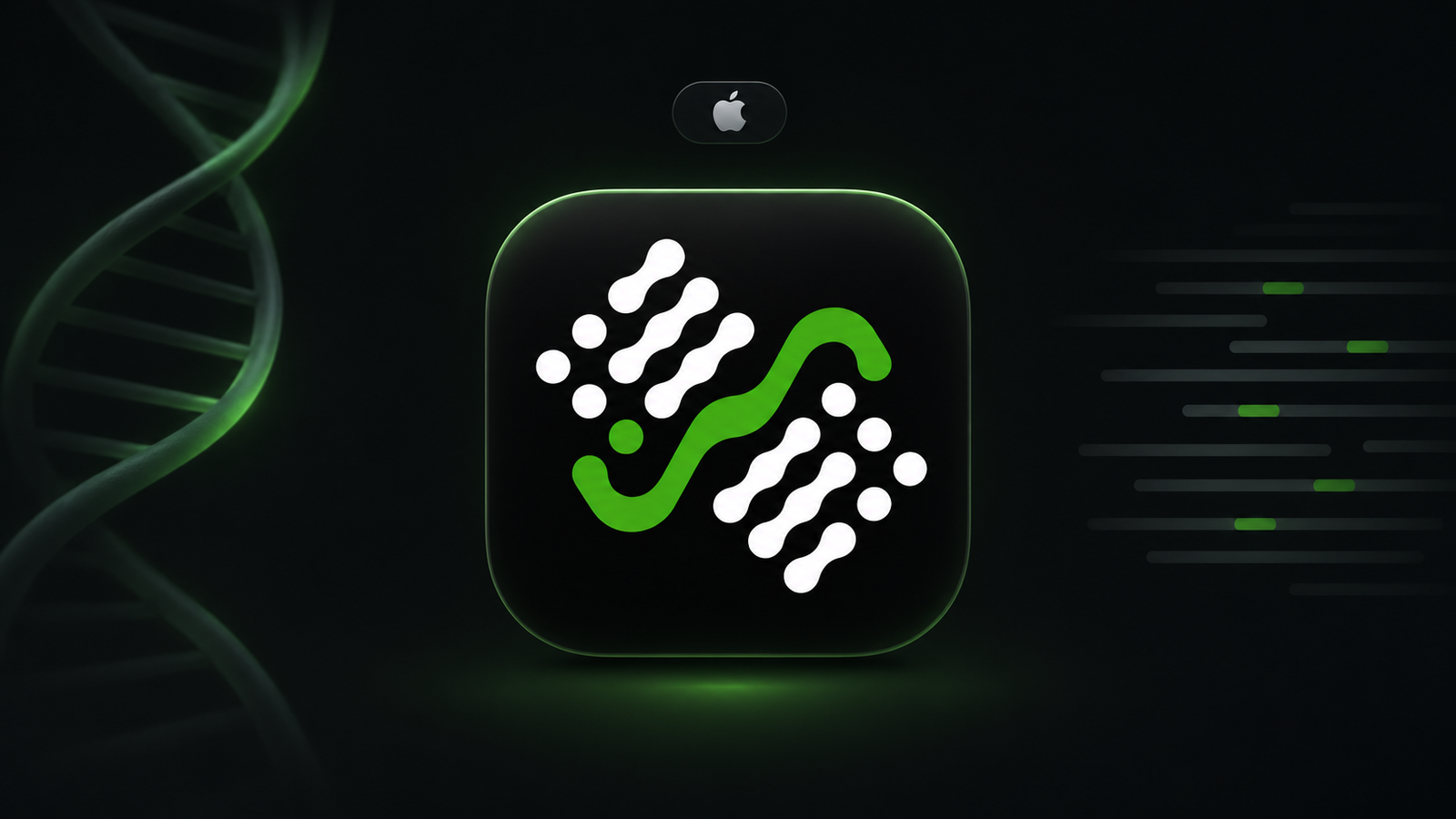
Your Mac can now run AI agents that turn scientific literature into research briefs and audit the drafts locally through the Minos (SN107) public beta.
Minos is a subnet focused on improving the accuracy and independent verification of genomic analysis. Its new desktop app gives users a hands-on way to explore how research and verification could become part of the network’s work.
Each assignment moves through research, drafting, review, and auditing, making the initial draft one step in a longer checking process.
A dashboard tracks evidence, sources, responses, and validation scores, allowing users to follow the work as it develops and moves toward completion.
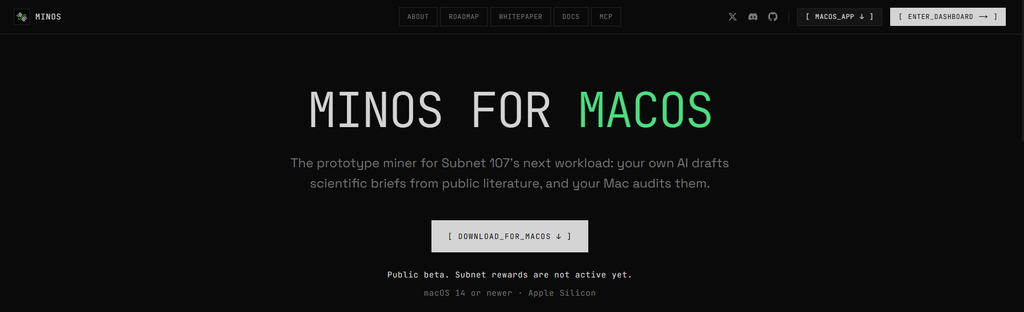
The app supports Apple Silicon Macs running macOS 14 or newer. Users connect their existing AI tools and accounts, including Codex/ChatGPT, Claude Code, Kimi Code, and other providers accessed through API keys.
Assignments draw on those subscriptions or credits, so testing involves using the AI resources users already pay for.
Originals are processed locally, and API keys are stored securely in the macOS Keychain. Completed assignments upload a single evidence bundle through a signed URL, alongside worker status and activity events.
The beta currently operates through a test queue, with no active subnet rewards, on-chain registration, or on-chain work submissions.
Behind the application is an effort to make genomic analysis more reliable. Minos’s variant-calling design addresses the task of identifying differences in DNA sequencing data, where missed variants and incorrect findings can weaken results.
Miners compete to produce accurate outputs, while validators compare them against known answers using precision, recall, and F1 scores.
That design supports established tools including GATK HaplotypeCaller, Google DeepVariant, FreeBayes, and BCFtools. Miners optimise configurations against synthetic genomes containing known, hidden mutations, creating a controlled basis for comparison.
The Mac beta explores a separate scientific research workload, while long-term plans include a consensus variant caller, more complex genomic analysis, and validated datasets for AI training and evaluation.
For Bittensor folks, the release offers a practical way to see AI agents at work and follow their research process. Early users can test the workflow and help improve it before incentives become available.
➛ Access the Minos Public Beta Here. Click below for more coverage on Minos.
Enjoyed this article? Join our newsletter
Get the latest TAO & Bittensor news straight to your inbox.
We respect your privacy. Unsubscribe anytime.
Enjoyed this article?
Join our newsletter
Get the latest TAO & Bittensor news straight to your inbox — every morning before markets open.
No comments yet — be the first.