


Yanez (SN54) develops identity verification, sanctions screening and authorization tools that help businesses verify users and control sensitive actions. In its October update, founder Jose Caldera reported $580,000 in sales booked since the start of the year, up from roughly $300,000 at the June update. These figures represent sales secured, not revenue already received.
Separately, Jose estimated annual recurring revenue (ARR) at ~$550,000, up from $342,000 in June and about $100,000 ahead of internal expectations. ARR represents the estimated annual value of recurring revenue, which is distinct from revenue only collected during the year.
The company secured a deal with one of the world’s largest social media platforms, whose identity remains confidential under a nondisclosure agreement. It also added four large enterprise clients for its sanctions product. Revenue recognition has trailed sales because of enterprise contract structures and a slower summer period, with newly signed deals expected to strengthen revenue in the coming quarter.
The active sales pipeline stood at just under $1 million, including two to three substantial Proof of Human Uniqueness opportunities and smaller contracts across other products. Separately, a sponsor bank relationship had already generated one client win and could extend to dozens of the bank’s partners. Its potential to generate several million dollars in annual revenue remains outside the reported pipeline and ARR.
Pulse and Gate, released at the end of September, have opened new enterprise conversations. One partnership under discussion could bring Yanez’s technology to a broad network of US banks seeking secure solutions for agentic commerce. No completed agreement was announced.
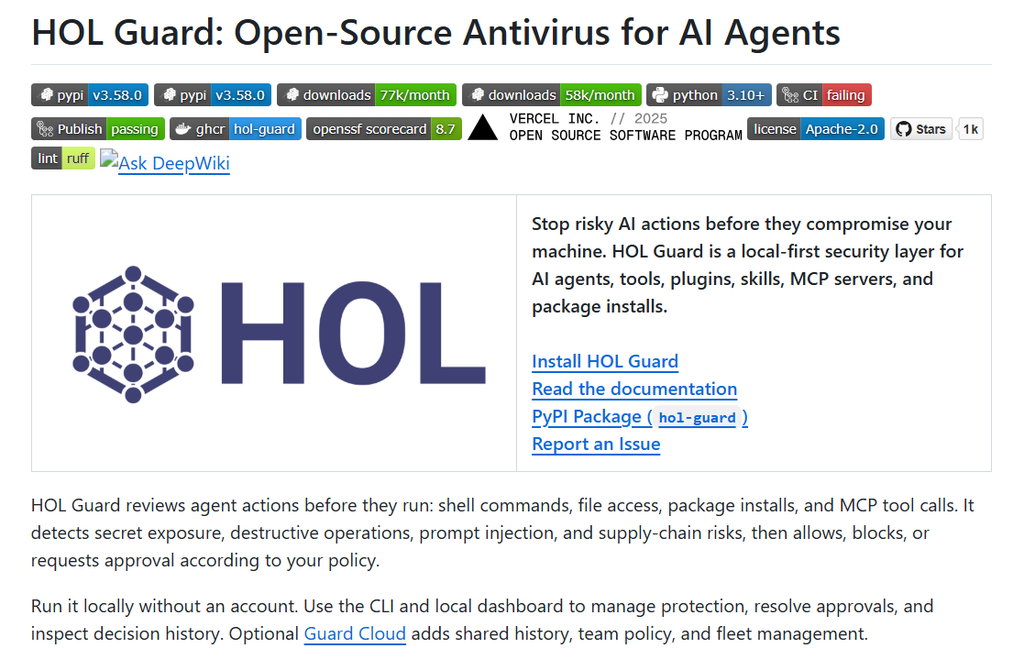
Integration work is progressing with HOL Guard, an open-source security layer for AI coding agents with reportedly millions of downloads and nearly 1,000 GitHub stars. The teams aim to complete an integration using Pulse for final authorization before the end of November, connecting Yanez’s capabilities with an existing developer audience.
Yanez also plans to make its technology native to two protocols by the end of November and is discussing integrations with three others. These efforts would embed its authorization tools directly into infrastructure used by applications and AI agents, creating distribution opportunities beyond individual enterprise contracts.
On the consumer side, one product is scheduled for broader alpha testing in early November, while a second product in private beta is targeted for early December. Yanez is working toward ~10,000 registered users across its free offerings by year-end, adding a consumer adoption target alongside its enterprise business.
Enjoyed this article? Join our newsletter
Get the latest TAO & Bittensor news straight to your inbox.
We respect your privacy. Unsubscribe anytime.
Enjoyed this article?
Join our newsletter
Get the latest TAO & Bittensor news straight to your inbox — every morning before markets open.



No comments yet — be the first.