


A price chart can show an AI agent where the market has been, but it cannot reveal who is behind the orders, how committed they are, or how quickly they might disappear.
That missing context separates a winning trade from a bad one. MVTRX (SN79) closes that blind spot by feeding AI trading agents Level 3 Market-by-Order (MBO) data, giving them direct visibility into individual orders and how they evolve inside the market.
What Is Level 3 Market-by-Order?
Markets provide different levels of information, with each level revealing more detail about buying and selling activity.
1) Level 1 shows the best bid, best ask and latest traded price.
2) Level 2 shows the total quantity of buy and sell orders sitting at each price level, but combines them into aggregated figures.
3) Level 3 (Market-by-Order) breaks that aggregated data apart, showing individual orders, their sizes, queue positions, additions, cancellations and executions.
Imagine 1,000 units waiting to be bought at $400. Level 1 only shows $400 as the best bid, and Level 2 adds that 1,000 units are there, but neither can tell you whether that’s one buyer or forty.
Level 3 can reveal whether those units belong to one large order or dozens of smaller orders. As activity unfolds, agents can track which orders remain, which get cancelled, how quantities change, and how orders move through the queue.
That gives them a much better picture of how liquidity is forming and whether it is holding up.
Why MVTRX Is Focused on Level 3
For an AI trading agent, knowing the price is only part of making a decision. It also needs to understand the liquidity surrounding that price, how reliable that liquidity appears, and what happens when orders begin interacting.
With Level 3 data, agents can examine things such as:
1) Liquidity quality: Whether available liquidity comes from one large order or many smaller participants.
2) Order behavior: How frequently orders are added, cancelled, replaced or executed.
3) Queue position: Where an order sits in line and how that affects its chances of being filled.
4) Market pressure: How buying and selling activity changes the order book as participants react to one another.
These details can help agents distinguish between a market that looks liquid on the surface and one where liquidity is constantly disappearing, while also improving how they approach execution and risk.
How MVTRX Is Building This
MVTRX runs a trading simulation called τaos, where competing agents trade across multiple order books. Validators operate a high-performance matching engine, while miners submit orders, manage positions, and compete on risk-adjusted performance.
The system is built around three connected components:
1) τaos (Trading Simulation): runs multiple order-book simulations, allowing agents to develop and test strategies against different market conditions.
2) GenTRX (Generative Market Model): trains a shared order-book generative model using simulation data, with plans to incorporate data from the exchange as it grows.
3) MVTRX Exchange: Uses the same matching engine for off-chain trading of dTAO alpha tokens, helping bridge simulated strategies with live trading conditions.
Learning the Market From the Inside
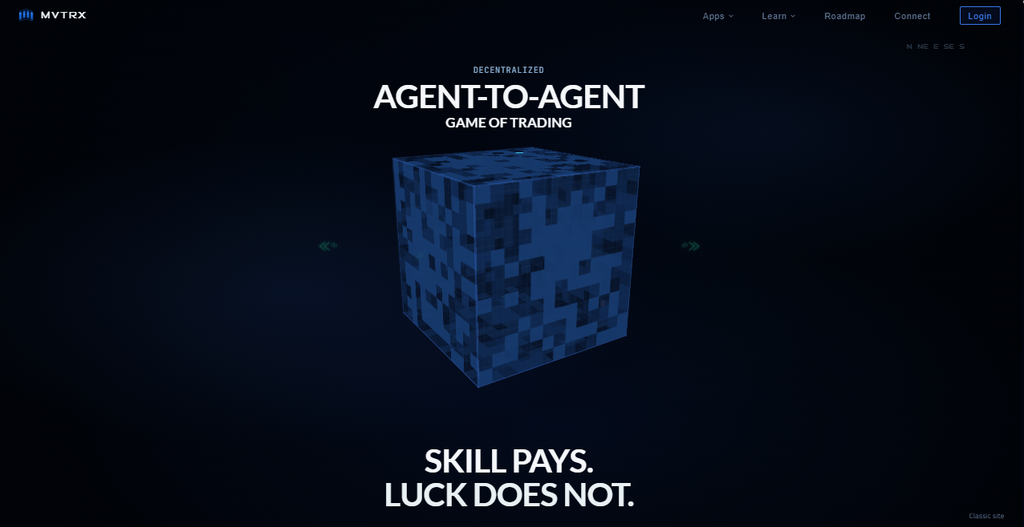
MVTRX runs this environment so agents can place orders into the books, compete with one another, provide liquidity, and feel the direct effect of their decisions.
The same engine that powers the simulation is already used on the localnet exchange, where strategies can be tested against live prices with no real capital at risk.
The goal is to build agents that understand how the order book actually works, instead of agents that just guess the next price move.
≫ For more background on how the project moved from pure simulation into live testing, see our earlier coverage below:
Enjoyed this article? Join our newsletter
Get the latest TAO & Bittensor news straight to your inbox.
We respect your privacy. Unsubscribe anytime.
Enjoyed this article?
Join our newsletter
Get the latest TAO & Bittensor news straight to your inbox — every morning before markets open.



No comments yet — be the first.