

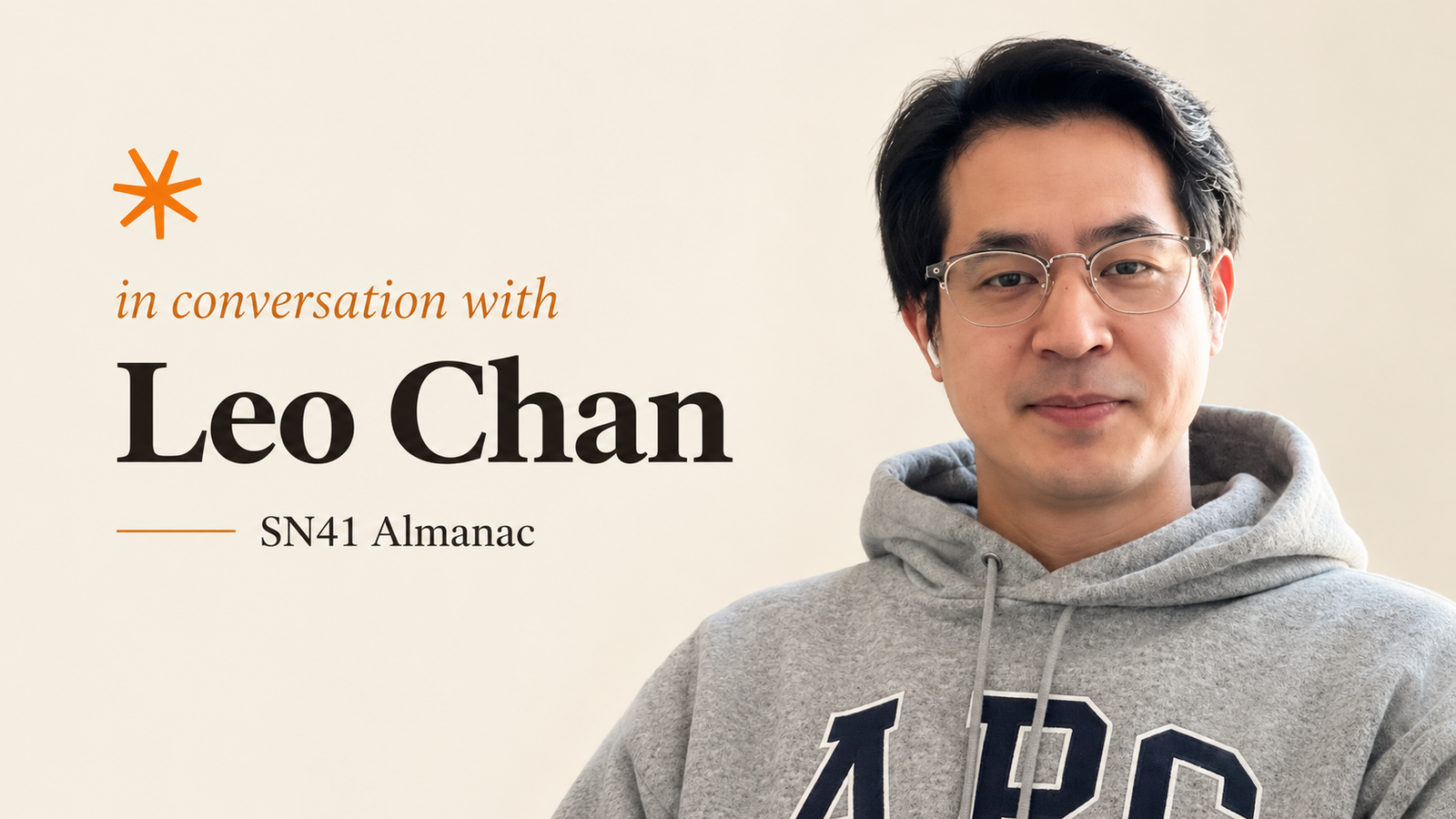
Leo Chan has had an eventful year. His Bittensor project, Almanac (SN41), has moved beyond sports predictions, navigated public criticism, and continued building through a period of little or no subnet emissions.
In a recent People of TAO interview with Louise, Leo opened up about those challenges, the lessons he has learned as a founder, and where he wants to take Almanac next. He also shared a more personal side of his life, including how becoming a father has changed the way he thinks about the future.
From Sports Predictions to a Bigger Opportunity
Almanac started as Sportstensor, a subnet where miners developed machine learning models to predict sporting outcomes. The team used those predictions to trade on Polymarket, with trading returns helping fund token buybacks.
However, the approach had technical limitations, and Leo eventually realised there was a much bigger opportunity beyond sports.
An approach from the Polymarket team helped set Almanac on a new path. Today, the project is building forecasting infrastructure for prediction markets, covering everything from interest-rate decisions to economic developments and geopolitical events.
The goal is to help traders and institutions make better-informed decisions about uncertain future events. Working with Polymarket has also given Almanac valuable technical feedback and helped the team develop a more reliable platform.
For Leo, the change is about building something with a broader purpose and a stronger commercial future.
Building Through the Noise
Almanac’s journey has not been without controversy. Earlier this year, the project faced public criticism surrounding a dispute involving a former employee and Const, creating a difficult period for Leo and his team.
Leo said Const supported him personally, but the situation still demanded attention from the company. His response was to avoid getting drawn into prolonged arguments in community channels and concentrate on what Almanac was building.
That decision came during an already challenging stretch in which the team continued operating with little or no emissions.
According to Leo, what kept everyone going was a shared belief in the project and in Bittensor itself. He credits the team’s progress to months of consistent work, even when the circumstances were far from ideal.
The experience also reinforced a lesson about building in public. While community discussions matter, Leo believes founders must know when to engage and when to put their energy into the product.
Where Almanac Is Going Next
One of Almanac’s biggest priorities right now is making mining accessible to more people, including those who have never written machine learning code.
The project has introduced a second incentive mechanism that allows participants to use AI agents to help build and operate their miners. Someone can provide an AI agent with Almanac’s GitHub repository, explain what they want to achieve in ordinary language, and let the agent handle much of the technical work.
Participants can then concentrate on predicting events listed on platforms such as Polymarket and Kalshi, developing their reasoning, and improving their forecasting strategies.
Leo believes opening the process to people from different backgrounds could make Almanac’s forecasting network stronger. A software engineer, an economist, and someone with experience in international affairs might approach the same question very differently.
Almanac also plans to use the reasoning generated by these agents to train and improve its own forecasting models. Over time, the team hopes this diversity of approaches will produce better-calibrated predictions.
Beyond the technology, Leo is focused on turning Almanac into a sustainable business with products that people are willing to pay for.
Why Leo Thinks Marketing Matters
Another lesson Leo has learned is that building a good product is not enough if nobody understands what it does.
Almanac has become more deliberate about communicating its work, testing different content styles on X and reviewing their performance each week. The team has also started using AI agents to turn internal development updates into content that the wider community can understand.
Leo doesn’t want every post to become a token promotion. He wants the team to explain what it is building, why it matters, and what progress is being made.
He believes more Bittensor founders should approach communication this way, while more creators should build brands around the ecosystem and help introduce its technology to people outside the existing community.
His advice to prospective subnet founders is equally practical: spend time mining to understand the incentives, listen to the community, and think about the business from the beginning. Building useful AI technology is important, but finding customers who will pay for it is what makes a business sustainable.
The Father Behind the Founder
Away from Almanac, Leo is a father to a 16-month-old boy, and parenthood has changed how he thinks about his work.
Building in AI means working on technology that could shape the world his son grows up in. That makes the future feel more personal and gives him another reason to think carefully about what he is helping create.
Between running Almanac, spending time with his family, and maintaining his health, Leo says there isn’t much room for anything else, but he wouldn’t have it any other way.
The conversation also revealed a sentimental side of him. When Louise asked which three people he would invite to a picnic, he chose Robin Williams, Jim Carrey, and his maternal grandfather.
Williams brought imagination and laughter to his childhood, while Carrey fascinated him because of how his perspective on life had evolved.
His grandfather’s inclusion was more personal. He had built a grocery business in Hong Kong but died when Leo was young. Leo wishes he could sit with him now and ask the questions about business and life that he never had the opportunity to ask.
And what would Leo bring to this rather extraordinary picnic? Good beer.
For now, Leo’s attention remains on his family and Almanac. The project has already undergone a major change in direction, and its next challenge is to turn its forecasting technology and expanding mining network into a lasting business.
His story is a reminder that behind every subnet is a person making difficult decisions, learning from setbacks, and trying to build something worth sticking around for.
This article is based on Leo Chan’s conversation with Louise on People of TAO. Watch the full talk below:
Enjoyed this article? Join our newsletter
Get the latest TAO & Bittensor news straight to your inbox.
We respect your privacy. Unsubscribe anytime.
Enjoyed this article?
Join our newsletter
Get the latest TAO & Bittensor news straight to your inbox — every morning before markets open.


No comments yet — be the first.