

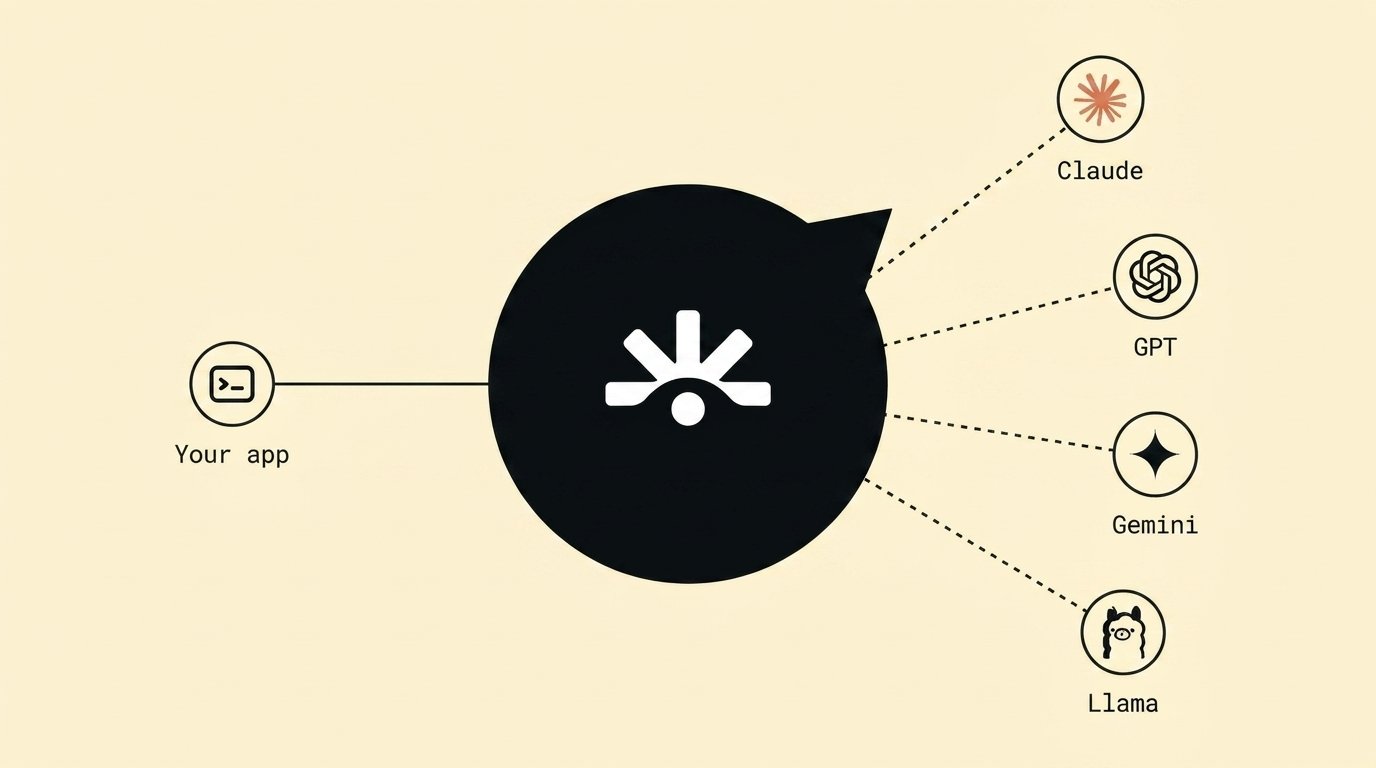
At first glance, GM (Subnet 28) seems to be doing something that should not be possible.
The subnet offers access to frontier models such as Claude Fable 5.1 and GPT-6 Astra at prices below the official rates published by their respective companies. For example, GM lists Fable at roughly 7.3% below list price and Astra at about 8.3% below list.
So how can a marketplace sell access to an AI model for less than the company that created it?
The answer is simpler than it sounds: GM is not buying the models and reselling them as a traditional middleman. It creates a marketplace where independent providers compete to supply the inference.
GM Is a Marketplace for AI Inference
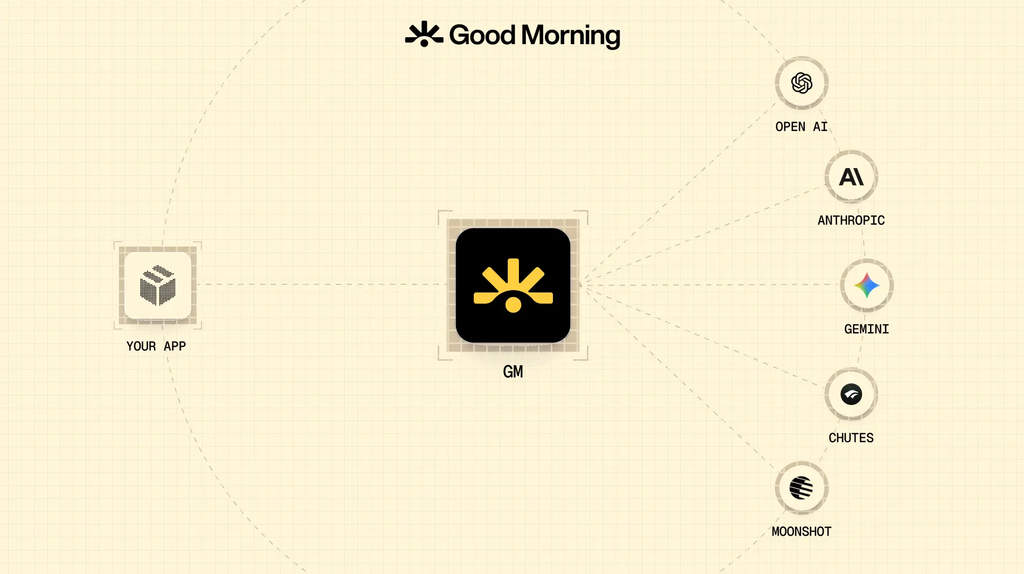
GM is an OpenAI-compatible API gateway. Developers can point tools such as Cursor, Cline, Claude Code, or their own applications to GM and access dozens of models through one interface.
Behind that interface are independent miners.
A miner runs GM’s software inside an attested Intel TDX confidential environment and connects its own API accounts and infrastructure.
It can bring access to providers such as Anthropic, OpenAI, Google, AWS Bedrock, Microsoft Foundry, DeepInfra and others.
The important part is that miners set their own prices.
They choose how much of a discount they are willing to offer against GM’s published retail price. GM then routes requests to eligible miners based on price and service quality.
In simple terms:
Users want cheap, reliable inference → miners compete for the traffic → prices are pushed down.
Where Does the Discount Come From?
Suppose a model has an official retail price of $10 per million input tokens.
A miner might offer that model to GM at a 10% discount.
GM therefore pays the miner $9, while the user pays GM no more than the published retail price, and in most cases less depending on GM marketplace’s pricing.
But the miner’s profit is not simply the difference between $9 and $10.
The miner may have obtained access to inference more cheaply through its own upstream arrangement, cloud provider, enterprise pricing, prepaid capacity, or another route. If its actual cost is $8, for example, it can earn $1 while still offering the user a price below the model’s official list price.
This creates a basic marketplace arbitrage:
Upstream cost → miner adds a margin → miner still undercuts retail → user gets a cheaper model.
For open-weight models, the difference can be much larger because miners can source the same models from multiple hosting providers with substantially different costs.
Bittensor Adds Another Incentive
There is another piece that makes GM different from a normal AI reseller: Bittensor emissions.
GM miners don’t only compete for inference revenue. They also compete for emissions from the subnet.
This means a miner can accept a thinner cash margin because running a successful worker can also earn alpha emissions.
That changes the economics.
A traditional reseller might refuse to sell a service for a few cents of profit because the business would not be worth operating. A GM miner can potentially accept that smaller margin because there is another economic incentive attached to providing useful service to the network.
In effect, Bittensor rewards miners for bringing capacity to the marketplace and competing to provide it.
Why Frontier Models Are Only Slightly Cheaper
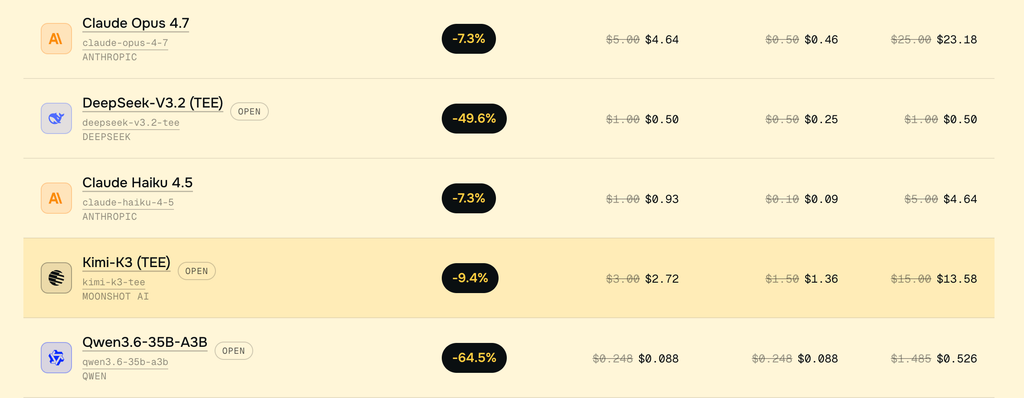
This also explains why the discounts on frontier closed models are relatively modest.
GM can list models such as Fable and Astra below official retail, but the underlying inference still has to be paid for by someone. Anthropic or OpenAI still receives money when their infrastructure performs the inference.
There simply isn’t as much room for arbitrage.
Open-weight models are different. A model can be hosted by several providers, and those providers can have very different costs. This gives miners more room to compete.
That’s why GM can show relatively small discounts on frontier models while offering much deeper discounts on some open or multi-hosted models.
The Same Model Can Have Multiple Routes
This is another important part of the system.
When a user requests a model through GM, there may be several ways to fulfil that request.
For a closed model, different miners might have access through Anthropic, AWS Bedrock, Microsoft Foundry, or another supported provider.
For open models, there can be even more options, with miners sourcing inference from different hosting companies and infrastructure providers.
GM can therefore treat these as competing routes to the same product.
If one miner can provide the service more cheaply while maintaining acceptable reliability, it has an incentive to win the request.
The result is a market where the model is the product, but miners compete over the route used to deliver it.
Why GM Can Move Quickly
The same architecture also helps explain GM’s speed in listing new models.
GM does not necessarily need to negotiate a new commercial partnership every time a model launches. If a miner already has legitimate access to the model and can add it to the network, that miner can make the model available through GM.
The team has pointed to Astra as an example, with the model appearing on GM shortly after its announcement.
That turns model availability into a supply-side competition rather than a centralized partnership queue.
The Simple Version
GM’s advantage can be reduced to four things:
- Miners compete on price. They set their own discounts to win traffic.
- Miners can source inference through different providers. Some routes are cheaper than others.
- GM does not need to add a traditional aggregator markup. Its published retail prices are capped at or below official list prices.
- Bittensor emissions provide an additional incentive. Miners can accept thinner cash margins while competing for subnet rewards.
So when GM offers Claude Fable or GPT-6 Astra below the official list price, it isn’t because GM has somehow made inference free.
The underlying cost still exists.
What changes is who supplies it, how much that supplier is willing to charge, and how many suppliers are competing for the same traffic.
GM turns AI inference into a competitive marketplace, and Bittensor’s incentive system gives miners a reason to participate.
That is the mechanism behind the discount.
You can read the full technical details in the documentation, including a quickstart guide that gets you from signup to first request in a few minutes.
Read more about GM (SN28) below:
Enjoyed this article? Join our newsletter
Get the latest TAO & Bittensor news straight to your inbox.
We respect your privacy. Unsubscribe anytime.
Enjoyed this article?
Join our newsletter
Get the latest TAO & Bittensor news straight to your inbox — every morning before markets open.


[…] How GM (SN28) Sells Fable and Astra for Less Than the Companies That Make Them […]
[…] more on how SayGM’s pricing works in practice, see earlier TAO Daily coverage: HERE and […]