
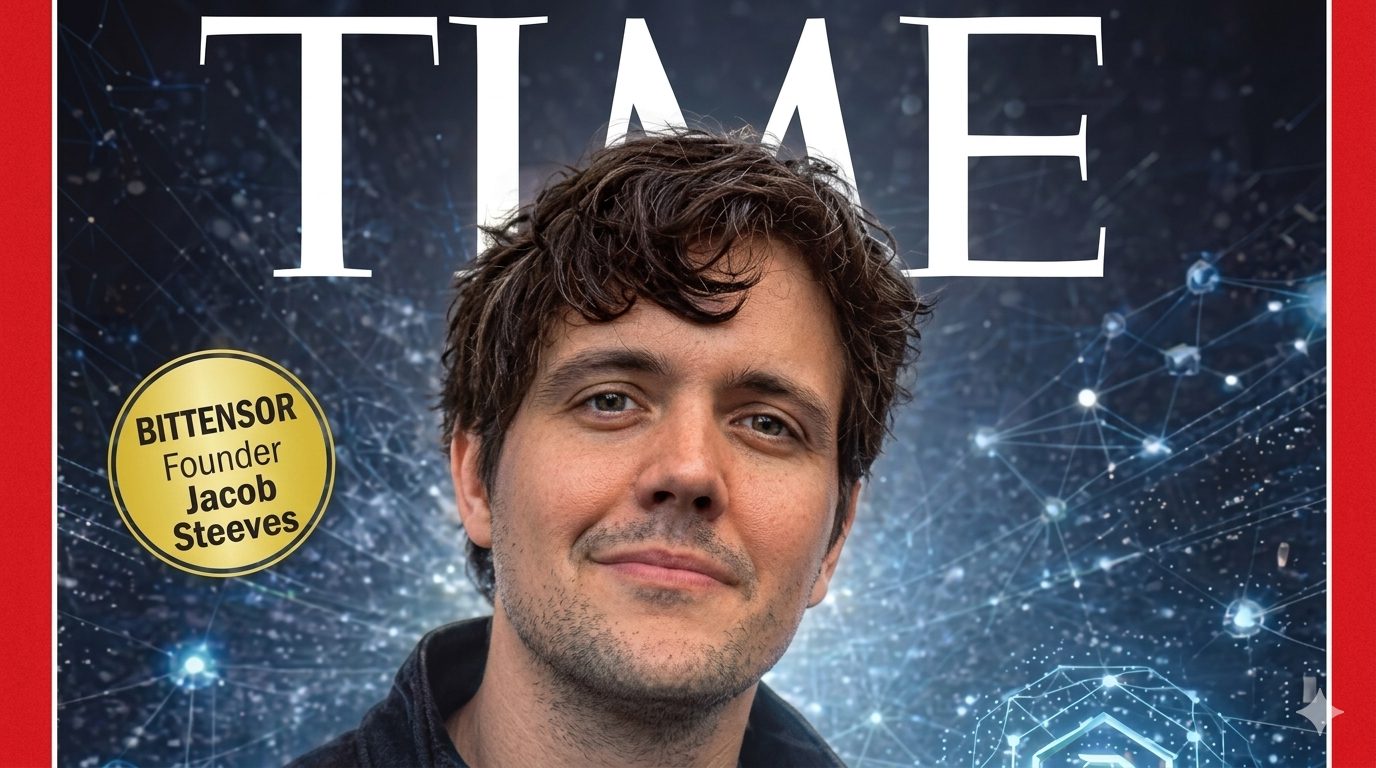
In this video, Crypto Millie covers TAO updates like technical setup, the macro headwinds, why he’s pushing back on the OGs picking other AI infrastructure tokens, and his core thesis on why compute demand only goes up from here.
The diversion
Millie opens by addressing the elephant in the room — OGs like Anatoly, Arthur Hayes, and others have been picking Near and VVV over TAO recently, and that’s been bothering him. The counter-quote he cites makes the case that those names have dropped 70–80% over the past year while the ecosystem has expanded, leaving TAO arguably undervalued. Fair value could be $1,000–$2,000 based on growth alone.
His read: TAO’s strength is the coordination of compute, not just provision of it, and that’s a different thing entirely from what Near or VVV offer.
TA check-in
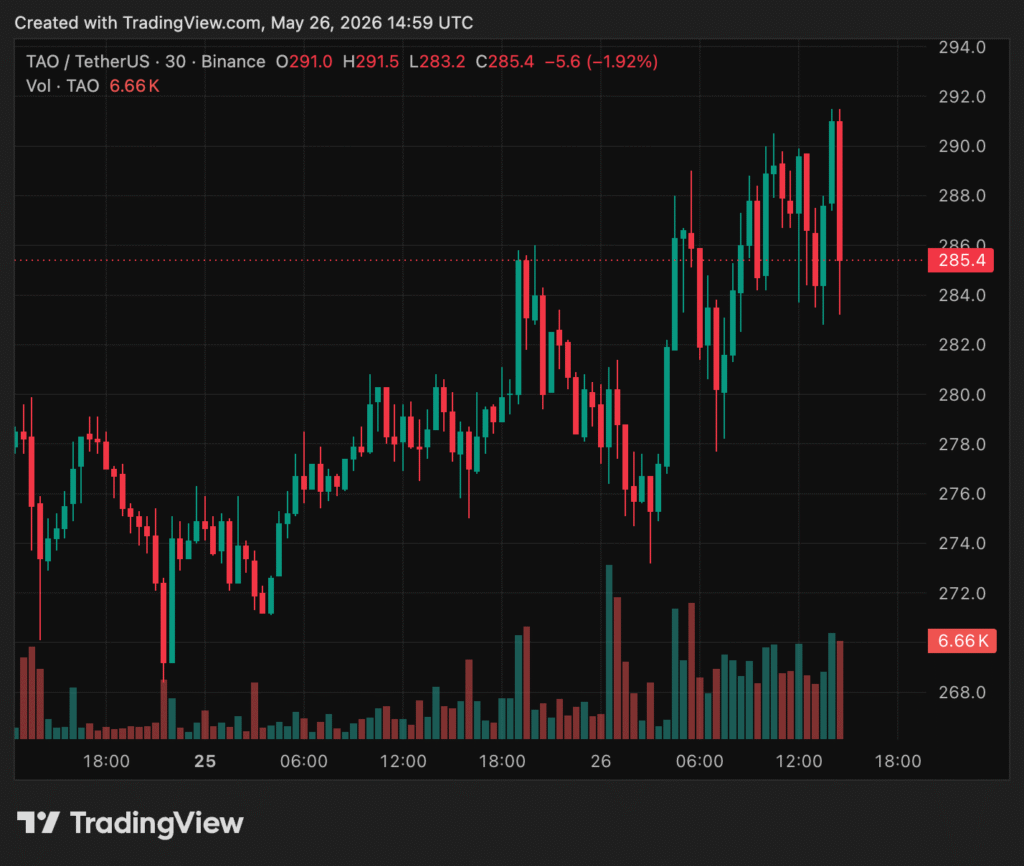
- TAO is sitting around $289.50, still above the ultimate RSI threshold — bullish.
- Resistance lives at the top of the FVG gap and the 50-week moving average, which TAO recently reclaimed but could lose again.
- The trend line from the February bottom is the friend until proven otherwise.
- If TAO closes the week below the 50W, the chart starts to look like a potential double top, opening downside toward the $150–$250 range.
- Millie’s take on a possible dip: celebrate it. “Whenever you got an opportunity to buy crypto for a low, you should be celebrating.”
The bullish technical bright spot: TAO/BTC just printed a golden cross on the weekly, and TAO dominance vs. the broader AI sector is still holding. While VVV looks overbought and Near looks extended, neither offers what Bittensor offers structurally.
The macro framing
- The headwind is the bond market and broader macro pressure
- The tailwind is that PMI is expanding, but it’s not retail driving it — it’s AI subsidies and capital chasing the AI build-out.
- Microsoft passing on the Anthropic deal isn’t a sign AI is retreating. It’s a sign that even the giants are looking for cheaper compute and inference. That’s exactly what Bittensor’s subnet architecture is built to provide.
Why compute demand only goes up
This is the heart of the video. Millie’s four reasons:
- Each model generation needs 4–10x more compute to train. Every milestone from teams like Covenant or Arbos’s Subnet 97 represents a step-change in compute consumption.
- AI agents run continuous loops. Implementation isn’t a one-off training event; it’s 24/7 inference across thousands of companies across multiple countries.
- Every physical industry is a brand-new compute category. Drug discovery, EVs, climate modeling, robotics, genomics. Each is a trillion-dollar industry creating net new AI demand from scratch. Every robot deployed is a permanent compute node making real-time decisions multiple times per second.
- 2 billion new AI users are still coming once compute and inference get commoditized. The grid isn’t ready. Hardware isn’t ready. The infrastructure was never built for this scale, which is why data centers are being pushed into space, into homes, into EVs.
The contrarian read on “AI failing”
AI failing to replace engineers is actually bullish for compute infrastructure, not bearish.
- Every field AI deployment means companies need better AI, which means more training compute, better inference, more verification, and higher-quality outputs.
- The rehiring trend isn’t a retreat from AI but evidence that the centralized AI stack is inadequate and needs to be rebuilt with better underlying infrastructure.
- Bittensor’s subnet architecture, where validators compete to produce better outputs and bad results get slashed, is the architectural answer to hallucinations and bugs.
- “The application layer disappointing retail is the setup for the infrastructure layer rerating.”
Privacy as a moat
He briefly highlights privacy as an underrated angle: subnets like Targon provide private computation for industries (law firms, medical, financial) that legally cannot use public inference. That creates a structural moat that keeps users locked in regardless of price action.
Bottom line
Millie’s parting message: be efficient, be patient, and don’t let the noise around the Clarity Act or short-term macro shake you out of the structural thesis. AI gets better from here. Compute demand goes up from here. And Bittensor sits at the coordination layer of both.
Full video below:
Enjoyed this article? Join our newsletter
Get the latest TAO & Bittensor news straight to your inbox.
We respect your privacy. Unsubscribe anytime.
Enjoyed this article?
Join our newsletter
Get the latest TAO & Bittensor news straight to your inbox — every morning before markets open.


No comments yet — be the first.