

AI models keep improving, but choosing the right one for every task is getting harder. A model that works well today can become more expensive, slower, or less competitive tomorrow.
That is the problem Yugos (SN34) is built to solve.
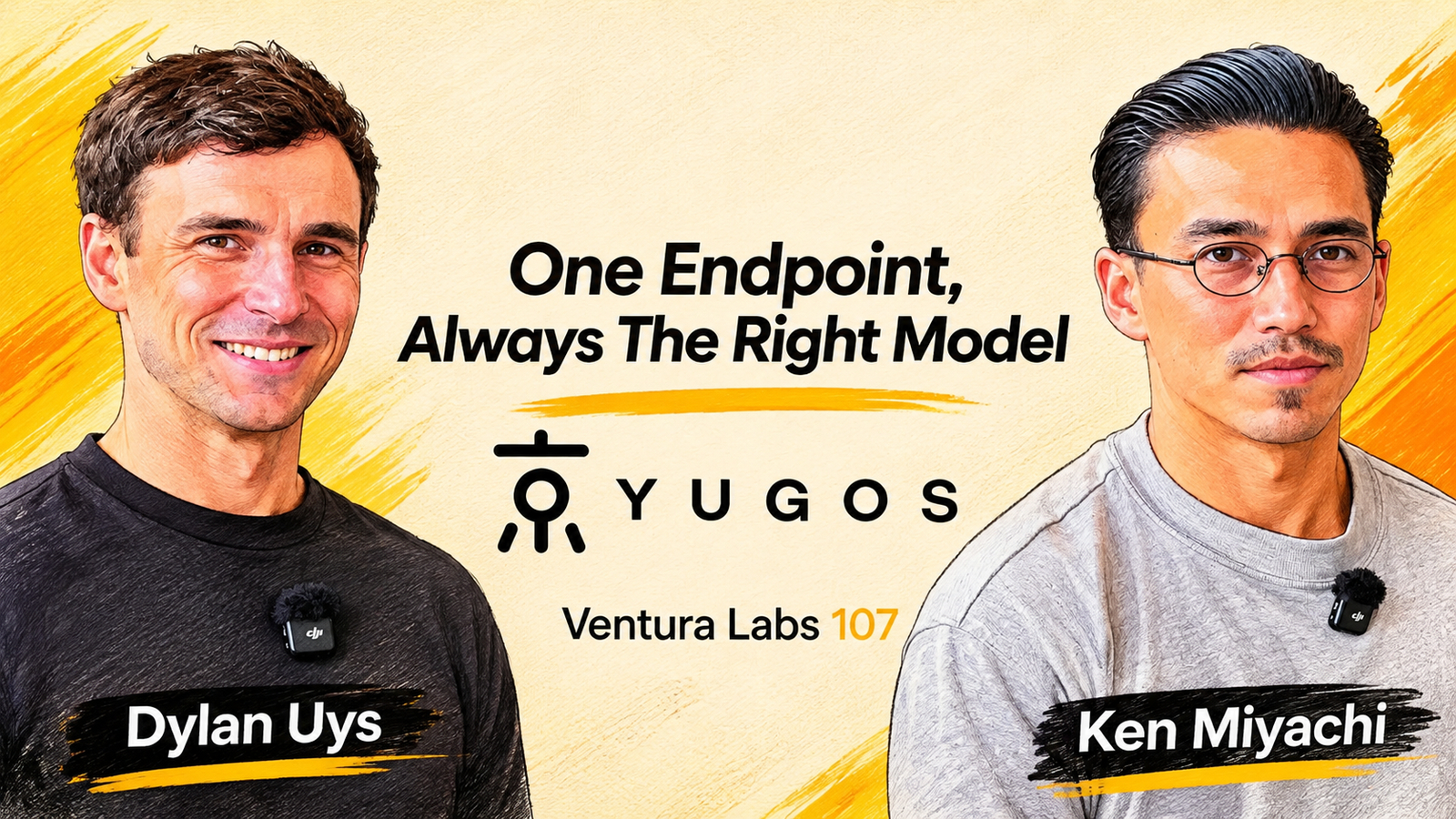
In a conversation with Ventura Labs, cofounders Dylan Uys and Ken Miyachi discussed the pivot from their earlier project (Bitmind), the challenges they faced, and how a competitive decision-model system can take the model-selection burden off developers.
From BitMind to Yugos
Before Yugos, the team ran BitMind, a subnet focused on detecting AI-generated and manipulated content.
They ran into two problems. First, many potential customers could not share the sensitive data needed to improve the system, which made sales cycles and feedback loops difficult.
Second, a growing number of users had simply started assuming online content was fake, reducing willingness to pay for detection tools.
The team took the routing experience they had already built inside BitMind and applied it to AI inference, which is a faster-growing problem.
What Yugos Is Building
Yugos is developing a competition for AI decision models that determine how a request should be handled.
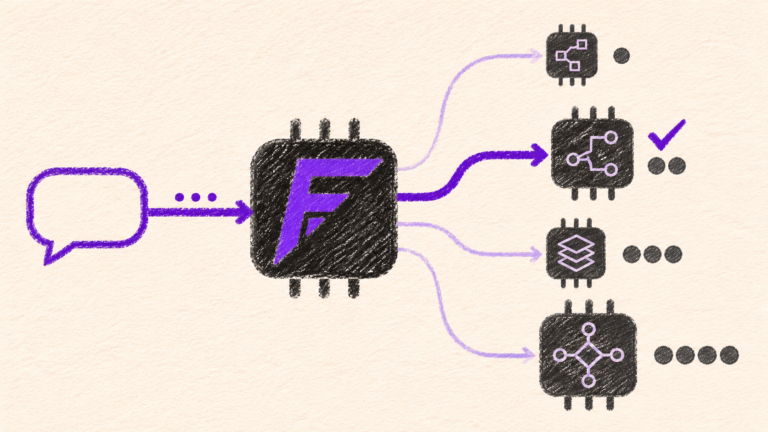
Instead of sending every prompt to the same model, a router can evaluate the task and select a suitable combination of:
1) Model: Which language model should handle the request?
2) Provider: Which inference provider should serve it?
3) Effort level: How much reasoning or processing should be used?
4) Harness: Which agent framework or execution setup is best suited to the task?
Yugos currently prioritizes intelligence, with cost and speed also included in its optimization process.
The founders also want to make the experience simpler than platforms that expose hundreds of models and providers. Most users, they argued, do not want to compare every available option. They want a reliable service that selects the best configuration for their task.
Different Users, Different Priorities
Not every user wants the same balance of intelligence, cost, and speed.
During the discussion, the founders outlined plans to expand Yugos into multiple router tracks that can optimize for different needs, including:
1) Intelligence-first routing
2) Cost- and speed-focused routing (useful for large numbers of agents)
3) Bittensor-provider-only routing
4) Open-source model pools
5) Privacy-oriented options (trusted execution or no-data-retention settings)
6) Local or on-device routing possibilities
The team also sees potential in local inference, where users can run models on their own hardware and route requests without relying entirely on cloud services.
Why AI Routing Is Becoming More Important
New models appear constantly, prices change, and performance can vary by provider.
A company that commits to a single model through a long-term contract could find itself locked into a less competitive option as the market evolves.
The founders described Yugos as a layer that can benefit from improvements across the entire model ecosystem. If a new model becomes faster, cheaper, or more capable, the router can potentially incorporate it into its decisions.
They also emphasized that Yugos is not trying to compete directly with major model developers. Its goal is to use their improvements to deliver a better experience for users.
The Business Strategy
The team plans to start with small enterprise tech teams and prosumers who already run heavy coding and agent workflows. The first job is to earn trust by delivering results comparable to leading models at lower cost.
From there, they see room to expand into application workflows, agent tools, managed services, and integrations.
They also stressed that pure API distribution is hard when established platforms already have users.
Monetization and Open Source
The founders said the subnet’s monetization approach is still being explored.
They discussed two potential models:
1) Closed-source routing models with an open-source application: The routing intelligence remains proprietary, while users can access the product through an application.
2) Open-source routing with a paid application layer: The routing solution is made available publicly, while the team monetizes the user experience and supporting services.
For now, the team intends to keep production routing models closed-source, with the possibility of releasing older versions later.
They noted that routing models can quickly become outdated as the underlying AI models change. This continuous need for updates could make the problem well suited to a subnet competition.
Token Spending and Efficiency
The podcast also explored whether AI token consumption could eventually plateau.
The founders expect token usage to keep increasing as businesses adopt AI and build more agent-driven workflows. However, they acknowledged that the industry still needs better ways to measure how much value a given amount of token spending actually creates.
Some AI work produces revenue-generating software, while other work involves experiments, failed ideas, or projects that are never used.
This is one reason the founders believe inference efficiency will become increasingly important. As AI usage expands, organizations will need to assess whether the cost of their AI systems is justified by the value they produce.
The Role of Bittensor
Building on Bittensor gives access to a growing set of inference providers and services that can be combined for better cost and performance.
The founders are interested in Bittensor-only tracks and in using network tools to protect proprietary routing models when needed.
On the broader pace of development, the founders supported moving quickly. They argued that AI is advancing so rapidly that Bittensor needs to experiment, iterate, and learn at a pace that can keep up with frontier AI labs.
They also stressed that speed should not come at the expense of security, particularly as cybersecurity risks grow.
What Comes Next
Yugos is still early in its development stage. The team is focused on improving the routers, expanding the set of competitions, building useful applications, and settling on a sustainable business model.
As models keep improving and teams rely on them more heavily, the hard part is no longer finding a capable model. It is choosing the right one for each task, every time, without the constant manual work.
➛ More on Yugos (SN34):
Enjoyed this article? Join our newsletter
Get the latest TAO & Bittensor news straight to your inbox.
We respect your privacy. Unsubscribe anytime.
Enjoyed this article?
Join our newsletter
Get the latest TAO & Bittensor news straight to your inbox — every morning before markets open.

No comments yet — be the first.