

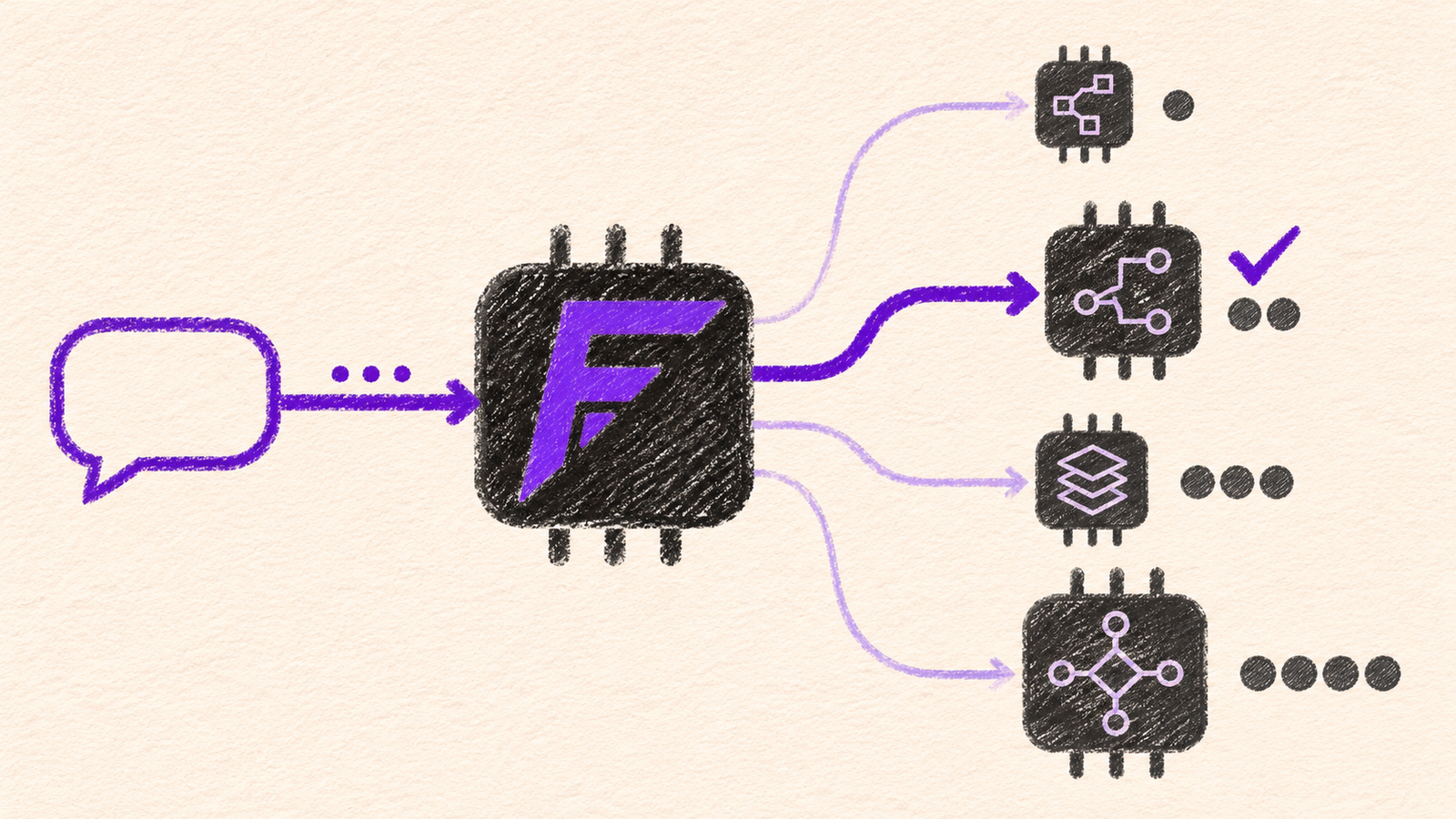
Using a powerful AI model for every request can mean paying premium prices for tasks that a cheaper option could handle.
Choosing a less expensive model creates a different concern: whether it can answer reliably when the question becomes difficult.
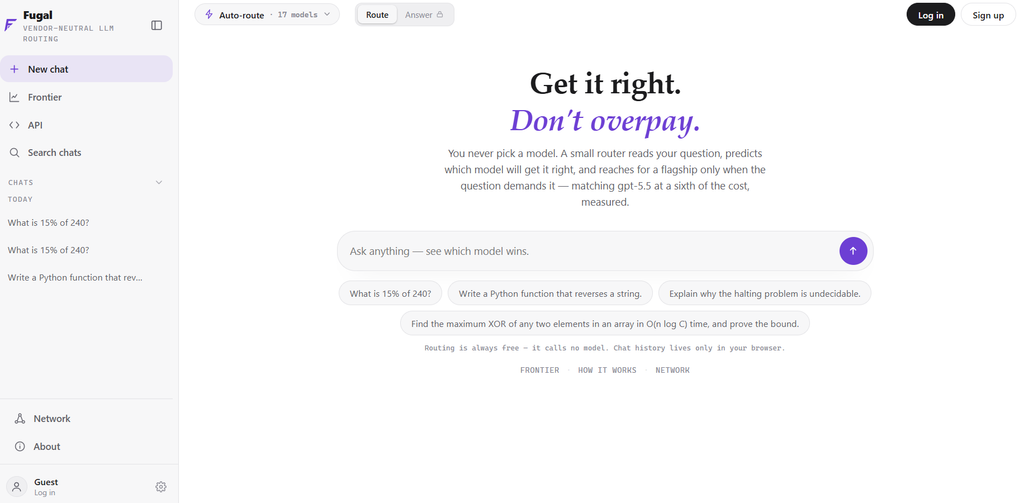
Fugal (SN70) aims to handle that decision automatically. The Bittensor subnet develops a router that examines each question and selects a model based on predicted accuracy and cost, helping users balance answer quality with affordability.
What Does Fugal Do?
Fugal provides a shared interface for accessing language models from different providers. Users submit a question without having to compare the available options or decide which one suits the task.
The platform offers two modes. Route mode shows predicted success probabilities and estimated costs without requesting an answer. Answer mode sends the conversation to the selected model and streams its reply.
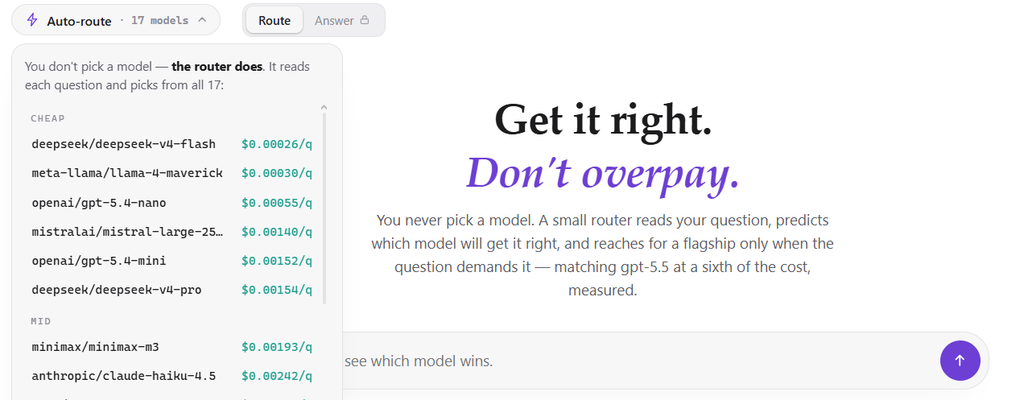
Users cannot choose a preferred model because Fugal automatically selects which provider will handle each submitted request. This suits people seeking automatic model selection but limits those who need to use a specific provider.
How Does the Router Work?
Fugal uses Qwen3-0.6B, a small language model, with a trainable layer that predicts how likely each candidate is to answer a question correctly. It combines those predictions with estimated prices to determine which model receives the request.
The team controls how strongly cost influences that decision. Giving price more weight encourages cheaper selections, while prioritising predicted correctness can justify a more expensive choice.
This balance reflects a product policy, so it does not represent a universally correct trade-off for every user.
The selected model receives one call, with no automatic retry or verification of its resulting answer. Fugal does not escalate requests to another model, so reliability depends on its initial routing decision.
What Does Fugal’s Research Show?
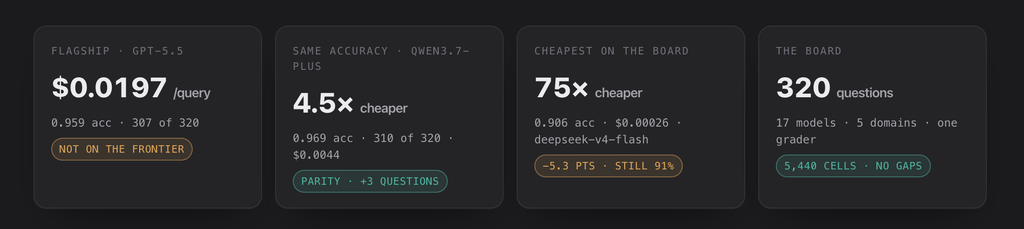
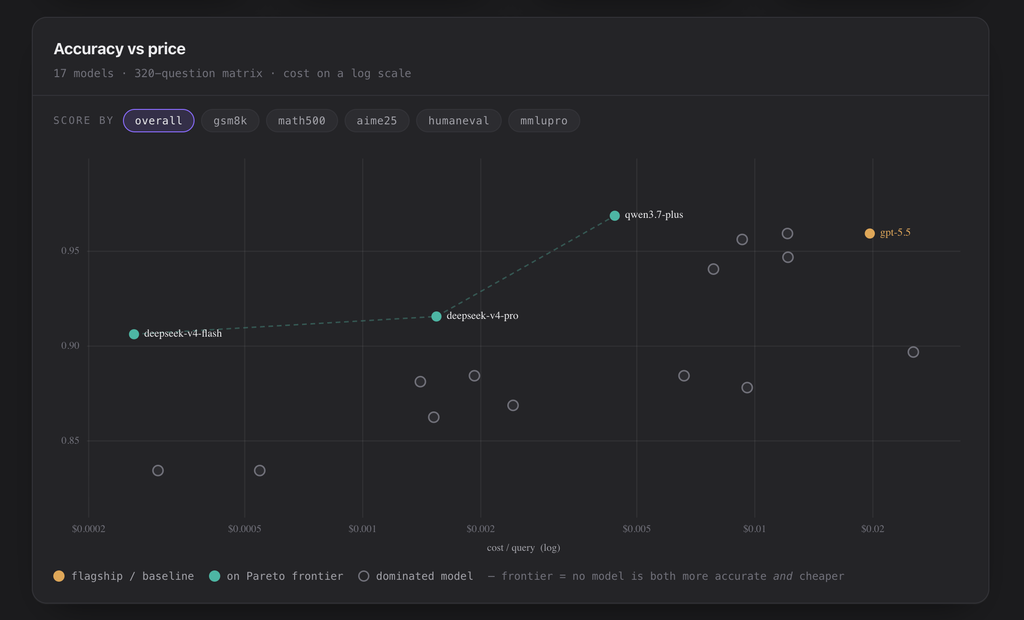
Fugal tested 17 models on 320 questions covering mathematics, coding and knowledge. Qwen3.7-Plus achieved 96.9% accuracy at $0.0044 per query, while GPT-5.5 scored 95.9% at $0.0197. Qwen answered three more questions correctly at roughly 4.5 times lower cost.
DeepSeek-V4-Flash delivered 90.6% accuracy at just $0.00026 per query, approximately 75 times cheaper than GPT-5.5. The findings show that a premium price does not automatically buy a better answer, and cheaper models can handle a substantial share of questions.
In a separate test on 110 fresh questions, Fugal’s router achieved 94.5% accuracy at $0.00285 per query, compared with GPT-5.5’s 96.4% at $0.0169. Fugal reduced average spending by approximately 83%, with the accuracy gap falling within the test’s statistical uncertainty.
Why Does Routing Across Providers Matter?
Model providers have a commercial incentive to keep requests within their own catalogues. Their business earns money when users run their models, giving them little reason to send a question to a competitor offering better value.
Fugal selects across providers. Its scoreboard shows the opportunity clearly, with Qwen delivering the highest measured accuracy and DeepSeek offering the lowest price. Access to both gives the router options that a single provider’s catalogue cannot offer.
Fugal makes that selection visible through predicted accuracy and estimated prices for each question. Bittensor extends the approach through miner competition, rewarding better routing decisions and generating fresh evidence for continued improvement.
Where Does Bittensor Fit In?
SN70 allows miners to compete by training routers that choose models based on each question and improve accuracy within a given spending budget.
Rewards depend on outperforming a fixed model or random mixture of models at the same cost, demonstrating the value of question-specific model selection.
Miners run evaluations inside Intel TDX confidential computing environments, pay for the model calls and submit hardware-backed proofs.
Validators verify those proofs and calculate scores, providing a way to assess submitted results without repeating the paid inference themselves.
Each evaluation cycle produces public records showing which models answered particular questions correctly and what those answers cost.
Miners can use this evidence to improve their submissions, connecting subnet competition with the data needed to train future routers.
How Can Users and Developers Access It?
Signed-in users receive a daily free allowance of 10 answers or $0.02 in model spending, whichever is reached first.
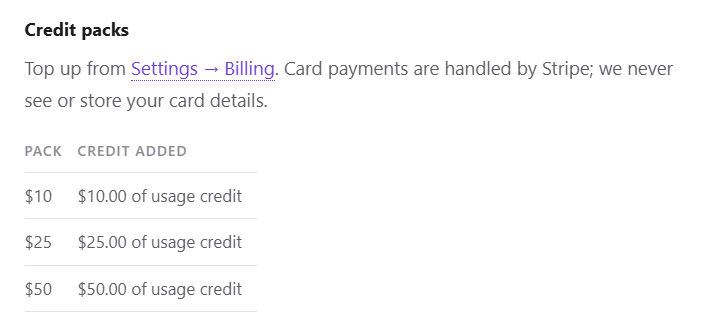
Routing decisions remain free and uncapped, while additional answers draw from prepaid credit packs of $10, $25 or $50, with no subscription or credit expiry.
Developers can connect through an OpenAI-compatible endpoint or an Anthropic Messages endpoint. The service supports streaming and tool calling, and its responses identify the model that answered. Listed exclusions include images, embeddings, batch processing and MCP.
Answer requests pass through OpenRouter to the selected provider. Guest chats remain in browser storage, signed-in chats are stored with account-level access controls, and using conversations for training requires an explicit opt-in. Users can also export or delete their chats.
Conclusion
Fugal targets a practical problem for AI users and developers, deciding how much capability a request needs before paying to answer it. Its reported evaluation suggests that selective routing can reduce spending, while leaving questions about performance across broader workloads.
The subnet’s longer-term value will depend on whether miner competition produces improvements that hold up as model capabilities and prices change. Sustained results on fresh tasks will provide stronger evidence of how well that approach works.
Useful Resources
Website: https://fugalai.com/
API Gateway: https://fugalai.com/api
Discord: https://discord.gg/ASefRAXR64
GitHub: https://github.com/fugal-ai/fugal-subnet
Enjoyed this article? Join our newsletter
Get the latest TAO & Bittensor news straight to your inbox.
We respect your privacy. Unsubscribe anytime.
Enjoyed this article?
Join our newsletter
Get the latest TAO & Bittensor news straight to your inbox — every morning before markets open.


No comments yet — be the first.