


Bittensor’s first halving cut daily emissions from approximately 7,200 to 3,600 TAO nearly a year ago. With TAO around $250, Subnet Summer Spaces 7 explored the contrast between price and ecosystem progress.
The discussion examined the road to 2027 through investment, builder, and infrastructure perspectives.
Five words captured the assessment. Revenue reflected rising commercial expectations, while fickle described shifting narratives and incentives. Change highlighted builders’ need for resilience, and discipline meant questioning what emissions supported. Expansion covered community growth, cross-chain access, and potential ETF liquidity, as the ecosystem extended its reach under growing pressure to deliver results.
Revenue was central to the investment discussion, with reported annualised ecosystem revenue rising from roughly $35 million to $50 million. Buybacks also began linking customer income to token demand. The trillion-dollar outlook for 2030 depended on capturing AI demand, particularly inference, where Bittensor’s subsidy-supported model could offer lower prices if quality and speed remain competitive.
Many heavy AI users remain unfamiliar with Bittensor’s products, making visibility a major challenge. Genomics researchers’ reactions to storage pricing showed how direct exposure can change perceptions. These “holy shit” moments give potential customers a concrete reason to engage, beyond broad crypto narratives.
Commercial claims need context, with storage volume, tokens processed, and paid usage providing evidence of traction. Burn-to-emission ratios also help assess buybacks relative to subsidies received. However, revenue flowing through private companies, fiat payments, and long-term contracts remains difficult to verify on-chain.
Builders had to adapt while pursuing larger ambitions. At Score (SN44), an adjustable manifest lets miners respond to new client tasks without rebuilding the incentive mechanism, while work expands toward larger generative world models and training runs. Subnet development also offered valuable experience in evaluation, validation, and incentive design under intense competition.
Root Reborn expanded validators’ responsibilities toward capital allocation and reward management, requiring clearer explanations to delegators. Weight-copying also highlighted the challenges of honest validation, where operators running the code and bearing its costs could be disadvantaged.
eTAO introduced flexibility around the traditional 41/41/18 emissions split, opening room for experimentation. However, forgoing owner emissions carries different weight when operators already hold large positions or benefit elsewhere. The concern was that revenue pressure could reward both real commercial success and its appearance.
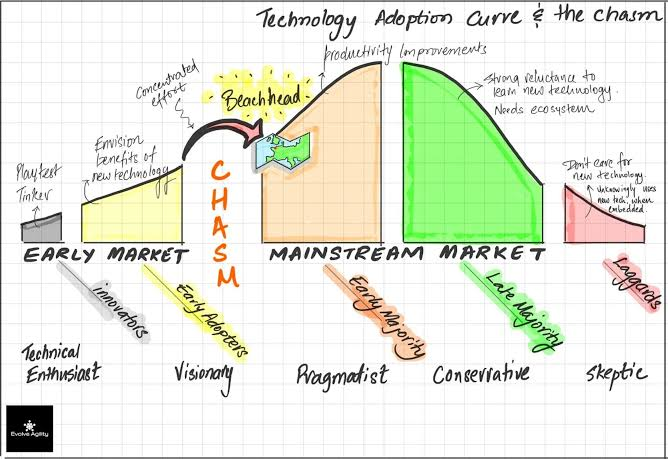
The panel balanced decentralization with the speed and accountability needed to deliver reliable products. For 2027, inference offered a marketing beachhead, drawing on Crossing the Chasm. A clear commercial win could build recognition and strengthen TAO demand, potentially benefiting the wider network.
Better coordination could bring inference, storage, and other subnet services into complete applications that customers use without understanding Bittensor. The year revealed a more commercially focused and adaptive ecosystem, whose next test is converting technical advantages into sustained demand and stronger links between revenue and token value.
Enjoyed this article? Join our newsletter
Get the latest TAO & Bittensor news straight to your inbox.
We respect your privacy. Unsubscribe anytime.
Enjoyed this article?
Join our newsletter
Get the latest TAO & Bittensor news straight to your inbox — every morning before markets open.



No comments yet — be the first.