

xTAO Inc. released its Winter 2026 Investor Deck, outlining its financial performance, validator operations, and long-term investment thesis for Bittensor.
The 35-slide presentation highlighted ~63,242 TAO in holdings, $321,000 in quarterly revenue, and the company’s strategy for generating income through the network.

The publicly traded company is listed as XTAO.U on the TSX Venture Exchange and XTAIF on OTC Markets.
The presentation also compared xTAO with other investment options offering exposure to Bittensor, including TAO Synergies, TaoWeave, Grayscale Bittensor Trust, and direct TAO ownership.
xTAO’s Financial Performance
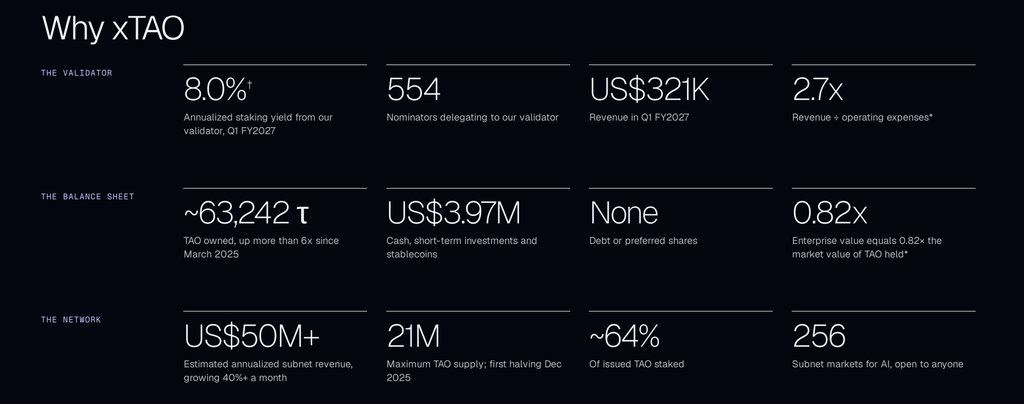
As of September 25, 2026, xTAO held approximately 63,242 TAO, representing more than sixfold growth from roughly 10,032 TAO in March 2025.
For the quarter that ended June 30, the company generated $321,000 in staking revenue from 1,226 TAO earned, representing a historical annualized yield of approximately 8%.
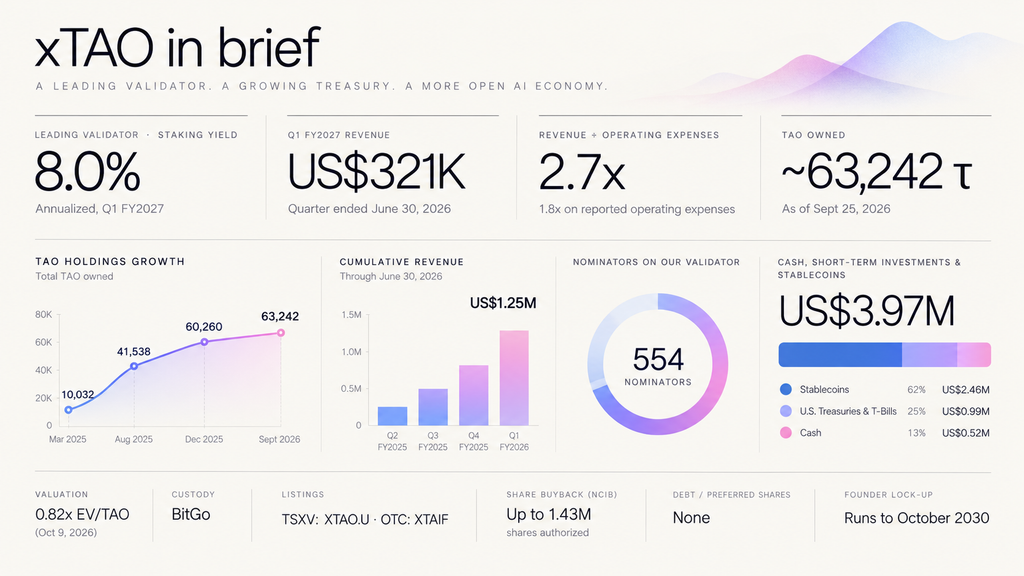
The company also reported that revenue covered adjusted operating expenses by 2.7 times, with an adjusted operating margin of 49.8%.
Its liquidity reserve stood at approximately $3.97 million, providing resources to fund operations without necessarily selling its TAO holdings.
How xTAO Generates Revenue
xTAO operates a validator on Bittensor, earning rewards by staking TAO and participating in the network’s validation process.
It also accepts delegated stake from other holders, with 554 nominators and ~66,700 TAO delegated through its validator as of October 11, including its own holdings.
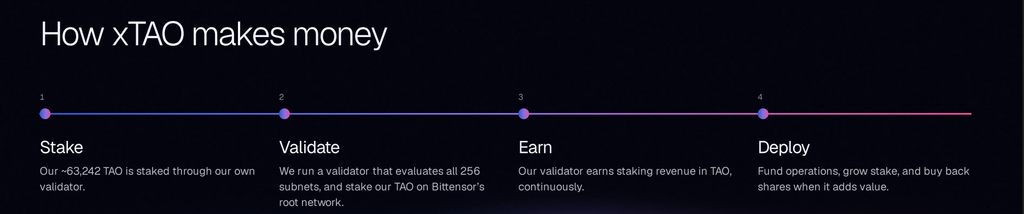
The company intends to expand beyond staking through API and infrastructure services that connect businesses and developers with Bittensor products.
These services remain under development, while staking continues to provide its established revenue.
How xTAO Compares With Other TAO Investment Vehicles
A significant part of the investor deck compares xTAO with TAO Synergies, TaoWeave, Grayscale Bittensor Trust, and direct TAO ownership.
The comparison focuses on valuation, staking revenue, operating efficiency, and potential shareholder dilution.
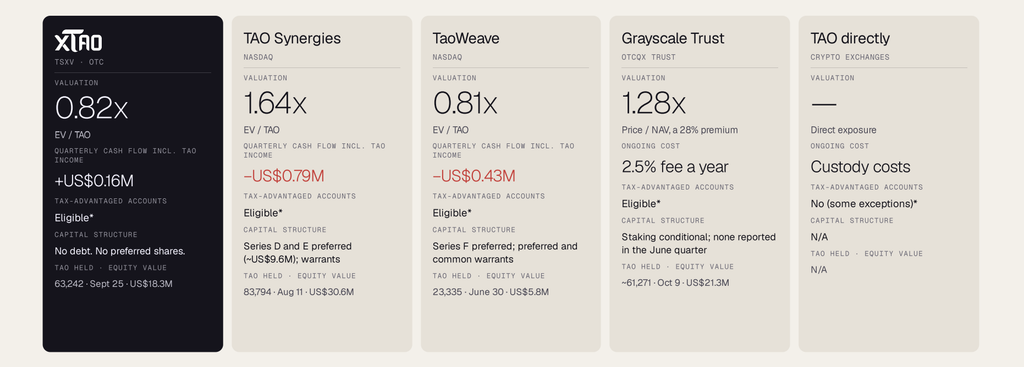
xTAO highlighted an enterprise-value-to-TAO ratio of 0.82x based on October 9 market prices, suggesting its enterprise value was below the market value of its TAO holdings.
The company also emphasized its debt-free capital structure, absence of preferred shares, and comparatively limited potential dilution from outstanding options.
Unlike holding TAO directly, investing in xTAO provides exposure through a company that operates a validator and generates staking revenue.
However, shareholders also face company-specific risks, and the deck’s comparisons do not establish that xTAO is necessarily a better or cheaper investment than other options.
Share Buybacks and Capital Management
xTAO has authorized a share buyback program covering up to approximately 1.43 million common shares. The company intends to repurchase shares when management considers doing so beneficial to existing shareholders.
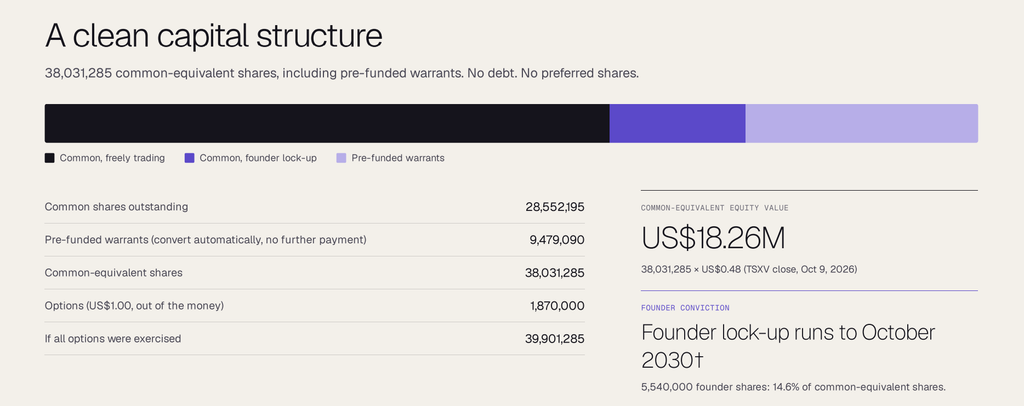
Its capital structure includes approximately 28.6 million common shares, 9.5 million pre-funded warrants, and 1.9 million outstanding options.
Founder shares representing approximately 14.6% of common-equivalent shares remain locked until October 2030, supporting the company’s stated focus on long-term alignment.
xTAO’s Bittensor Investment Thesis
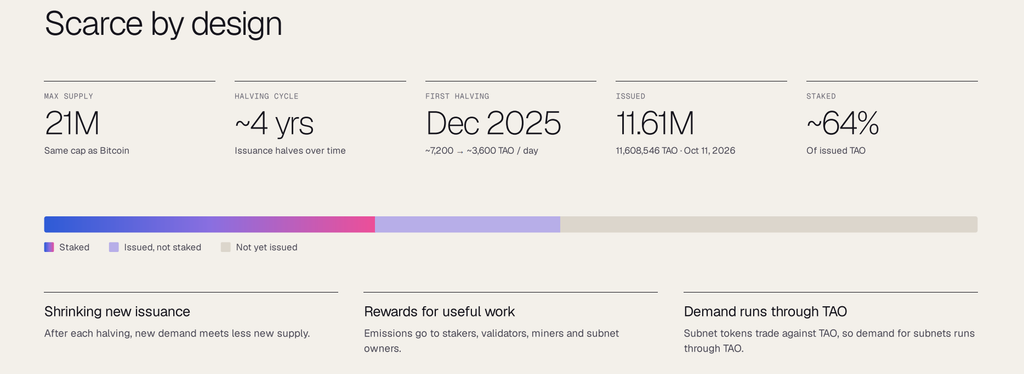
The presentation positions Bittensor as an alternative to centralized AI infrastructure, where specialized subnets compete to provide services such as AI inference, GPU computing, and data processing.
xTAO argues that growing demand for these services could support the network’s long-term development.
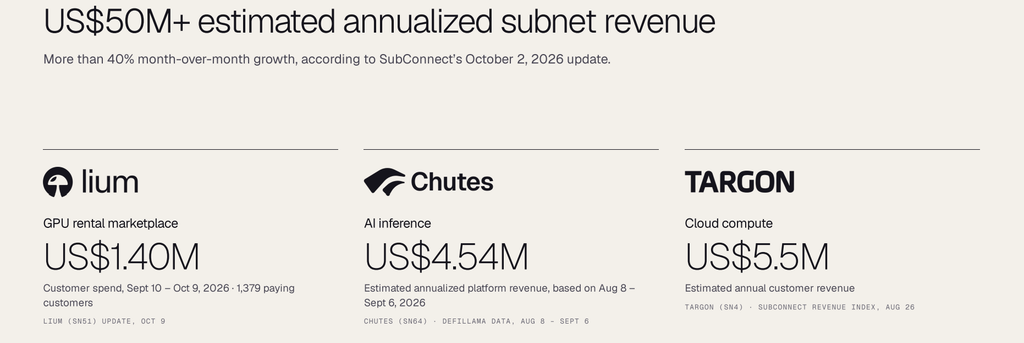
The deck cites estimated annualized subnet revenue exceeding $50 million, based on third-party October 2026 figures.
It highlights Lium (SN51), which reportedly generated $1.40 million in customer spending over approximately 30 days, alongside Chutes (SN64) and Targon (SN4) as examples of commercial activity across the ecosystem.
What Comes Next for xTAO?
xTAO intends to strengthen its validator operations, attract additional delegated stake, maintain its liquidity position, and develop new infrastructure services.
Its strategy combines earning network rewards with managing its TAO treasury and shareholder capital.
The company remains exposed to TAO price volatility, changes to Bittensor’s reward mechanisms, validator performance, and potential future dilution.
Its Winter 2026 Investor Deck presents a business seeking to benefit from Bittensor’s growth while offering public-market investors an alternative to owning TAO directly.
➛ Access the xTAO Investor Deck Here.
Enjoyed this article? Join our newsletter
Get the latest TAO & Bittensor news straight to your inbox.
We respect your privacy. Unsubscribe anytime.
Enjoyed this article?
Join our newsletter
Get the latest TAO & Bittensor news straight to your inbox — every morning before markets open.


No comments yet — be the first.