

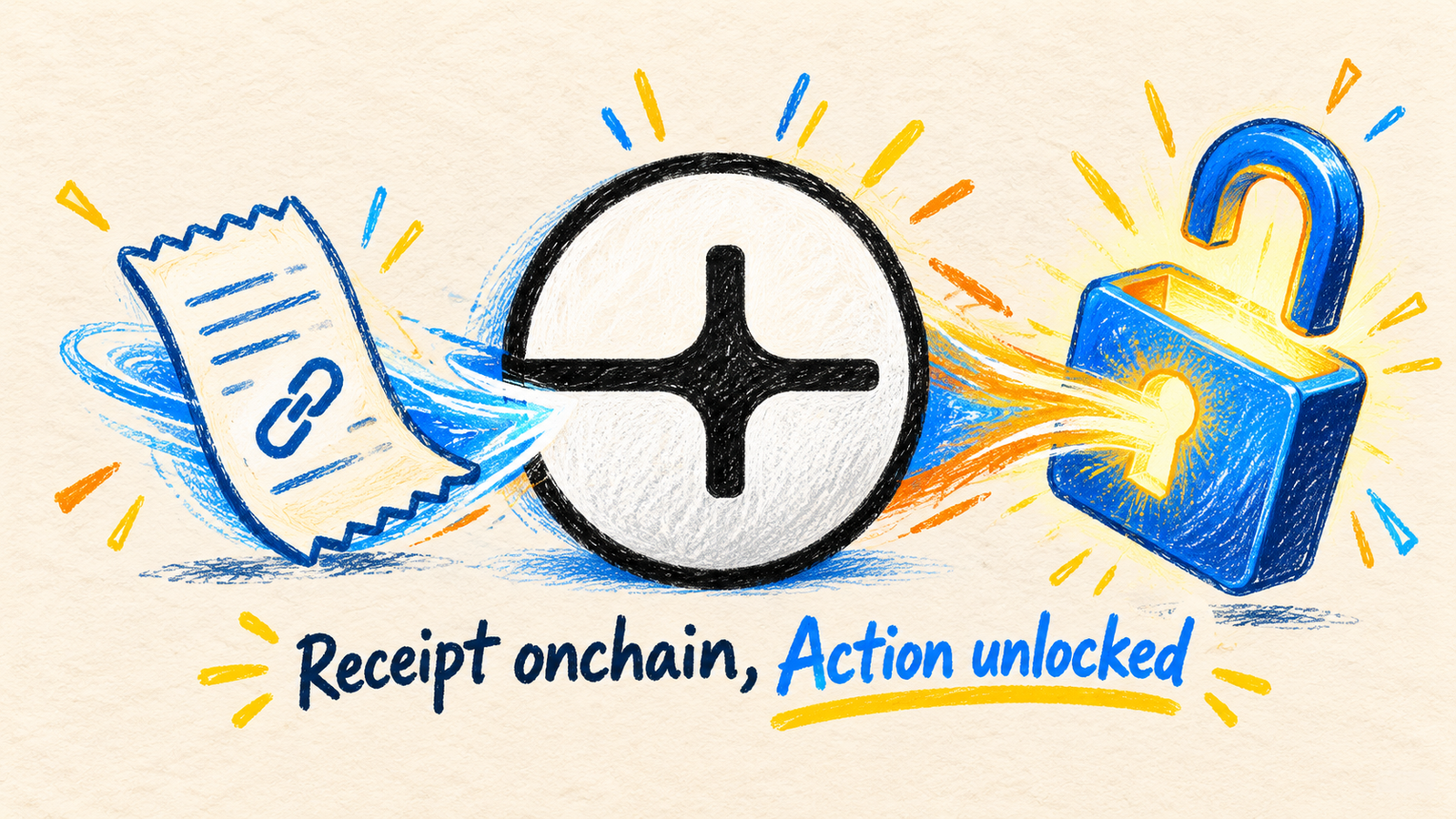
Imagine paying for a dataset, only to discover that the files never arrived. Or running an AI workflow that moves to the next step before the required data has been delivered.
Beam (SN105) is tackling this problem with its Bittensor EVM integration. The update lets developers put transfer records on-chain so smart contracts and applications can act on the reported outcome.
What the Integration Does
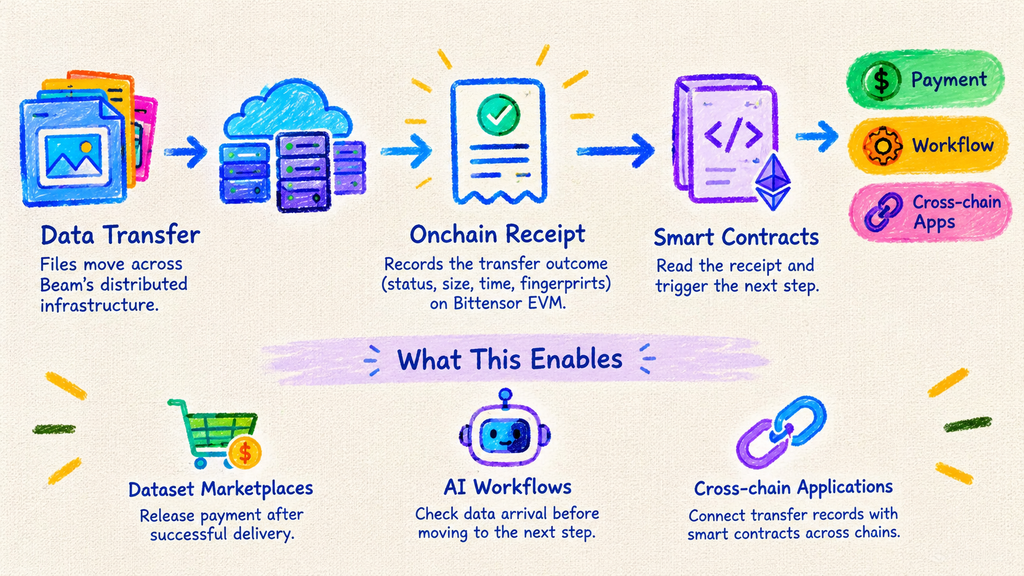
Moving data is only part of the job. Applications also need to know whether a transfer succeeded, how much data arrived, and when it was completed.
Beam’s integration makes this information available on-chain through delivery receipts. These receipts contain transfer metadata, not the files themselves.
Each receipt can record:
1) Transfer status: Whether the transfer succeeded or failed.
2) Data size: The number of bytes moved.
3) Completion time: When the transfer finished.
4) Fingerprints: Metadata used to identify or reference the transfer.
This allows applications to access transfer records without storing entire files on the blockchain.
Receipts rely on information reported by Beam. Standard (Level 1) receipts use Beam’s reporting, while receipts for transfers involving Rooms can include evidence signed by the target, adding confirmation from the receiving side.
Each receipt costs one credit, charged only when the receipt is recorded.
Two Ways to Record Delivery
Beam gives developers two options for creating receipts:
1) Automatic receipts: Developers can enable receipt recording through a console setting, allowing receipts to be created for every transfer.
2) On-demand receipts: Approved contracts or wallets can request receipts when a particular transfer needs to be recorded.
Setup requires a read-only API key registered through Beam’s console and credits are charged only when a receipt is recorded.
Developers should understand what the evidence supports before using receipts to automate payments or other decisions. A record of a reported transfer does not independently prove that the file contents are correct, complete or usable.
What Developers Can Build With It
Beam highlights several potential uses:
1) Dataset marketplaces: Release payment after a receipt confirms that a dataset was successfully delivered.
2) Automated AI workflows: Check that required data has arrived before allowing a workflow to proceed to its next step.
3) Onchain coordination: Use delivery status, data size and completion time to trigger contract logic or coordinate actions between applications.
These are potential applications, not claims that Beam has already launched each product.
The broader idea is straightforward. When an application can read a delivery receipt onchain, it can use that result to decide what happens next, including whether to release payment or continue an automated process.
Why Bittensor EVM Is Part of the Picture
Bittensor EVM supports Ethereum-compatible smart contracts and familiar developer tools, with TAO as its native currency.
This gives builders a practical way to link Beam’s data-transfer records to programmable actions without learning an entirely new environment.
A marketplace, for example, can check a transfer receipt before releasing payment. The contract acts on the recorded status while the dataset itself remains offchain.
By connecting data-transfer records to smart contracts, Beam gives developers a practical building block for applications that can coordinate data delivery, payments, and AI workflows automatically.
For the full technical details, including the receipts contract address and setup steps, see the official Beam documentation.
Read more of our earlier coverage on Beam below:
Enjoyed this article? Join our newsletter
Get the latest TAO & Bittensor news straight to your inbox.
We respect your privacy. Unsubscribe anytime.
Enjoyed this article?
Join our newsletter
Get the latest TAO & Bittensor news straight to your inbox — every morning before markets open.


No comments yet — be the first.