


Zipcode (SN46)‘s uses the Serotonin State of On-Chain Credit coverage as the framework for a walkthrough of where the product sits today. The stream covered the Zipcode Finance credit warehouse launching by the end of July, the SDK audit already in progress with Octane, and the curator competition positioning the subnet as a Bittensor-inside-Bittensor for credit products.
Zipcode is on the precipice of $1-$3 Million in its first case study vault, with the incentive mechanism directing rewards purely to lenders rather than splitting them across owner and validator layers. The stream closed with a mapped-out path to deflationary token economics and a preview of Ditto v2 as a generative-UX company harness attacking memory as the moat.
Where The Stream Landed On Product, Economics, And Harness
The stream moved through Zipcode Finance’s launch mechanics, the curator competition, the deflationary path, and the Ditto v2 memory harness that ties into the broader stack.
1. Zipcode Finance Is The Credit Warehouse Launching By The End Of July: A Morpho-Midnight-style launch with the code already written, audited by Octane, and documented for third-party curators to use.
The first vault is a 90-day proof of concept that unlocks the broader curation model.
2. The Subnet Incentivizes Lenders Directly Rather Than Splitting Rewards Across Curator, Borrower, And Lender: Bittensor’s standard split (owner 20%, validator 40%, miner 40%) is replaced with a model that sends the full incentive to lenders.
Curators benefit through the vaults they create attracting more capital and more borrowers.
3. Any Curator Can Build A Vault Using The Zipcode SDK: A vault is a credit product (car loans for a specific age bracket, HELOC at a specific credit score, and so on) that any fintech or mortgage brokerage can plug into. Gauntlet, Steakhouse, and other curators are the target participants.
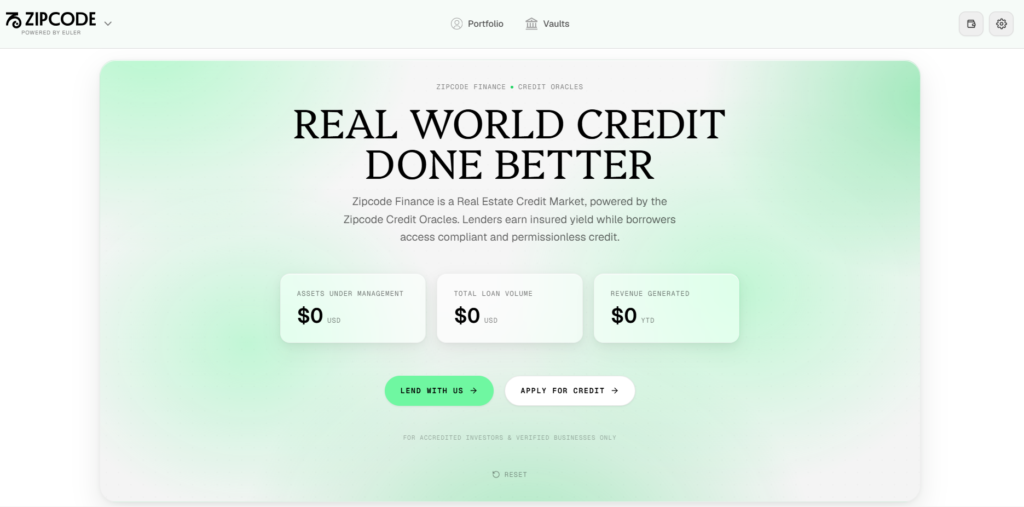
4. Zipcode Finance Is The First Curator On The Zipcode Network: The team is dogfooding the product to prove the vault economics before opening curation to third parties. Alpha Growth and other curator specialists are being onboarded through a whitelisted structure.
5. The Serotonin Article Puts Zipcode Alongside 3Jane, Cap, and Maple: Recognition from the DeFi research ecosystem is arriving, and the article covers the collateral-to-credit-oracle progression from the Resi origin story through the current network architecture.
6. Real Estate Is Still The Target Market Despite The Rebrand: The RESI holding company name stays, and the two things that matter in real estate (settling transactions and financing deals) are still the focus. HELOC (Home Equity Line of Credit) is the near-term origination target, with Figure Network cited as a friendly benchmark rather than a competitor.
7. Figure Network’s 120 Basis Point Saving From Using The Blockchain Is The Case Study: Processing HELOC loans on-chain saves 120 bps at the operational layer, and Zipcode is targeting the same efficiency gain across its curator network. 2008-style opacity is the historical anti-pattern the team is deliberately avoiding.
8. The Deflationary Path Is Programmed, Not Speculative: Early days pay a revenue multiple in incentives (potentially 3x revenue in year one), decaying toward 1x at the next halving in October 2027, then dropping to 0.5x and 0.1x over subsequent years. When incentive-per-dollar-of-revenue falls below 1x, the subnet is structurally deflationary.
9. Zipcode Aligns With The New Bittensor Emission Rules That Penalize Burn: Under the recent spec change, subnets that burn miner incentives lose network $TAO emission. Zipcode’s model incentivizes revenue-generating vaults instead of burning, which qualifies the subnet for higher chain emission and better price support.
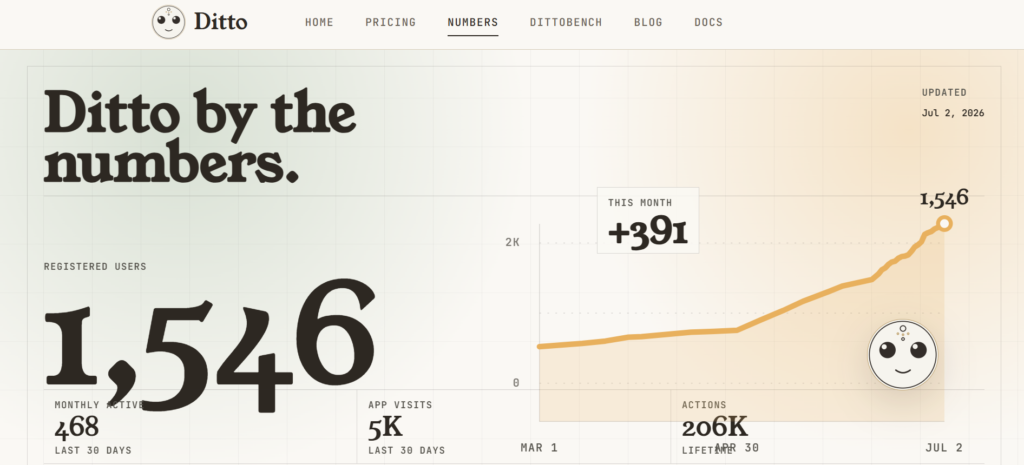
10. Ditto v2 Attacks Memory As The Harness, Not The Model: Rather than competing on frontier model performance, Ditto v2 positions memory and generative UX (User Experience) as the differentiator. Ditto’s memory system has proved itself as a viable alternative, with an incentive mechanism launching soon to hand harness improvement off to miners.
What Zipcode Is Building Toward
The arc across Zipcode Network, Zipcode Finance, Zipcode AI, and Ditto v2 is a decentralized credit infrastructure play with a memory-native front end. Zipcode Finance opens the credit warehouse with a first vault, the SDK unlocks third-party curators, and the incentive mechanism rewards revenue-generating vaults rather than burning emissions.
The deflationary path is mapped through the next halving, and the alignment with the new Bittensor spec rules means the subnet’s economics work with the network rather than against it. Ditto v2 sits on top as the personal and company harness tying the memory layer to the credit and AI infrastructure underneath. For anyone tracking where DeFi credit meets Bittensor incentives, this stream was the clearest single-source view of what the team is building.
Enjoyed this article? Join our newsletter
Get the latest TAO & Bittensor news straight to your inbox.
We respect your privacy. Unsubscribe anytime.
Enjoyed this article?
Join our newsletter
Get the latest TAO & Bittensor news straight to your inbox — every morning before markets open.

No comments yet — be the first.