

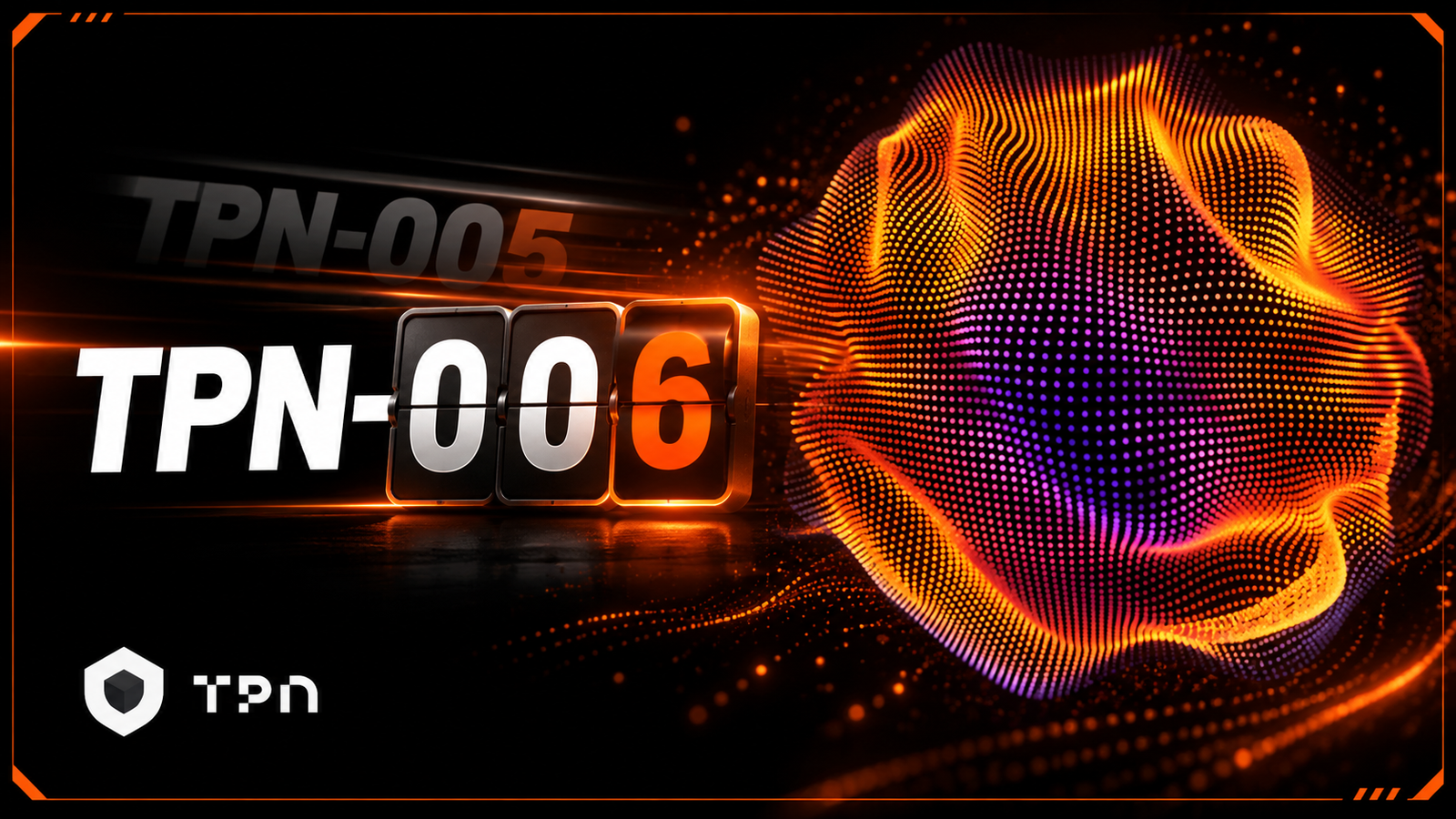
TPN (SN65) has demonstrated how artificial intelligence models can become significantly smaller while improving their performance. In its fifth competition, the project successfully reduced the size of an 8 billion parameter language model by 57.4% while increasing its general knowledge score.
TPN (SN65) is a decentralized AI optimization network that uses competitions to develop more efficient AI models capable of running on everyday hardware. The project allows miners to compete in improving existing models based on specific requirements, including memory usage, accuracy, and performance.

Its fifth competition, TPN-005, challenged miners to optimize Ministral-3-8B-Uncensored, an AI model originally occupying approximately 17GB of storage. The objective was to make the model run within an 11GiB memory limit while maintaining strong general knowledge capabilities, making it more practical for use in chat applications on consumer computers.
Three finalists successfully met the memory requirement and achieved higher evaluation scores than the original model. The winning submission, TPN005-K11, reduced the model’s storage size to approximately 7.2GB and required just 10.98GiB of memory during operation.
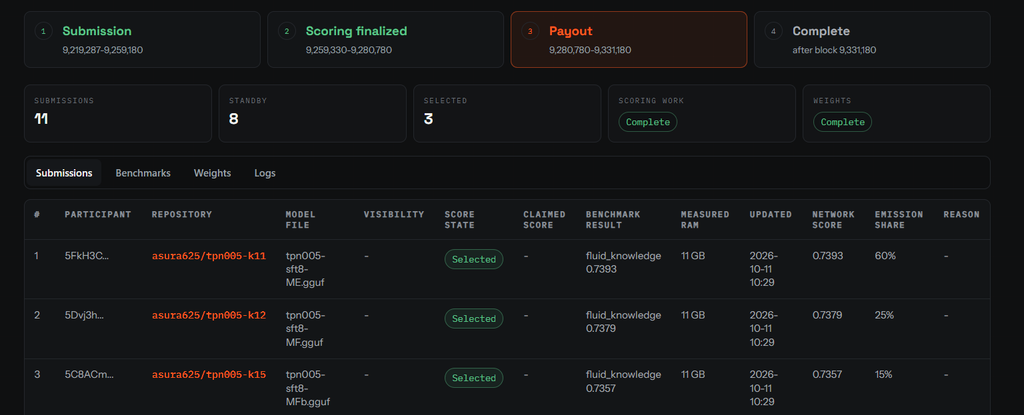
Despite being 57.4% smaller, the winning model scored 73.93% on TPN’s general knowledge benchmark, compared with 66.57% for the original model. This represented a 7.36% point improvement, with the strongest gains recorded in language understanding, constructed systems, and knowledge of society.
To evaluate submissions, TPN used Fluid_Knowledge, a private benchmark designed to assess general knowledge across seven categories. Each evaluation involved 1,400 questions generated by advanced AI models, with the questions kept hidden during the competition to prevent participants from training directly on the test material.
The competition also used TPN’s verification system, which allows miners to test their models through TPN Bench and submit evaluation records for verification. After each competition concludes, the benchmark questions and supporting evidence are published to allow independent verification of the results.
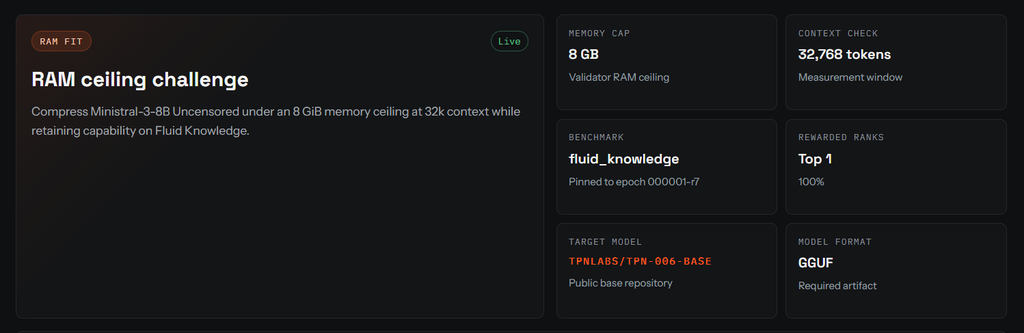
Following the success of TPN-005, TPN launched its sixth competition, TPN-006, introducing an even stricter memory requirement. Miners must now optimize the same model to operate within 8GiB of runtime memory while supporting a context window of ~32,000 tokens. The competition follows a winner-takes-all format, with the winning submission receiving the full 25% emission weight allocated to the round.
These improvements could make capable AI models accessible to more people by reducing the hardware needed to run them. Smaller models can operate on a wider range of consumer devices, allowing users to access AI tools locally without relying entirely on cloud services while offering greater control over their data.
For TPN, the results demonstrate how decentralized competition can help improve the efficiency of existing AI models without necessarily increasing their size. With TPN-006 underway, the next challenge is determining whether miners can deliver similar performance improvements under an even tighter memory limit, bringing capable local AI closer to everyday users.
➛ Explore TPN-006 Here.
Enjoyed this article? Join our newsletter
Get the latest TAO & Bittensor news straight to your inbox.
We respect your privacy. Unsubscribe anytime.
Enjoyed this article?
Join our newsletter
Get the latest TAO & Bittensor news straight to your inbox — every morning before markets open.



No comments yet — be the first.