

Minos (SN107) joined Novelty Search E079 to explain how Bittensor’s miner-validator structure solves one of genomics’ oldest bottlenecks: only seven fully sequenced human genomes exist to validate mutation detection tools against.
The subnet went live May 1 and generates a new challenge genome every 72 minutes with hidden mutations, letting miners identify them and validators score via hap.py, an FDA-developed benchmark.
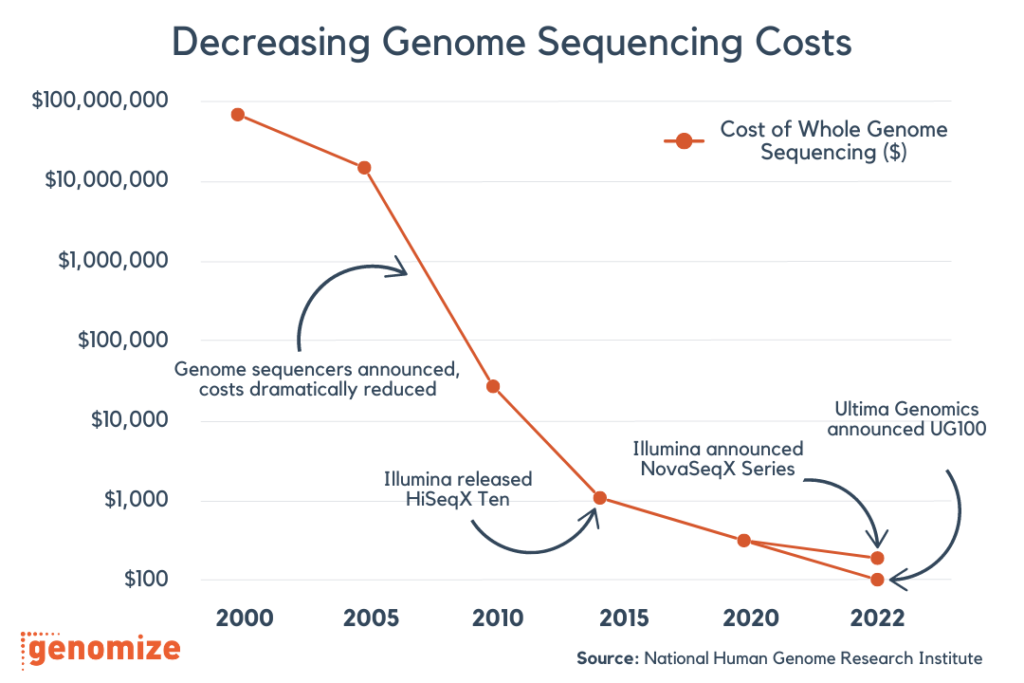
Sequencing costs have collapsed from $100 million to $100 over two decades, and genomic data is now arriving faster than the field can analyze it. Two chromosomes are mapped, results head to peer-reviewed publication and the ASHG conference in Montreal this November, and the model already found flaws in a tool the field trusted for seven years.
Ten Things to Pick From the Conversation
The Space moved through the scientific rationale, the subnet architecture, and the concrete results from the first two months live.
1. Minos is building a decentralized genomics evaluation engine on Bittensor. The subnet targets the foundational layer of genomics by identifying every possible mutation in the human genome, then combining that with protein and drug data to power personalized medicine at scale.
2. DNA sequencing is no longer the bottleneck. Sequencing collapsed from $100 million and 10 years to $100 and hours over two decades. The new bottleneck is analyzing what all that genomic data actually means, and the current tools were never built to handle the coming flood.
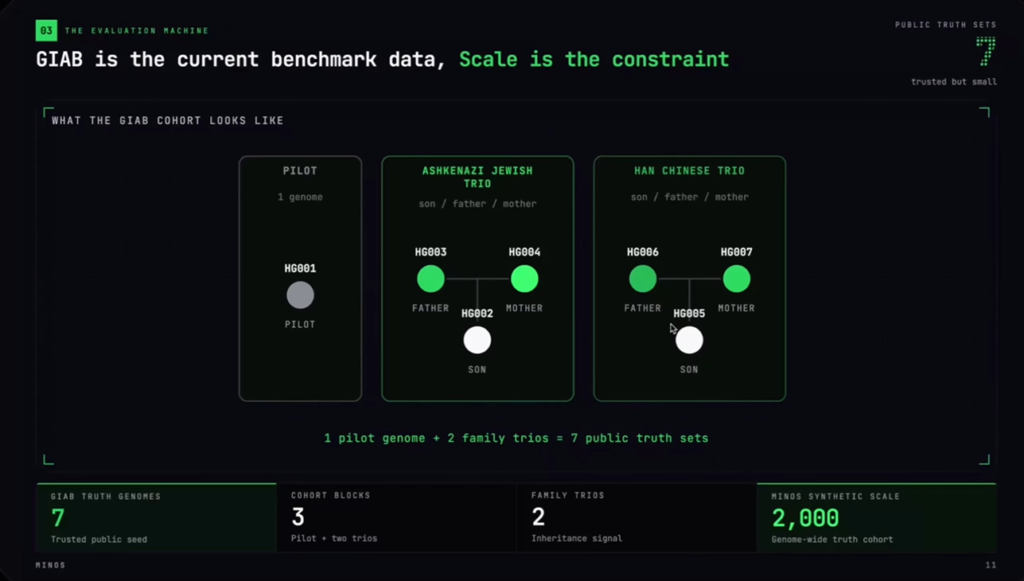
3. Only seven fully sequenced human genomes exist as ground truth today. The Genome in a Bottle consortium validated seven samples in 2017 (one European Utah pilot, three Ashkenazi Jews, three Han Chinese). Every mutation detection algorithm currently in production is trained and overfit on those seven.
4. Helix Forge generates synthetic challenge genomes every 72 minutes with hidden mutations. The team creates digital twins of the seven baseline samples with mutations injected at known positions, giving miners raw sequencing data indistinguishable from a real machine’s output but with a hidden truth set the validators can score against.
5. Miners choose from four state-of-the-art variant-calling tools and optimize the hyperparameters. These include DeepVariant (Google DeepMind), GATK (Broad Institute), BCFtools (community-driven), and previously Freebase.
Winners are decided by which combination of tool and configuration finds the injected mutations with the fewest false positives, and every 72-minute round crowns a new top miner.
6. Validators reproduce the miner’s work using hap.py, an FDA and NIST benchmark from 2016. The validator takes the same raw genome, runs it through the exact software configuration the miner claims to have used, and confirms the output matches. The top miner gets 90% of the emission for that round, with the remaining 10% distributed across the top 20 to keep them iterating.
7. Miners rejected the expected winner (DeepVariant) and converged on GATK. DeepVariant is a convolutional neural network trained on the seven ground truth samples and it outperforms other tools in published benchmarks. But it is overfit to those seven, so miners could not win rounds with it and moved to GATK, a hidden Markov model with Bayesian components that gives them the tuning room to attack novel synthetic genomes.
8. Freebase was retired after adversarial miners exposed a loophole nobody had found in seven years. In the first week, miners hit scores of 0.99 and 1.0 using Freebase. The team investigated the code and found the tool assumed honest researcher behavior and had never been tested adversarially. Published scientific literature over seven years may have unknowingly leveraged the same quirks.
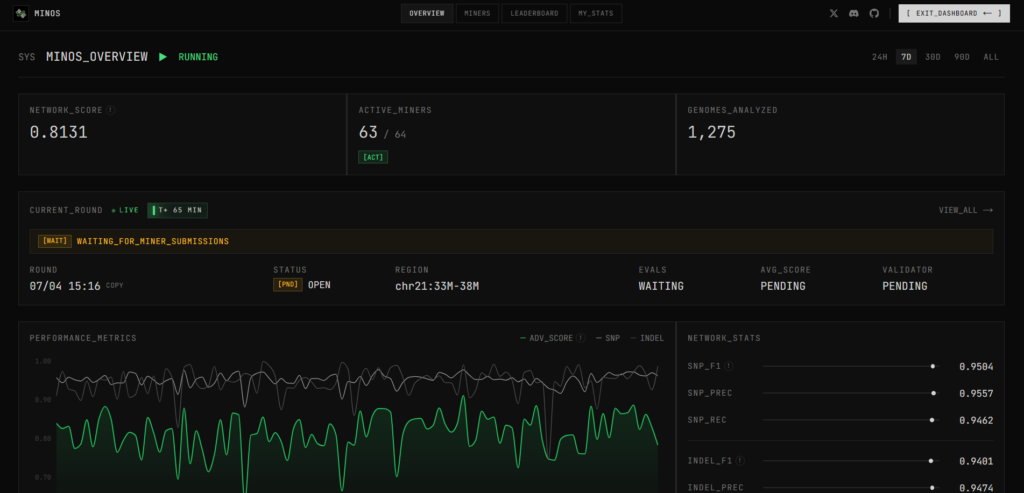
9. Scores went from 0.63 (default settings) to 0.88 (top ten miners) on chromosome 21 in weeks. The default settings that 99% of labs use produce an average score of 0.63. Miners have tested over 3,000 unique hyperparameter combinations across chromosomes 20 and 21, and the top ten are now hitting 0.88 while cutting false positive rates from the ~5,000 baseline toward 4,000 and lower.
10. Six validators now peer-review every 72-minute round. Crucible Labs joined recently, Kraken joined three days before the Space, and every miner submission is cross-validated by six independent parties. Traditional academic peer review takes months to years. Minos runs a full peer review cycle every 72 minutes, and the results head to peer-reviewed publication plus ASHG in Montreal in November where 7,000 human geneticists will see the work.
The Structural Case for Genomics on Bittensor
Scientific work has always been a peer review problem, and Bittensor’s miner-validator structure solves that problem structurally rather than through goodwill. In a typical lab, the same person generates data, runs the mutation detection, and validates the results before submitting a 99% accuracy claim nobody can independently verify.
Bittensor separates those roles into different economic actors with different incentives, which is exactly what the scientific revolution set out to do in the 1600s and never fully achieved.
Chromosomes 20 and 21 are mapped, chromosome 22 is next, and the roadmap runs through the full autosome set before extending to sex chromosomes.
For anyone tracking subnets that clearly earn their emission through work outside the network, Minos is one of the examples of what that looks like at scale.
Enjoyed this article? Join our newsletter
Get the latest TAO & Bittensor news straight to your inbox.
We respect your privacy. Unsubscribe anytime.
Enjoyed this article?
Join our newsletter
Get the latest TAO & Bittensor news straight to your inbox — every morning before markets open.

No comments yet — be the first.