

Targon has provided compute credits to Cascade (Bittensor subnet 91), the first team from Bitstarter’s ML track, to support the launch and research of the subnet.
Cascade is building a time-series forecasting subnet where miners submit programs that generate synthetic training data. Each submission is used to train a forecasting model, with validators measuring which generated data produces the best forecasts.
Cascade is also developing the forecasting decoder separately, allowing the subnet to improve both the data-generation and model sides of the system.
The Targon credits enabled Cascade to train 184 models across 24 experiment groups in roughly nine days. The experiments produced several findings that will guide the next version of Cascade’s forecasting decoder.
One of the strongest results came from combining multiple synthetic-data generators. A mixture of four diverse generators outperformed the best individual generator, with gains of roughly 3.8% versus 2.25%, and won all nine paired comparisons.
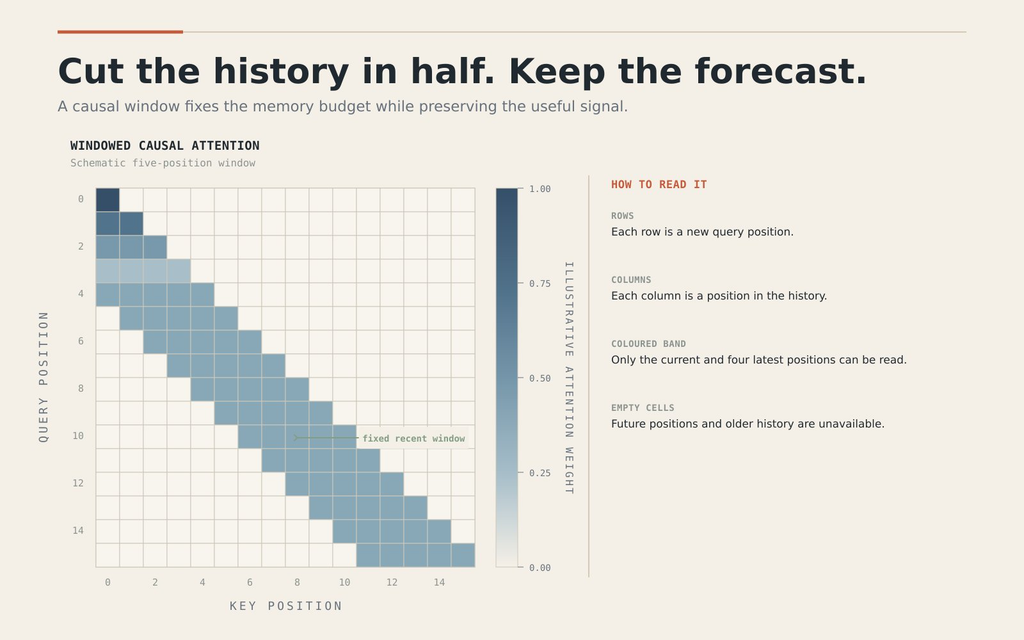
Other experiments found that windowed attention maintained performance while using half of Toto’s standard context, potentially making the model more practical for streaming forecasts.
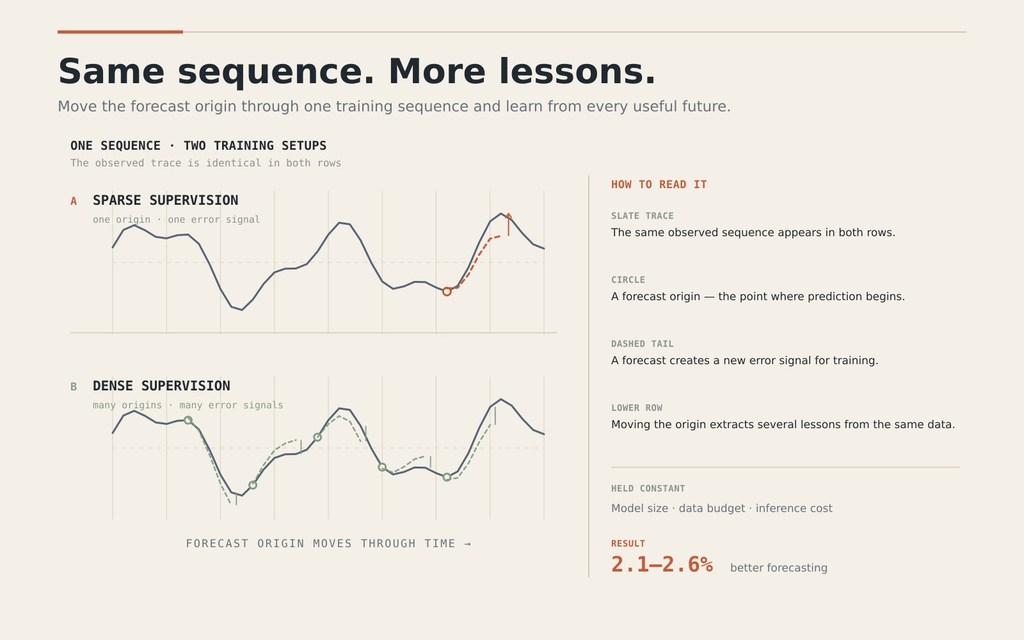
Cascade also found that denser supervision improved forecasting performance by around 2.1%–2.6% without increasing model size or inference costs.
Role-aware covariates improved the model’s ability to use additional signals such as weather, promotions and related time series. Meanwhile, several techniques borrowed from language-model research, including more elaborate positional methods and attention sinks, failed to produce meaningful improvements.
These experiments highlight the practical value of Targon’s compute support. Rather than simply validating an idea, Cascade was able to run a large number of controlled experiments and identify which approaches were worth pursuing.
The work is still early. Cascade’s longer-term goal is to develop a forecasting system capable of operating on live streams, while bringing successful decoder improvements back into the subnet through mechanisms such as warm starts and promoted checkpoints.
For Bittensor, the cross-project synergy is the interesting thing here. Bitstarter helps bring research teams into the ecosystem, Targon provides decentralized compute, and Cascade uses that compute to systematically search for better forecasting models and training data.
With this, Bittensor could become not just a network for serving AI models, but a network for running the research process that improves them.
Enjoyed this article? Join our newsletter
Get the latest TAO & Bittensor news straight to your inbox.
We respect your privacy. Unsubscribe anytime.
Enjoyed this article?
Join our newsletter
Get the latest TAO & Bittensor news straight to your inbox — every morning before markets open.



[…] Privacy erosion complaints get answered by Targon (SN4) and Chutes (SN64): Confidential compute infrastructure keeps user data invisible even from the […]
[…] Cascade (SN91) is training time-series foundation models, targeting the AI category no lab has enough data to crack alone. […]
[…] (SN3) is among his preferred subnet plays, alongside Engy (SN53), Targon (SN4), Lium (SN51), GM (SN28), Bitcast (SN93), Minos (SN107), Hippius (SN75), RedTeam (SN61), and Oro […]
[…] Cascade (SN91) develops AI models that predict future events using historical data, including cryptocurrency prices, weather patterns, and business demand. […]
[…] example, a subnet could purchase computing power from Targon (SN4) or storage from Hippius (SN75). Under Gamma, part of a subnet’s alpha emissions would be used […]