

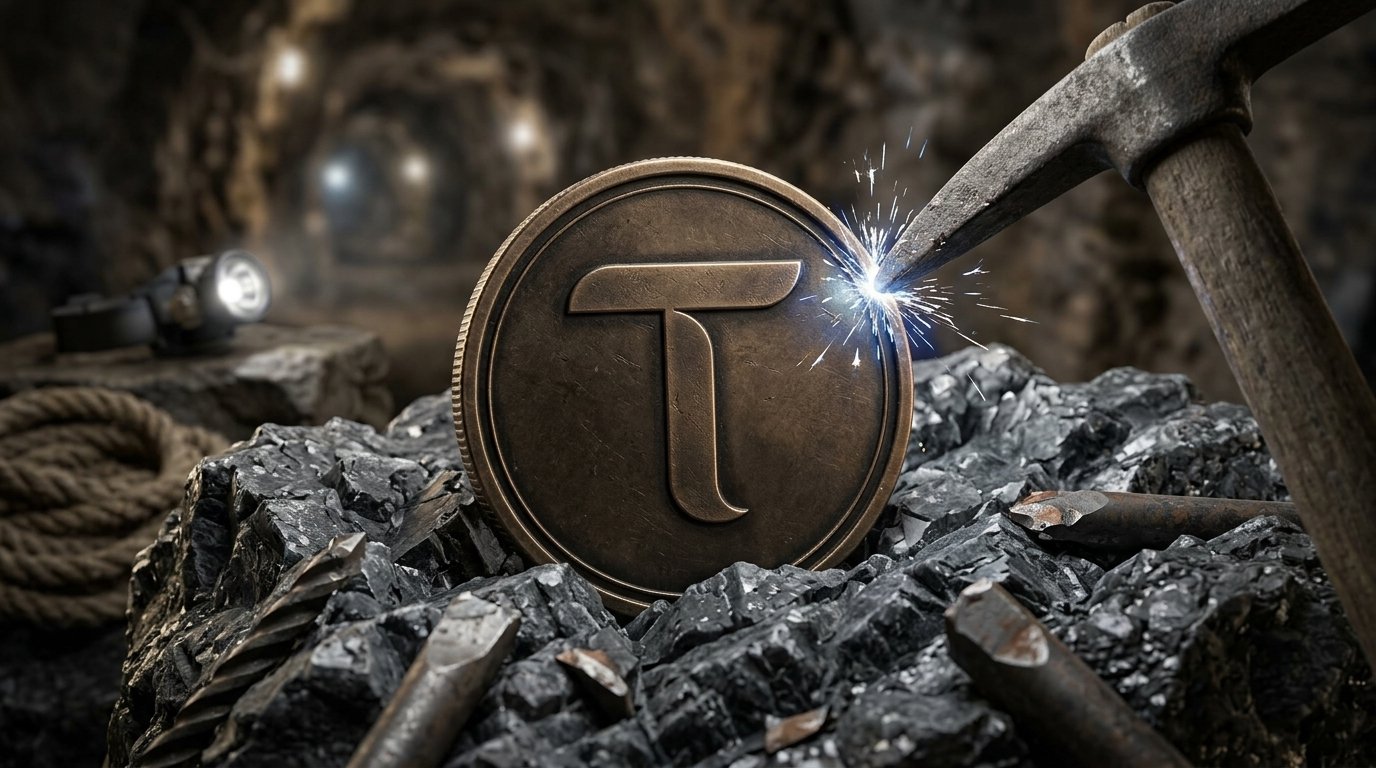
Bittensor has spent five years quietly raising the bar for who earns TAO from the network.
Tao Templar, who left a fifteen-year engineering career to cover Bittensor full-time, traces that pattern across six upgrades.
Each change, from the 2021 subnets rollout to this year’s Conviction Locks, made emissions harder for unproductive subnets to claim.
That steady tightening is why his belief in TAO has only grown over time.
From One Team to Many: The 2021–2023 Subnets Upgrade
Bittensor launched in 2021 with a single incentive mechanism controlled entirely by the Opentensor Foundation, and by most accounts it did not reward miners very effectively.
The 2023 subnets upgrade changed the entire model by letting anyone build and launch their own incentive mechanism on the network.
That opened the door to dozens of teams competing to design better ways of paying miners for useful work.
- Miners moved from producing arbitrary hashes to producing measurable outputs: model training, weather prediction, image authentication, and dozens of other tasks
- Subnet creation stopped being limited to the founding team and opened to any developer willing to build one
- Competition among miners within each subnet started functioning like a global vetting process, surfacing the best performer through direct comparison against others
The upgrade turned Bittensor from one team’s experiment into a network of competing experiments, which is the structural change everything since has built on.
Alpha Tokens Replace Validators as Price-Setters
Subnets soon revealed a weakness in how they distributed rewards: validators held outsized control over how much emission each miner received, which left the system open to favoritism and quiet corruption.
The dynamic TAO upgrade introduced alpha tokens, giving every subnet its own tradable asset whose price is set by market activity and not validator discretion.
Alpha tokens remain redeemable for TAO, but their value now reflects genuine demand for whatever that subnet is producing.
- Each subnet’s commodity gets an independent market price instead of a validator-assigned score
- Emissions follow the market’s valuation of a subnet’s output
- The change replaced a centralized point of failure with a decentralized pricing mechanism, mirroring how any open market sets value
Handing pricing power to the market closed off one of the more obvious avenues for manipulation inside the network.
Why TaoFlow Punished Standing Still
Market-based pricing solved one problem but created another: a subnet could earn a high valuation early and then coast on it indefinitely without improving its product.
TaoFlow addressed that gap by weighting emissions toward recent capital flows into a subnet’s alpha token. Subnets that stopped attracting fresh interest saw their share of emissions shrink, regardless of how strong their reputation once was.
- Subnet owners gained a direct incentive to keep marketing and refining their product instead of resting on an early valuation
- Emissions became tied to ongoing momentum
- The mechanism pushed subnet teams toward the same behavior expected of any competitive business: keep earning attention or lose ground to teams that do
TaoFlow effectively told every subnet owner that the network would keep grading them long after launch day.
Halving, Conviction Locks, and the “TAO Mines Subnets” Update
TAO’s first halving arrived on schedule and passed without disrupting the network, even with subnets now splitting a smaller emission pool.
Two further changes landed in June 2026: Conviction Locks let subnet owners voluntarily lock their alpha tokens as a public commitment against dumping, and the “TAO Mines Subnets” update tightened emissions further for subnets producing little of value.
Neither change is mandatory, but both give investors a clearer insight about which subnet owners are willing to put something at risk.
- Conviction Locks function as an informal accountability measure in a market where rug pulls remain common
- The “Tao Mines” update continued the same trend as every prior upgrade: less reward available for subnets that aren’t producing
- Additional changes have shipped since June, extending the same tightening pattern into August 2026
The Scarcity Behind the Conviction
The throughline across five years of upgrades is that it has become progressively harder to extract TAO from the network without producing something the market wants.
That trend is what pushed Tao Templar to put the overwhelming majority of his net worth into TAO and build a full-time career around covering it, despite openly warning viewers against doing the same.
His case rests less on any single price target and more on a pattern he has watched repeat with every major upgrade since 2021. Scarcity that tightens on a predictable schedule, driven by real competition, is the mechanic he keeps returning to when explaining why he isn’t going anywhere.
Watch the full video on YouTube:
Enjoyed this article? Join our newsletter
Get the latest TAO & Bittensor news straight to your inbox.
We respect your privacy. Unsubscribe anytime.
Enjoyed this article?
Join our newsletter
Get the latest TAO & Bittensor news straight to your inbox — every morning before markets open.


No comments yet — be the first.