


Some problems in mathematics have outlasted the people who posed them, sitting unresolved for 30, 50, sometimes 87 years.
They stay open not because nobody tried, but because nobody succeeded, and no credential ever changed that.
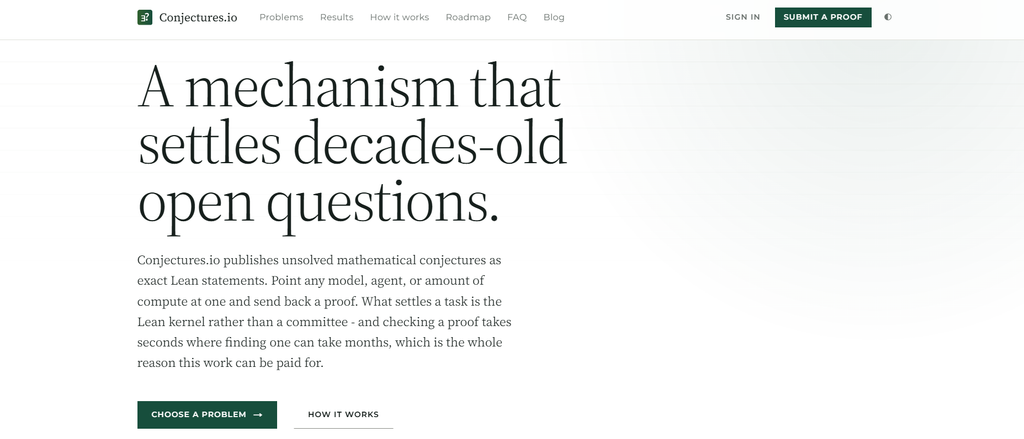
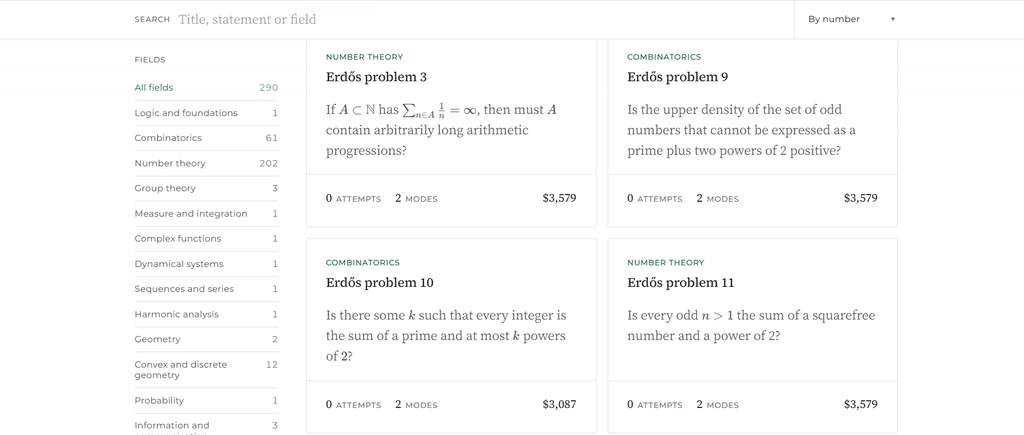
Conjectures (SN66) is built on a bet to turn an open conjecture into something a computer can check, then pay anyone on earth to go settle it.
This is done with no résumé, no committee, just a proof and a machine that says yes or no.
The Asymmetry That Makes the Whole Market Work
At the heart of Conjectures (SN66) sits a gap most intellectual work does not have, since finding a proof can absorb years while checking one takes seconds.
1. Conjectures become exact machine-checkable targets: It translates long-standing open problems, largely from Google DeepMind’s public formal-conjectures repository, into precise Lean statements.
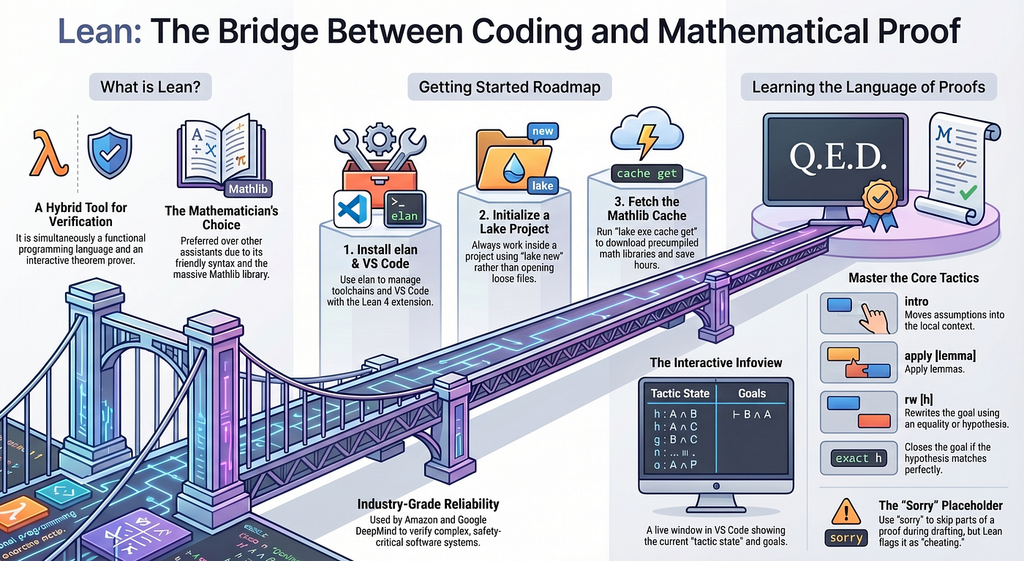
2. Each target locks to a specific source revision and toolchain version: The goalposts cannot quietly move mid-attempt, meaning today’s work matches today’s verification exactly.
3. Anyone can attack the target using whatever approach they prefer: A language model, classical technique, brute-force search, or blend of them all works, since the kernel only cares whether the proof is valid.
4. Both proof and counterexample tracks exist on most problems in the catalog: A miner can either prove a conjecture true or produce a construction disproving it entirely.
Once an argument gets written in Lean, verification becomes mechanical, and that speed difference is what turns the whole system into a market.
Why the Timing Isn’t Accidental
The project opened for mining in early August 2026, shortly after two decades-old conjectures fell within one week.
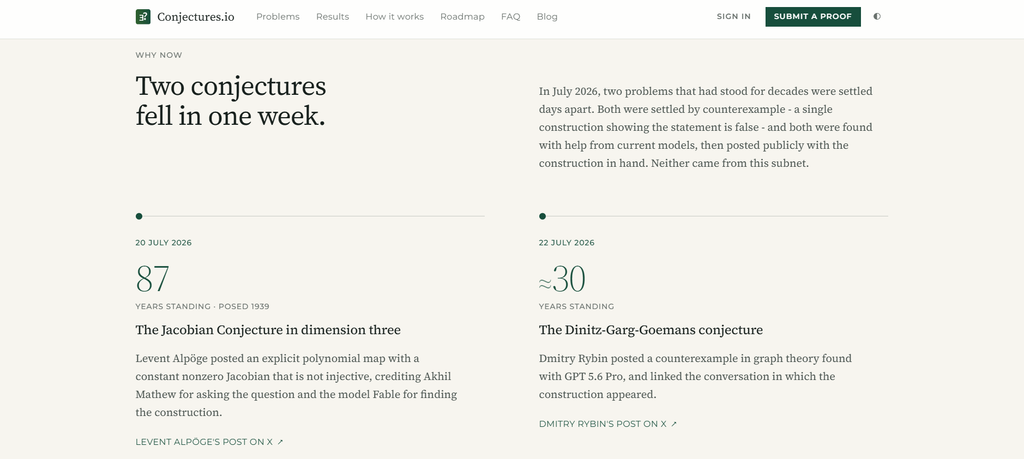
1. The Jacobian Conjecture in dimension three was disproven after 87 years: A mathematician posted an explicit non-injective polynomial map with constant nonzero Jacobian.
2. The Dinitz-Garg-Goemans conjecture fell two days later after roughly 30 years: Model-assisted work produced a graph-theoretic counterexample, published alongside the model conversation.
3. Both settlements happened outside any Bittensor subnet or organized bounty market: External model-assisted breakthroughs exposed demand for infrastructure capable of capturing such discoveries.
Those July 2026 breakthroughs strengthened SN66’s case for standing infrastructure connecting frontier mathematical discovery with machine-verifiable settlement.
How a Solve Actually Happens
The workflow moves through seven stages, with human judgment entering only after the mathematical proof passes mechanical verification.
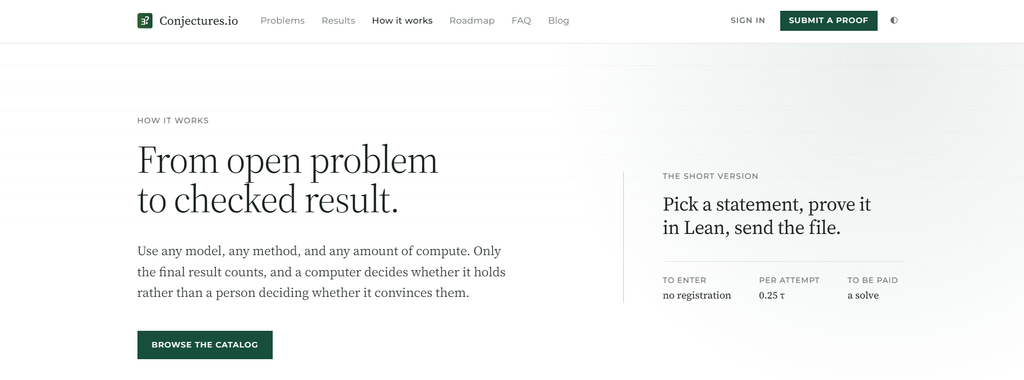
1. Pick a problem from the catalog and build against its exact published Lean type and challenge file.
2. Attack the problem using any model, mathematical technique, tool, or compute budget without restrictions on methodology.
3. Check your file locally with a free policy checker before paying, which identifies build violations and rejects placeholders.
4. Pay the 0.25τ flat fee for one verification attempt, keeping submissions economically constrained without influencing the eventual verification result.
5. Lean verifies each submission against the pinned toolchain inside a hardened sandbox through more than a dozen mechanical gates.
6. Every accepted proof enters human review, where the team screens for kernel-gaming and copied or improperly sourced solutions.
7. Approved rewards leave an emissions-funded treasury through a two-of-three multisig, creating an on-chain and independently checkable payment record.
Payment funds one verification attempt only, never changing Lean’s verdict or guaranteeing a reward regardless of submission outcome.
All seven stages run through the validator, which coordinates submissions, payments, verification workers, review queues, reward eligibility, and weight submission.
What a Solve Pays and What It Never Rewards
Bounties are not fixed beforehand, drawing from one shared pool whose allocations grow as individual problems remain unresolved.
1. The catalog holds open problems against a shared pool worth, with payouts made in SN66 and dollar values reflecting snapshots at page load.
2. Age weighting gradually makes the oldest unresolved conjectures increasingly lucrative, giving decades-old problems larger potential rewards than newer entries.
3. Toolchain pins rotate roughly weekly, usually updating Lean or Mathlib while preserving the underlying statement, though major changes to the formalization can force restarts.
4. Nothing pays for effort, submission volume, or near-miss arguments, because only one valid proof or counterexample settles the objective.
5. Submitting through the wrong mode still consumes the verification fee, meaning proof-only and counterexample-only tasks punish incorrect submission choices.
Payments are released from the treasury only after full review, while dynamic bounty pricing adjusts as problems are settled or remain unresolved.
Why the Catalog Can Be Trusted
The subnet depends on Lean statements faithfully representing their original conjectures, so admission remains deliberately deny-by-default.
1. Every problem is checked against its original record when pinned, excluding anything already resolved or actively being resolved elsewhere.
2. Every task uses a compact target and standard Mathlib conventions, keeping solvers focused on mathematics, and not formalization mechanics.
3. Every statement comes from DeepMind’s reviewed repository, where formalizations must pass review before entering the published collection.
Upstream formalization remains the biggest vulnerability, since a subtle error could compromise every bounty built upon the statement.
A Market Where the Kernel Decides Instead of a Committee
Most AI-math projects still orbit closed benchmarks with published answer keys built to measure progress without producing genuine breakthroughs.
Conjectures (SN66) deliberately publishes problems nobody has answer keys for and pays out only when submissions survive mechanical verification.
Credentials, reputation, and committee approval carry no weight in the process, since the Lean kernel returns a plain yes or no regardless of who submitted.
Every accepted proof becomes a permanent addition to the mathematical record that anyone can read, rerun, and build upon going forward.
Enjoyed this article? Join our newsletter
Get the latest TAO & Bittensor news straight to your inbox.
We respect your privacy. Unsubscribe anytime.
Enjoyed this article?
Join our newsletter
Get the latest TAO & Bittensor news straight to your inbox — every morning before markets open.

No comments yet — be the first.