

An AI agent might classify a support ticket on one call and investigate a software bug on the very next. Those tasks can require very different levels of reasoning.
Fugal (SN70) is building a router that decides which model should handle each request.
On Yuma’s Subnet Spotlight, Fugal’s Jack Doherty explained why choosing the wrong AI model can drive up costs and how miners compete to improve Fugal’s routing decisions.
He also discussed how the subnet’s token could eventually help users pay for inference.
Why Model Selection Matters
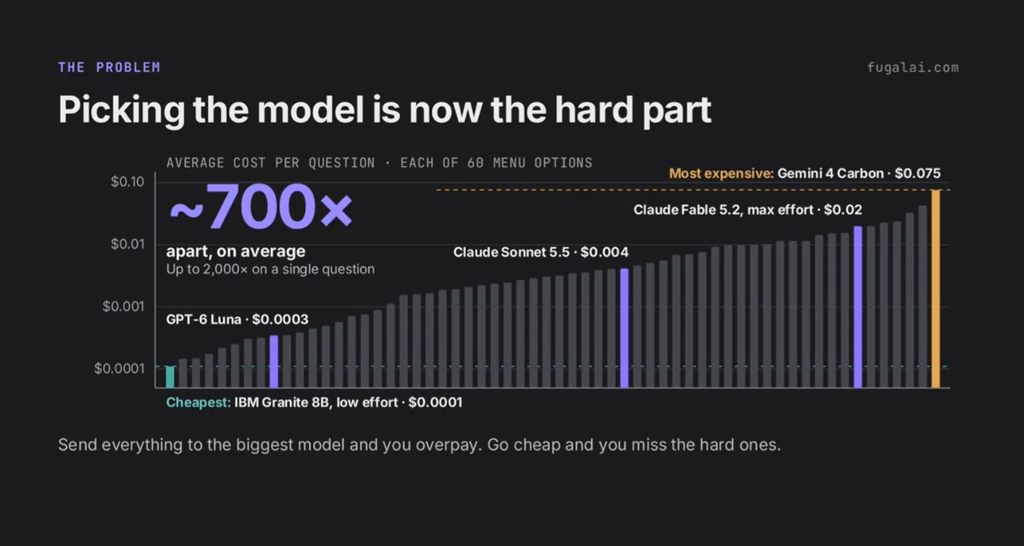
The interview put the average price gap between the cheapest model capable of answering a question correctly and the most expensive frontier model at around 700×, rising to 2,000× on individual queries.
A growing pool of specialist models makes it harder to choose the right one upfront.
Decision and routing models accounted for roughly 21% of traffic in data cited during the interview. Grok, OpenRouter, AWS, and Azure have introduced routing tools. Fugal offers a single chat or API endpoint that picks a model for each prompt based on expected answer quality and cost.
How Bittensor Miners Improve the Router
The case for neutrality starts with who owns the router. A provider can favor its own models and keep its training data and trade-offs private.
On Bittensor, miners can test strategies in parallel as models arrive. They train in a verifiable environment and can improve the winning router.
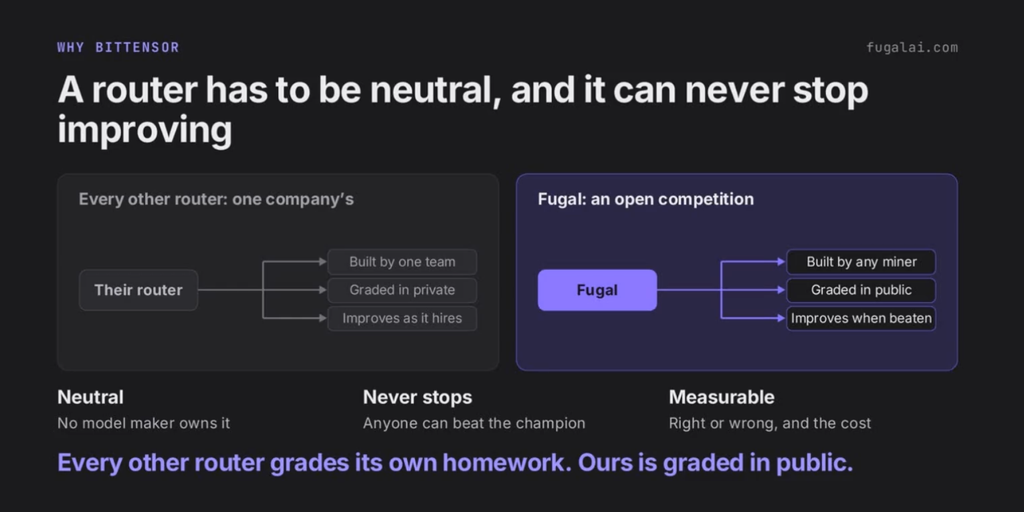
Fugal rewards miners for beating the current champion in a continuous competition. At the time of the interview, entrants could choose from ~600 models on OpenRouter. The strongest submissions typically used eight to ten models, with miners tuning the proportion of requests sent to each.
What Fugal’s Early Benchmarks Showed
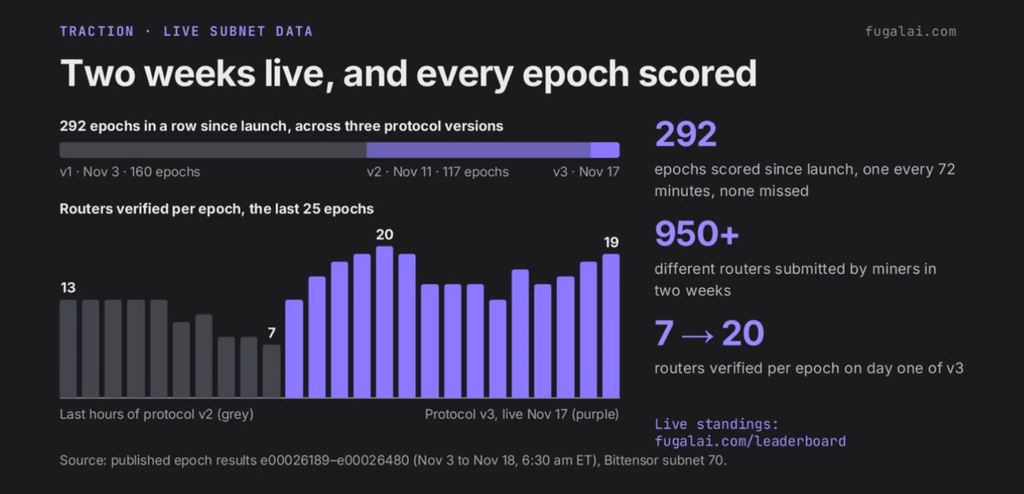
Fugal went from V1 to V3 in about two weeks on mainnet. In early Router Arena tests, the team reported comparable answer quality to strong reference models at about half the cost. In a separate comparison, Fugal beat OpenRouter’s automatic router on both quality and cost.
Fugal calls its long-term goal “perfect routing.” For any given request, the aim is to choose an option where spending less would sacrifice quality and getting a better answer would cost more.
From Public Testing to Agentic Workloads
Fugal is open for public testing, and at the time of the interview, the planned v4 release would add providers and stronger models while giving miners more freedom to build their routers.
The team also aims to improve the experience for miners entering the competition.
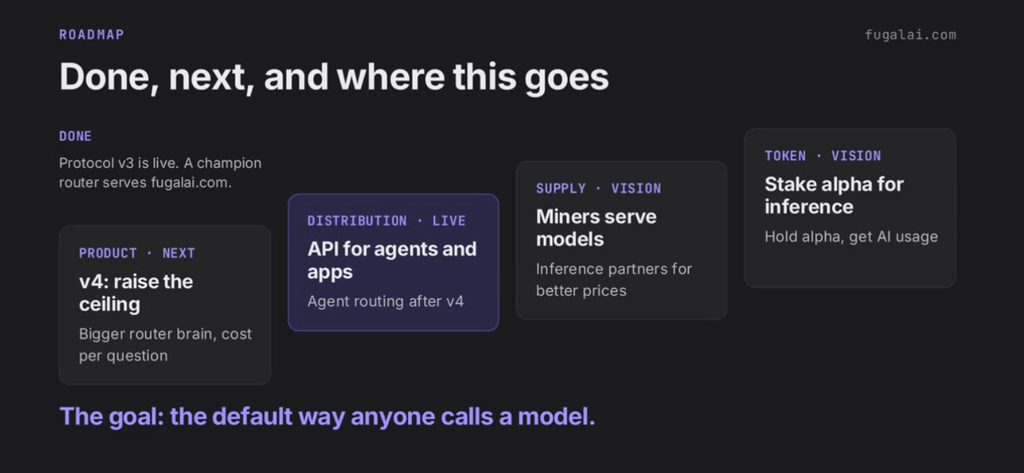
Fugal is prioritizing agentic workloads, where one job can require many model calls. That gives the team a way to measure how routing affects the cost of completing a task.
It also plans to let miners serve the router themselves, extending their role to decentralized inference.
How SN70 Staking Could Pay for Inference
Fugal expects to charge a small fee for routing requests and is exploring whether users could stake SN70 alpha to receive inference credits or free usage.
For customers who regularly run prompts through Fugal, those credits could offset part of their AI bill. The team is also evaluating token buybacks and burns.
Enjoyed this article? Join our newsletter
Get the latest TAO & Bittensor news straight to your inbox.
We respect your privacy. Unsubscribe anytime.
Enjoyed this article?
Join our newsletter
Get the latest TAO & Bittensor news straight to your inbox — every morning before markets open.


No comments yet — be the first.