


Every LLM trained on the open internet knows how the next decade unfolds, which quietly disqualifies it from serious historical analysis.
That flaw, called look-ahead bias, is a main reason hedge funds still refuse to backtest strategies with LLMs. A Bittensor subnet, ChronoLLM (SN38), went live with a fix built around yearly “vintage” models, each frozen at its own information cutoff instead of one model that remembers everything.
Jean Herelle, the co-founder, a decade-long quant modeler before founding Crunch, used the conversation with Gordon Frayne to walk through the architecture, the incentive design, and the roadmap to frontier scale.
How SN38 Keeps The Future Out
The talk moved fast from problem to mechanics, covering why finance avoids LLMs, how a family of models solves what one cannot, and where SN38 goes from here.
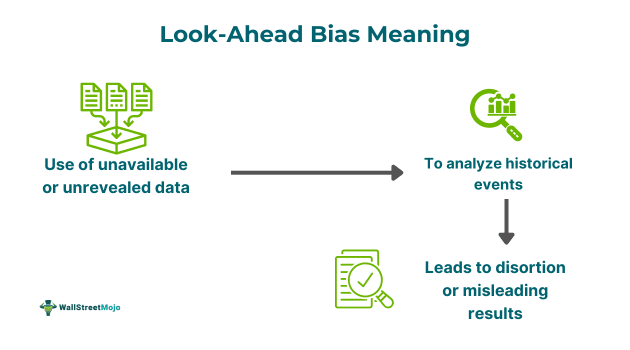
1. THE PROBLEM IS LOOK-AHEAD BIAS, NOT HALLUCINATION: A standard LLM already knows the 2015 Greek crisis and Moderna’s vaccine were coming, so any backtest built on it “cheats” like a student who memorized the answer key.
Jean said hedge fund chief data officers have told him directly that this look-ahead problem, not model quality, is the main reason they have kept LLMs out of historical backtesting.
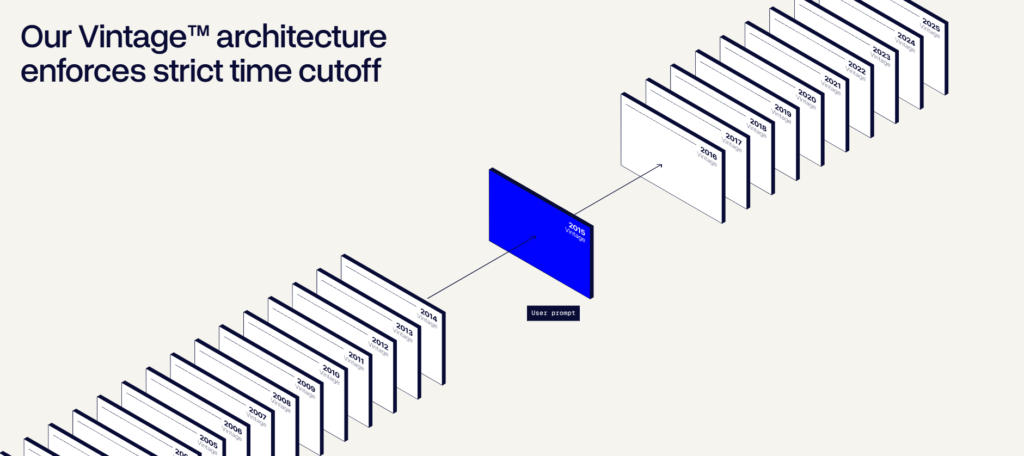
2. THE FIX IS A FAMILY OF VINTAGES, NOT ONE MODEL: ChronoLLM trains a separate Vintage™ model per year using rolling 20-year walk-forward training, on a corpus timestamped from 1999 to 2026 so no vintage absorbs its own future.
3. IT NEARLY GOT BUILT OFF BITTENSOR: VCs passed on the same architecture two years ago, spooked by fast, continuous compute burn. A conversation with a co-founder of Bittensor ($TAO) turned it into a subnet, live the day of the interview.
4. TWO LAYERS HUNT FOR LEAKS: Documents are timestamped before training, then Crunch’s researchers invent adversarial probes (who is US president, who won the last World Cup) to expose any model that knows too much.
This catches vendor backdating, where a bankruptcy is logged on its filing date rather than when it went public, opening two-to-three-day leak windows.
5. MINING RUNS AS WEEKLY WINNER-TAKES-ALL ROUNDS: Miners improve a 1.5B base model by sourcing timestamped corpus data and resubmitting weights, with each round scored inside a TEE for verifiability. Every output is open-weight and downloadable.
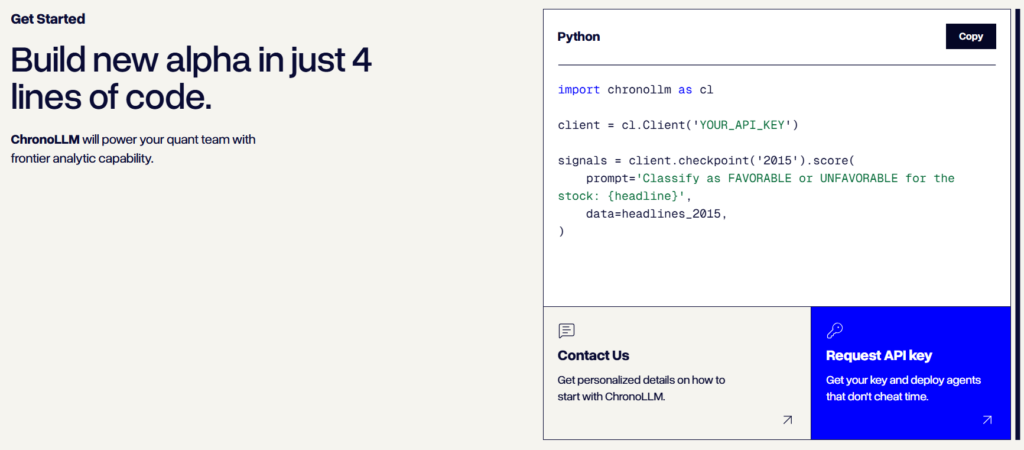
6. THREE CUSTOMER TIERS: Skilled teams self-host via a simple Python client for look-ahead-free signals and embeddings, institutions pay for on-prem deployment and proprietary fine-tuning, and academics get a free license at target scale.
7. AN EARLY PROTOTYPE ALREADY FOUND SIGNAL: A cruder, non-point-in-time version drew 37,000 community questions; one tracking ECB protectionist language showed a roughly 50% correlation with the NASDAQ-100, proving commercial value before the real model existed.
8. THE ROADMAP RUNS THREE SIZES: At 1.5B, the model beats a comparison model on just 16%-17% of an intelligence benchmark, short of the 51% bar.
Next is 14B by end of summer, then 72B (frontier scale) by end of 2026, with a US rollout targeted for January 2027.
9. THE NETWORK IS ALSO THE SALES PITCH: Crunch’s 12,000-plus researchers are about 80% finance professionals, and letting clients watch them fail to find leaks beats any vendor’s clean-data claim. Three institutions have already flagged pilot interest.
10. TESTERS BROKE IT IN WEEK ONE: Early community members surfaced real vulnerabilities, from gaming an LLM-as-judge setup to hiding data in timestamp fields, exactly the adversarial pressure the design is built to attract before clients arrive.
Waiting For 14B
The real test begins now that the subnet is live and the researchers can try to break it. 16% to 17% on a benchmark is far from ‘frontier,’ and Jean is blunt that 14B & 72B parameters will be the hardest steps yet.
What makes this worth watching is that verification is the product, since Chrono LLM sells proof of a clean model to institutions that avoided LLMs precisely because they couldn’t trust what was inside.
Three firms wait on the next size threshold, and by the team’s own conservative clock, a frontier-scale version should exist before the year is out.
Enjoyed this article? Join our newsletter
Get the latest TAO & Bittensor news straight to your inbox.
We respect your privacy. Unsubscribe anytime.
Enjoyed this article?
Join our newsletter
Get the latest TAO & Bittensor news straight to your inbox — every morning before markets open.

No comments yet — be the first.