


Carbon won Pitchtensor 2026 at Exploit Summit in Montreal, raising 500 TAO in 19 minutes and 58 seconds through a live crowdfunding round.
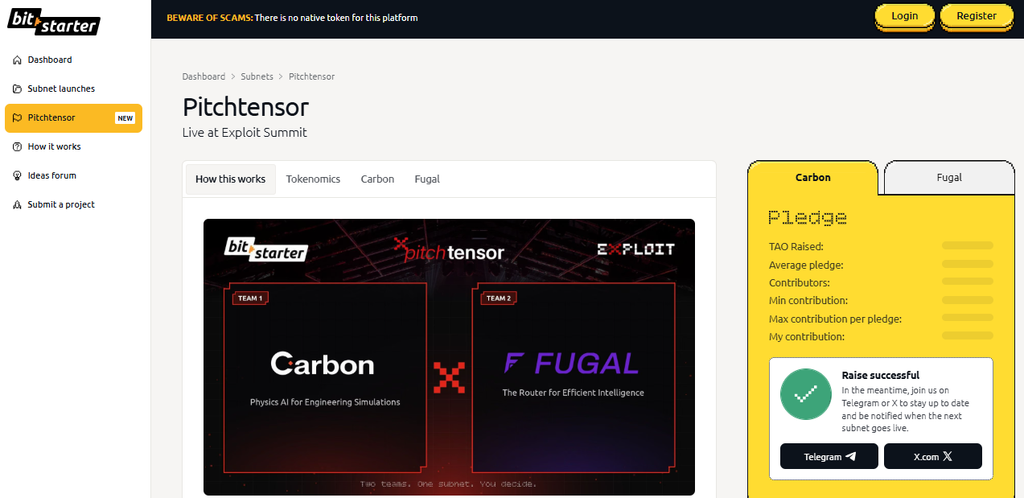
Exploit Summit confirmed Carbon as the winner, with the team now set to move toward launching a Bittensor subnet with Bitstarter.
Carbon’s pitch centered on a problem that becomes increasingly important as Physics AI moves into real engineering work. Faster predictions are useful, but engineers also need reliable evidence showing when a model can be trusted.
The Problem They Are Tackling
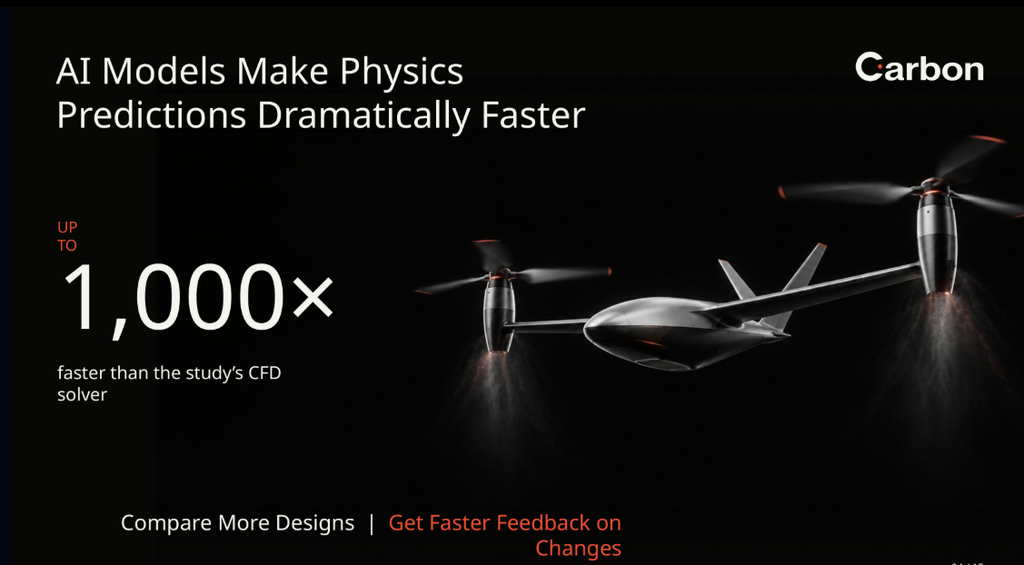
Traditional numerical simulations can take one to two days for a single design iteration, while Carbon cites published benchmarks showing that trained Physics AI models and neural operators can produce predictions up to 1,000 times faster.
That speed can shorten engineering design cycles, but it does not by itself establish whether a model will behave correctly under the physical conditions where an engineer intends to use it.
For applications involving batteries, cooling systems, electric motors, or aerodynamic designs, engineers need to understand both where a model performs well and where it can fail.
Carbon is building infrastructure around that problem by combining Physics AI discovery with a system for generating evidence about model performance.
Turning Physics AI Into a Competition
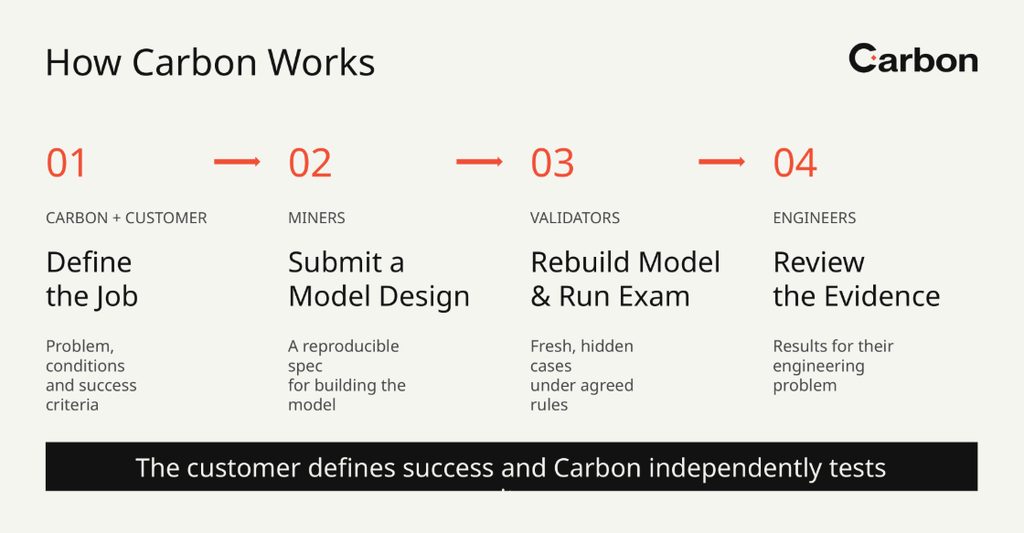
Carbon plans to use Bittensor to turn Physics AI research into an open competition where different participants can contribute to model development while independent evaluators determine which approaches actually work.
The proposed system works around a few key steps:
1) Researchers and miners submit model-building strategies:
Participants can submit models or reproducible configurations designed to solve specific physics problems.
2) Independent evaluators rebuild and test them:
Validators reconstruct the submitted work and test it against reference physics using controlled, pre-registered conditions. The team that produced the model does not control its official evaluation.
3) The network tests where models work and where they fail:
Carbon’s focus is not simply on finding the model with the highest average accuracy. Evaluators can examine performance across specific physical conditions to establish where a model is reliable and where its predictions break down.
4) The results create evidence for engineering use:
This gives Carbon a way to connect model discovery with the information engineers need before using an AI model for real decisions. Instead of treating a model’s output as sufficient on its own, the network can provide evidence about its actual performance under defined conditions.
That structure is central to Carbon’s pitch because the goal is not merely to produce faster Physics AI. It is to create a competitive system that can discover useful models and independently establish the conditions under which engineers can rely on them.
The Engineer Behind the Pitch
Carbon co-founder and CEO Ryan Bequette brings a test-engineering background directly connected to this approach. He spent five years as a U.S. Air Force test engineer and later worked on verification for Virgin Galactic’s Iron Bird and Boeing’s T-7A simulator.
Carbon has described his approach around three questions: what must the system do, under which conditions, and what evidence justifies using it? Those questions also shape the proposed subnet, where the objective is not simply to find models that perform well, but to establish the conditions under which their results can be trusted.
What Carbon Is Building
The team is already developing the infrastructure for this system with its public GitHub repository containing reconstruction and evaluation software, local Bittensor integration tests, miner research tools, and numerical studies.
The team is using Burgers’ equation as a development testbed for its independent evaluation pipeline, including fresh test cases, reference solutions, and uncertainty characterization.
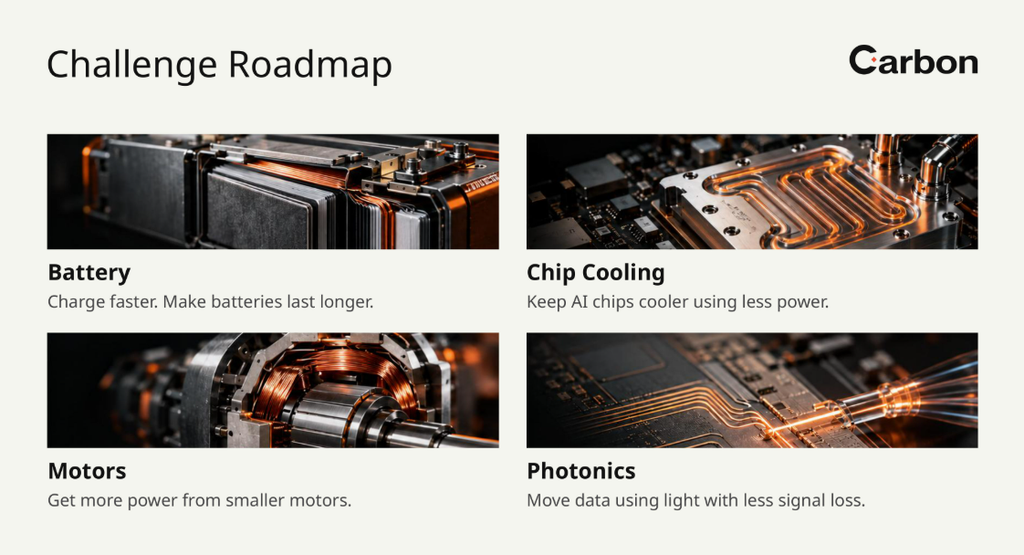
Its initial research areas include:
- Battery fast-charging and ageing
- AI-chip cold plates
- Electric motors
- Silicon photonics
The team also plans to take the system beyond research through Evidence Audits, which would evaluate existing Physics AI models, and Sponsored Discovery, which would use the network to investigate specific engineering problems for customers.
Where Carbon Goes Next
During the pitch, co-founder and CEO Ryan Bequette said the team plans to keep expanding the design space until the network becomes a broader Physics AI research lab.
“A major roadmap item for us is to continue to expand this design space. This is where we’re starting, but it is by no means where we are ending. We want to end up being a state-of-the-art Physics AI research lab where miners and agents can compete on real engineering challenges, delivering real value to engineering teams.”
The next step is to turn that vision into a working subnet where open competition can produce useful Physics AI solutions for real engineering problems.
If Carbon can make that model work at scale, it could give engineering teams a new way to discover and evaluate AI models for the problems they actually need to solve.
Enjoyed this article? Join our newsletter
Get the latest TAO & Bittensor news straight to your inbox.
We respect your privacy. Unsubscribe anytime.
Enjoyed this article?
Join our newsletter
Get the latest TAO & Bittensor news straight to your inbox — every morning before markets open.

No comments yet — be the first.