


Bittensor’s Spec 423 activated a major change in how the network handles subnet emissions. In the past, emissions went into subnet pools as new liquidity, which grew the pool but did not create direct buying pressure for the subnet ‘$ALPHA’ token.
Under the new design, once a subnet reaches a certain level of maturity, part of its emission is used to buy its own token directly from the pool. The shift moves Bittensor from a system where the protocol only funds liquidity toward one where the protocol also drives real demand, with the biggest subnets feeling the effect first.
How the New Mechanism Works
Every block, each subnet gets a share of $TAO emissions. What happens with that $TAO now depends on how mature the subnet is:
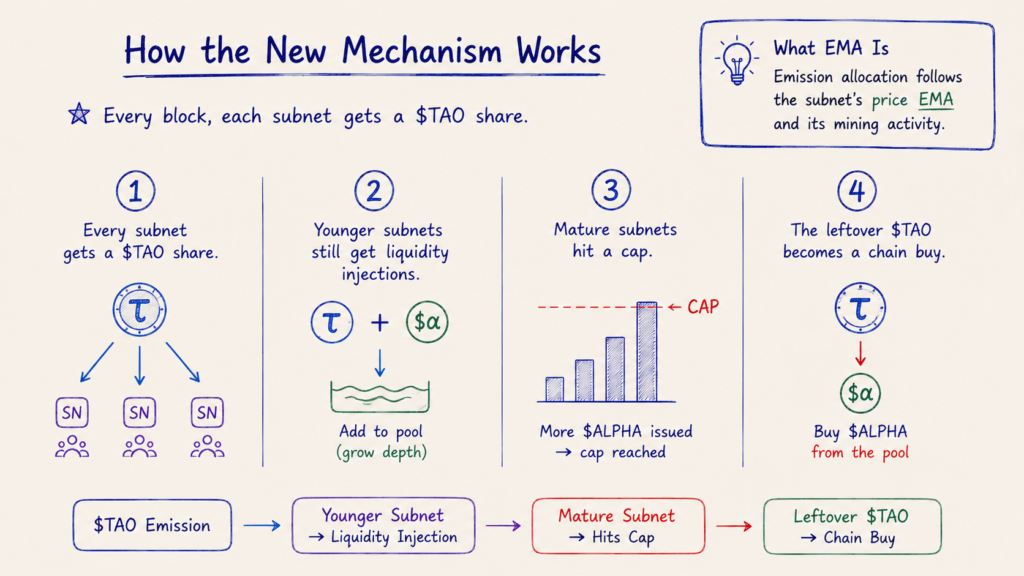
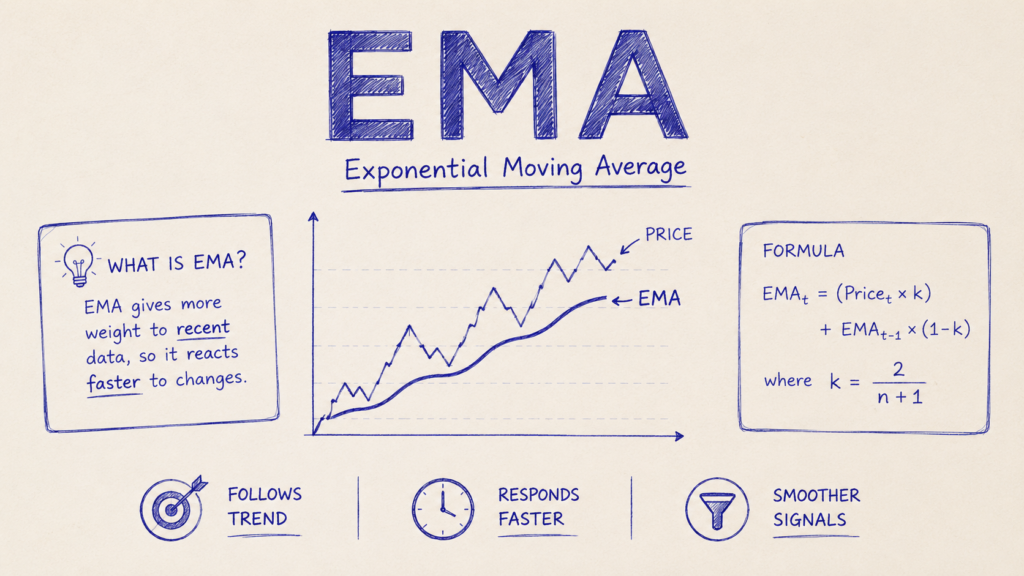
1. Every subnet gets a $TAO share. Emission allocation follows the subnet’s price EMA and its mining activity.
2. Younger subnets still get liquidity injections. Newly minted $TAO gets paired with $ALPHA and added to the pool, growing depth without buying the token.
3. Mature subnets hit a cap. As a subnet issues more $ALPHA over time, the chain limits how much new $ALPHA can be pushed into the pool.
4. The leftover $TAO becomes a chain buy. When the cap kicks in, the excess $TAO is used to buy the subnet’s $ALPHA directly from the pool.
Only the excess portion becomes a chain buy. Younger subnets continue to receive standard liquidity injections, and mature subnets receive a mix depending on where they sit in their lifecycle.
Which Subnets Feel It First
Not every subnet is affected the same way, as the mechanism creates a gradient across the network based on how much $ALPHA each subnet has already issued.
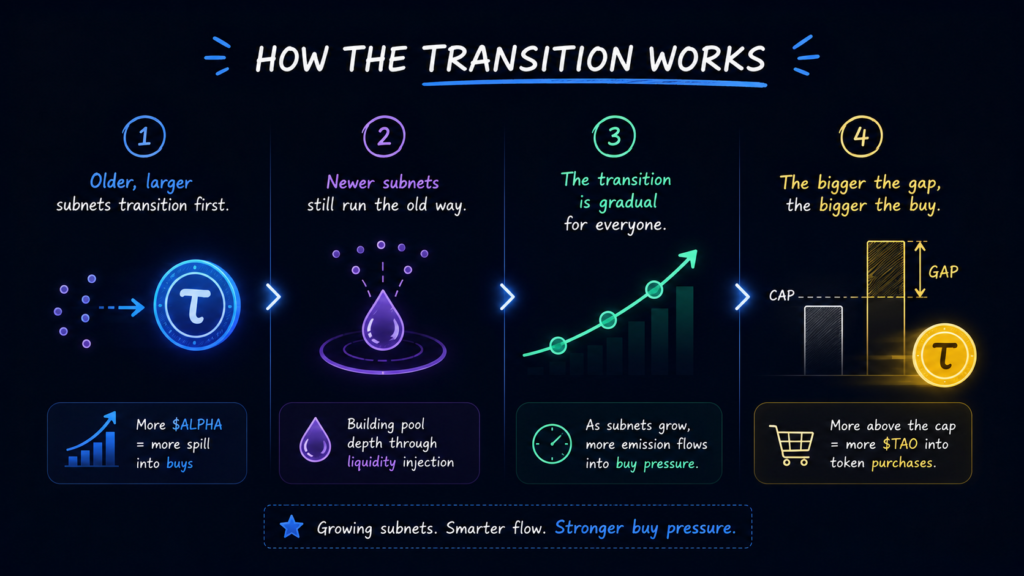
1. Older, larger subnets transition first. Subnets with more $ALPHA in circulation see a bigger share of their emission spill into chain buys.
2. Newer subnets still run the old way. Subnets earlier in their lifecycle continue to build pool depth through liquidity injection.
3. The transition is gradual for everyone. As any subnet grows, more of its emission naturally starts flowing into buy pressure rather than into new liquidity.
4. The bigger the gap, the bigger the buy. The more the subnet has outgrown the cap, the more $TAO gets converted directly into token purchases.
The subnets that have grown large enough to have significant $ALPHA in circulation also become the ones generating structural buy pressure on their own tokens through the chain itself.
Where This Changes Bittensor’s Emission Economics
The move from protocol-owned liquidity toward protocol-driven demand is a real architectural shift for how the network allocates its own inflation. Under the old design, subnet token prices depended entirely on external demand from traders and holders because emissions just built up pool depth.
Chain buys route a portion of that inflation back into the token as buy pressure sourced from the protocol itself, which changes how mature subnets accrue value over time. For anyone tracking alpha prices after Spec 423, the pattern worth watching is which subnets are now consistently in the chain-buy zone rather than the liquidity injection zone.
That pattern will only widen as the network matures.
Enjoyed this article? Join our newsletter
Get the latest TAO & Bittensor news straight to your inbox.
We respect your privacy. Unsubscribe anytime.
Enjoyed this article?
Join our newsletter
Get the latest TAO & Bittensor news straight to your inbox — every morning before markets open.



No comments yet — be the first.