

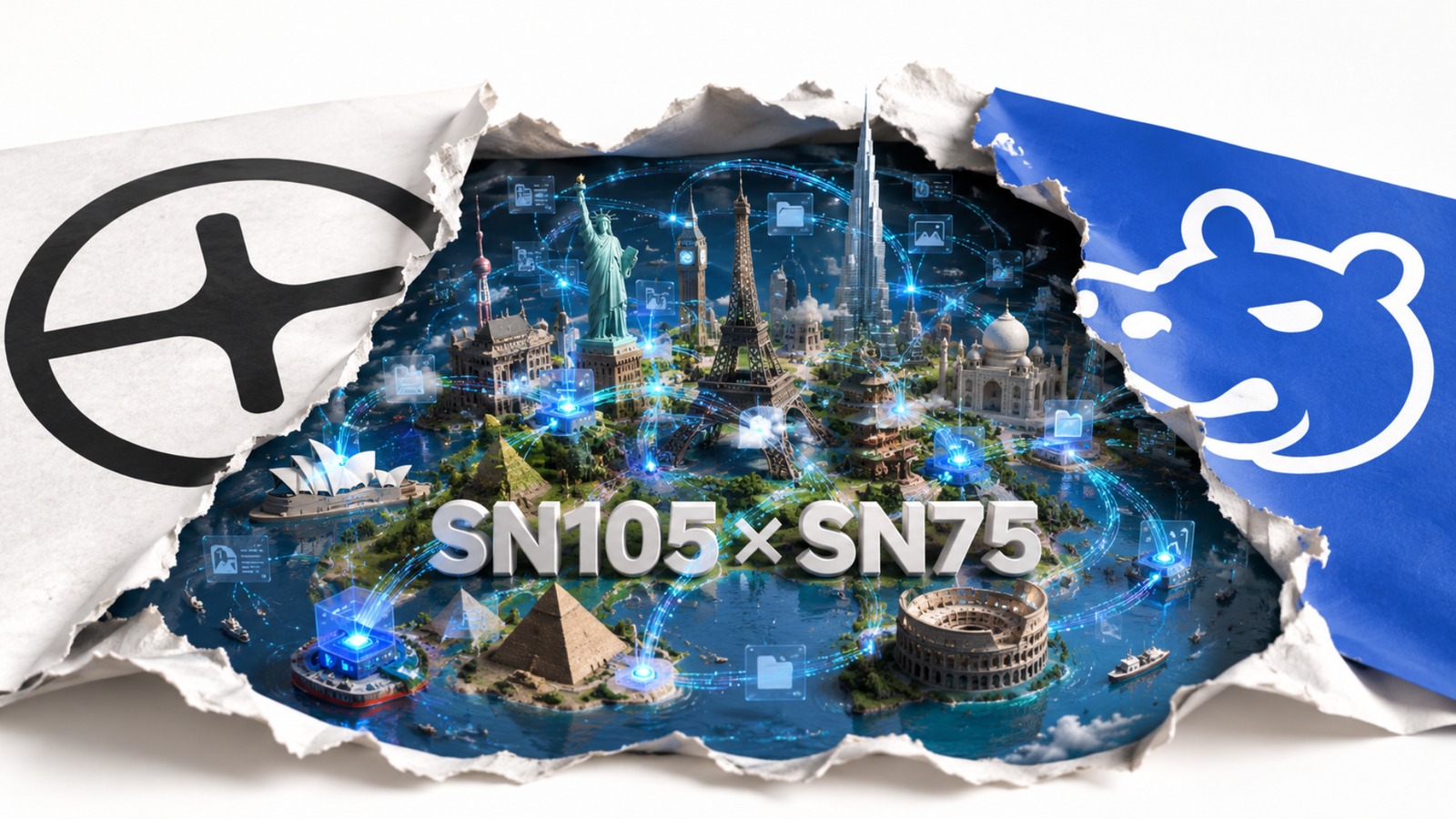
Beam (SN105) set a new decentralized bandwidth benchmark, orchestrating 1.12TB across its network in 3 minutes 40 seconds through hundreds of concurrent streams. That’s roughly 10× its previous 107GB benchmark completed in 2 minutes 16 seconds.
Alongside the milestone, Beam Transfer Studio began testing a native Hippius (SN75) connector that supports R2 to Hippius to R2 data movement, bringing decentralized storage directly into the programmable bandwidth stack.
Both developments push Beam toward its stated goal of becoming the interoperability layer for AI and enterprise data.
The New Benchmark, in Context
The 1.12 terabyte transfer is Beam’s clearest demonstration to date that decentralized bandwidth can absorb enterprise-scale workloads.
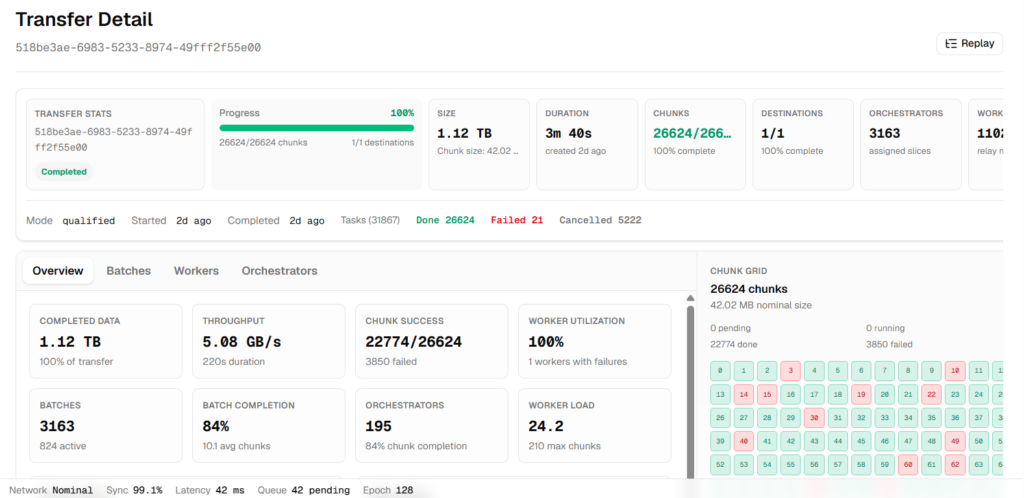
1. Volume: 1.12 TB moved in one orchestrated transfer.
2. Time: 3 minutes and 40 seconds end to end.
3. Coordination: Hundreds of concurrent data streams running in parallel.
4. Operators: Multiple independent nodes participating rather than a single trusted operator.
5. Prior benchmark: 107 GB in 2 minutes 16 seconds, the new record is roughly ten times the volume in comparable time.
The specific number matters less than what it says about scaling: decentralized bandwidth is no longer a proof of concept limited to demo-sized payloads. Enterprise workloads that previously required dedicated centralized infrastructure can now move over independent operators coordinating through Beam’s programmable network.
The Hippius Integration Coming Alongside It
Beam Transfer Studio is now testing a native Hippius (SN75) connector, which slots decentralized storage directly into Beam’s transfer surface.
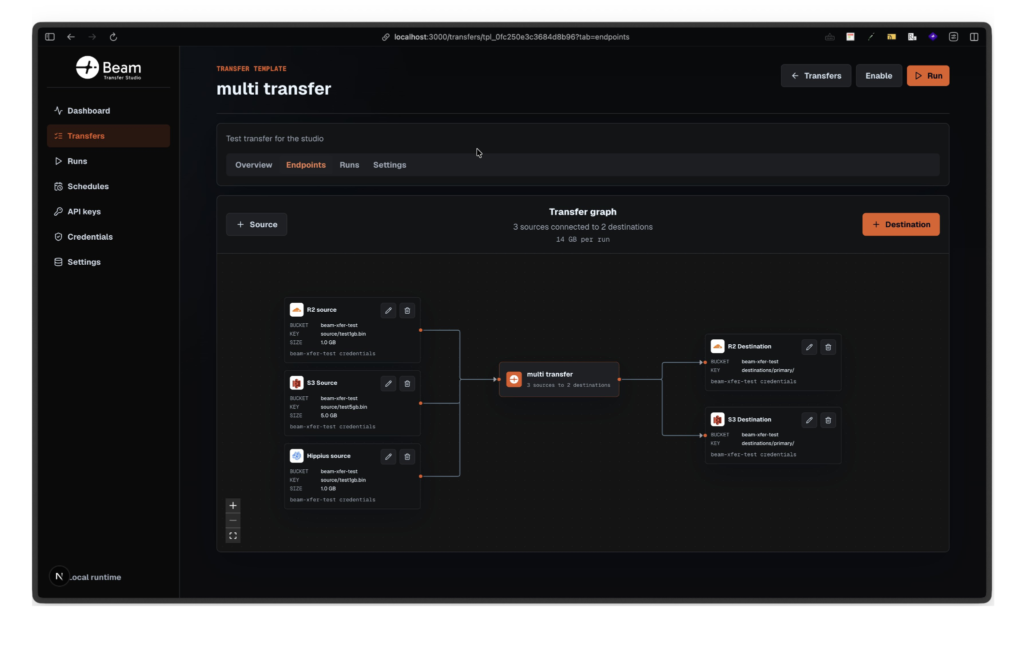
1. Transfer paths supported: R2 to Hippius, Hippius to R2, and R2 to R2 through Hippius as an intermediary.
2. Position in the stack: Bandwidth (Beam) and storage (Hippius) become interoperable primitives inside the same workflow.
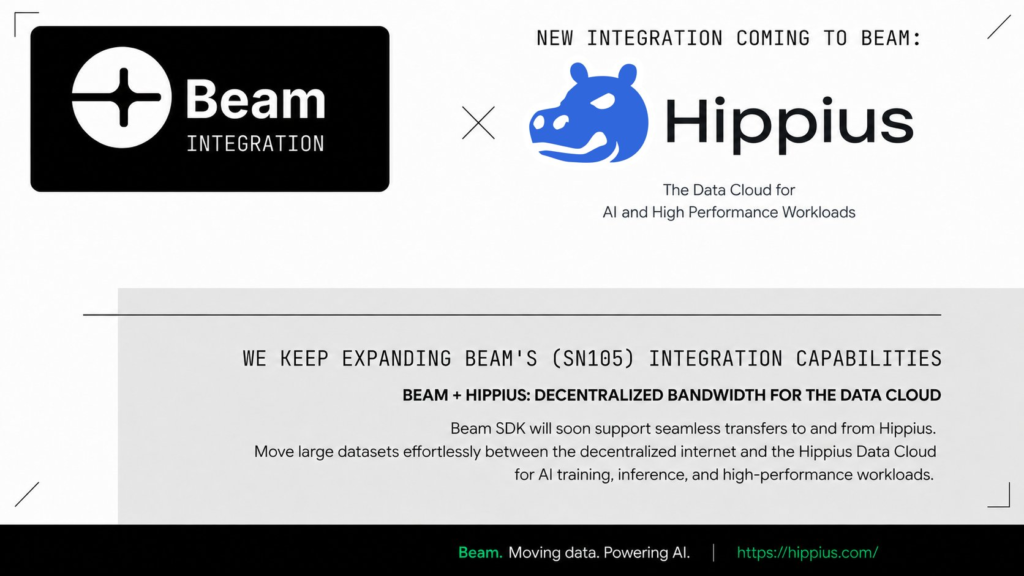
3. Product direction: Beam continues to position as the interoperability layer for AI and enterprise data movement rather than as a single-purpose bandwidth product.
The integration matters because most enterprise data workflows involve both moving data and storing it. A subnet stack that handles both natively removes a friction point that has kept decentralized infrastructure out of production pipelines.
Where Beam Is Heading
Programmable bandwidth is one of the least-covered corners of the Bittensor ecosystem, and Beam’s compounding benchmarks are starting to make the case that it should not stay that way. Ten times the data moved through the network in comparable time is the kind of scaling curve that changes what enterprise buyers consider viable, and the Hippius integration extends the surface into storage without requiring the buyer to leave the Bittensor stack.
For a subnet building toward being the interoperability layer between AI systems and enterprise-scale data movement, both developments point in the same direction: decentralized infrastructure ready for workloads that traditionally required a hyperscaler.
Enjoyed this article? Join our newsletter
Get the latest TAO & Bittensor news straight to your inbox.
We respect your privacy. Unsubscribe anytime.
Enjoyed this article?
Join our newsletter
Get the latest TAO & Bittensor news straight to your inbox — every morning before markets open.



No comments yet — be the first.