
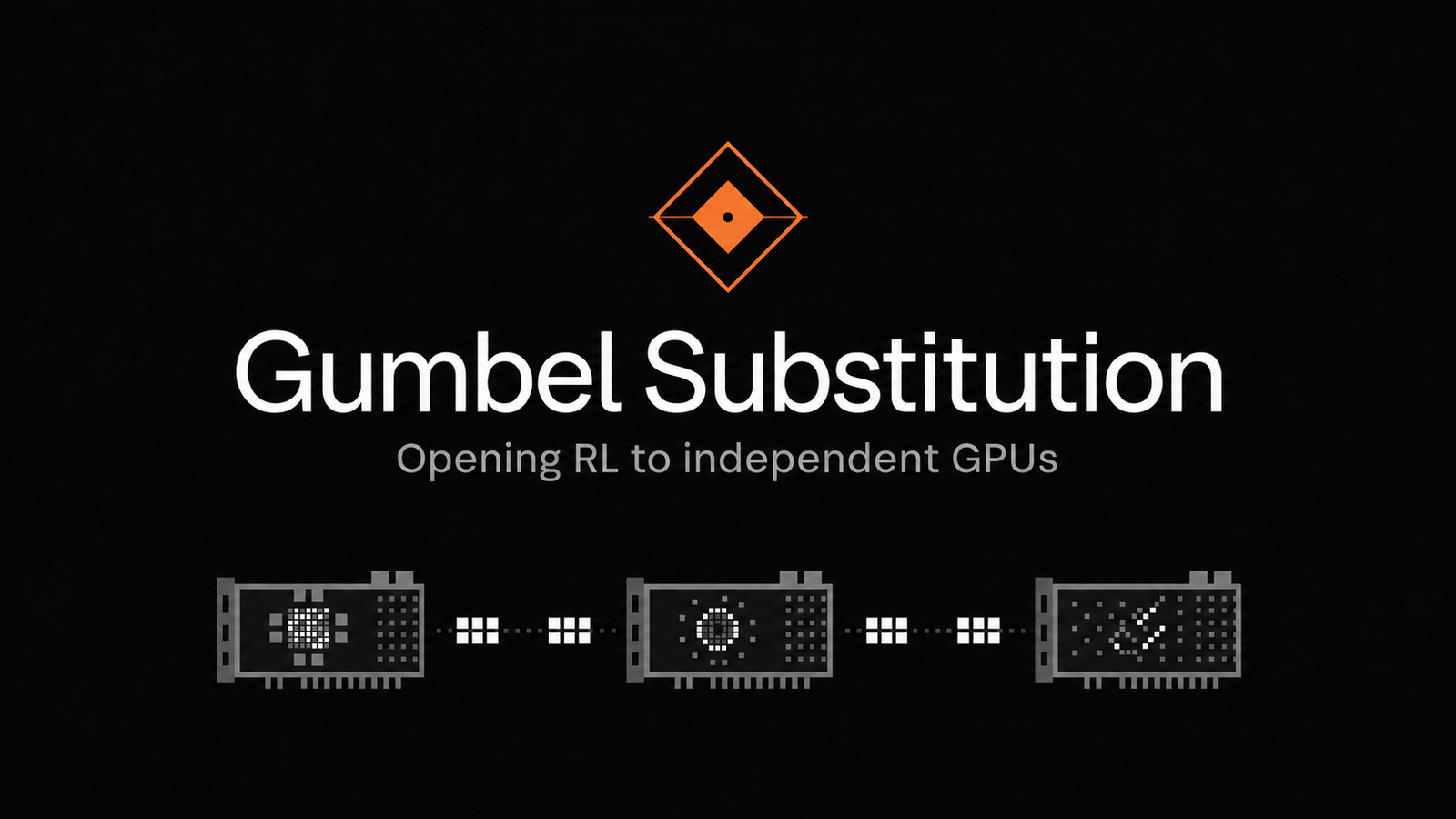
One GPU can generate a response from a language model, and another can use that response to train it. The trouble starts when the two machines make different predictions about what the model should say next.
Differences in hardware or model versions can cause those predictions to diverge. Over many training steps, that mismatch can build up until training breaks down.
Reliquary (SN81), a subnet that lets anyone contribute GPU power to generate responses from a language model, provides a solution.
It uses a method called Gumbel substitution to check those responses and turn them into examples the model can learn from through reinforcement learning.
These responses, known as rollouts, earn rewards based on how well they complete a task.
A coordinator commits to a secret and uses it to generate the same random values for both the contributing GPU and the trainer.
At each position in the response, the contributing GPU combines those values with its own scores to pick the next token. The trainer repeats the calculation with its own scores.
If it picks a different token, it trains on its own choice while keeping the preceding text and the reward the original response earned.
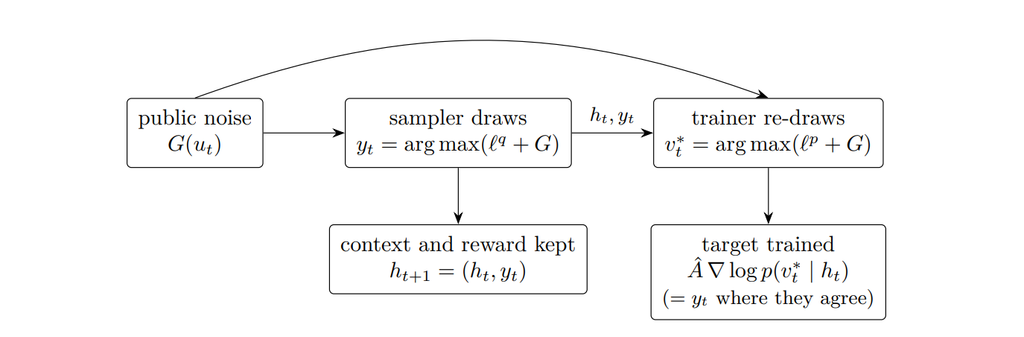
That substitution lets the trainer learn from a token drawn from its own policy without relying on probabilities reported by the contributing GPU.
In tests on a 9-billion-parameter model, expected training drift was 170 to 4,800 times higher without the correction.
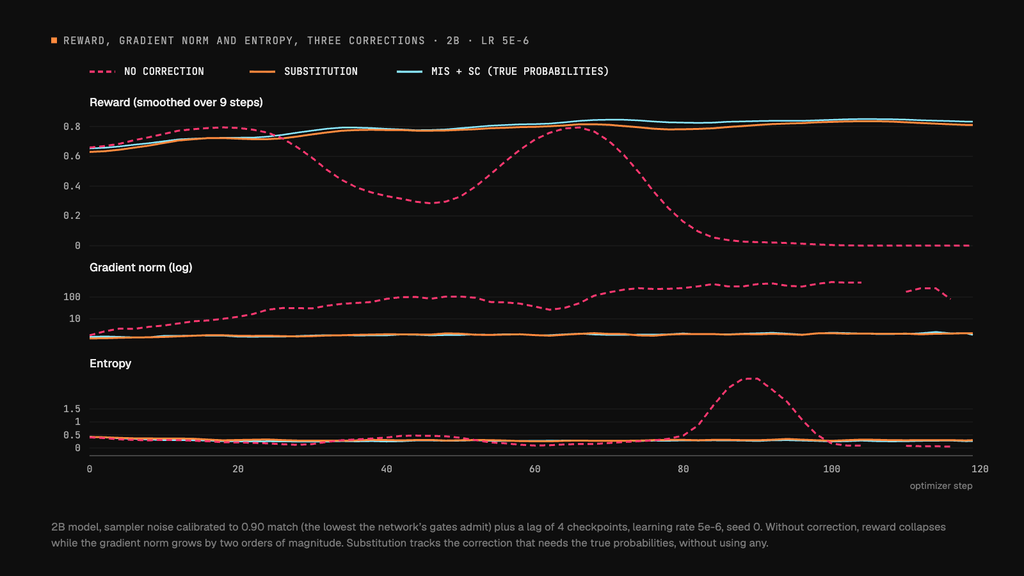
In separate runs on a 2-billion-parameter model, a strong mismatch caused uncorrected training to fail within dozens of steps. Runs using substitution stayed stable.
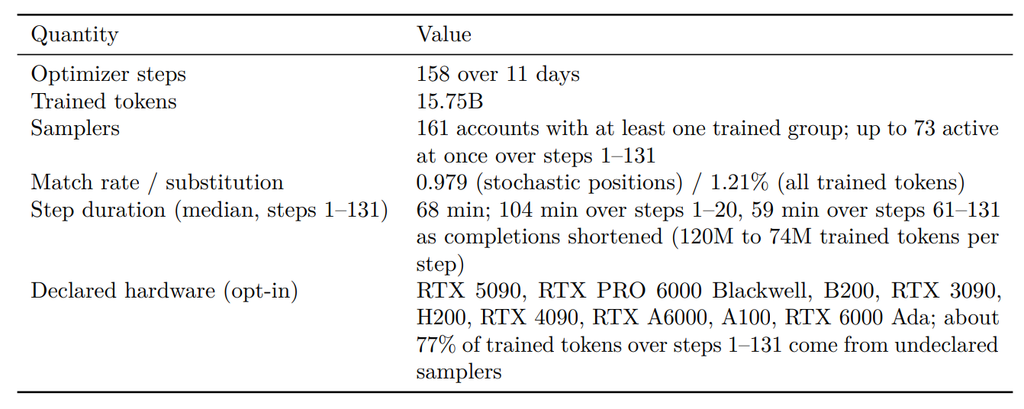
Reliquary then ran the method on its live network. Over 11 days, it completed 158 consecutive training updates and processed 15.75 billion tokens from 161 independent accounts.
Reported GPUs ranged from consumer RTX 3090s to data center B200s. The hardware behind 77% of the tokens went undeclared, and only 1.21% of all tokens needed substitution.
The same token comparison also determined what contributors earned. To qualify for payment, an operator’s choices had to match the trainer’s at least 90% of the time.
Once an operator cleared that threshold, Reliquary paid only for matching tokens. That let the network verify the work using the output itself, even when operators didn’t identify their GPUs.
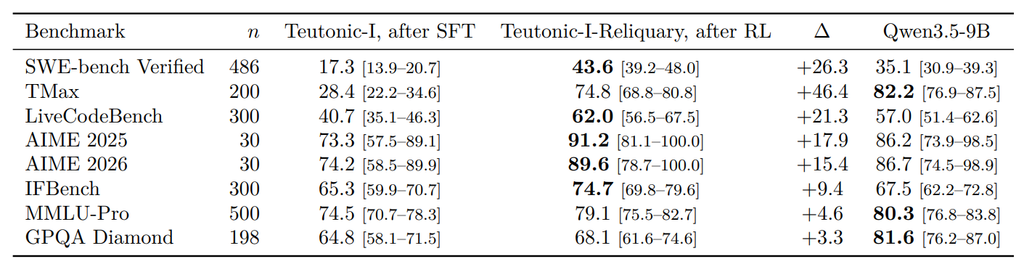
The resulting model, Teutonic-I-Reliquary, improved on all eight benchmarks held back for evaluation.
Its score on SWE-bench Verified, which tests whether models can resolve real software issues, rose from 17.3% to 43.6%.
Reliquary released the model weights under Apache 2.0 and published the paper, training logs, dashboard and source code so other teams could reproduce the experiment.
➛ View Reliquary (SN81)’s Paper on Gumbel Substitution.
Enjoyed this article? Join our newsletter
Get the latest TAO & Bittensor news straight to your inbox.
We respect your privacy. Unsubscribe anytime.
Enjoyed this article?
Join our newsletter
Get the latest TAO & Bittensor news straight to your inbox — every morning before markets open.
No comments yet — be the first.