

An open-weight model can get better at following instructions after fine-tuning and become more likely to agree with a user who is wrong. Engineers often discover those trade-offs only after spending hours or days training and evaluating the model.
Proba, a platform from Aurelius (SN37), brings that assessment forward by estimating how a dataset could change model behavior before a training run begins.
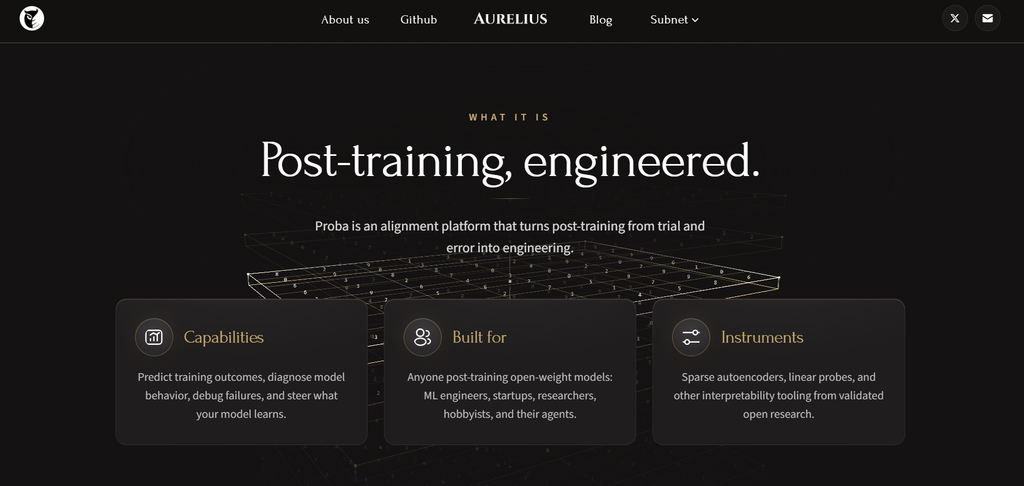
Aurelius (SN37) is a subnet that rewards miners for refining the interpretability tools used to study and predict changes in AI model behavior.
Proba puts those tools to work by passing examples from a proposed training dataset through the target model. Sparse autoencoders, linear probes, and logit readouts help analyze the model’s internal responses and estimate which behaviors could shift, in what direction, and by how much.
The report includes confidence scores and surfaces the highest-risk findings first.
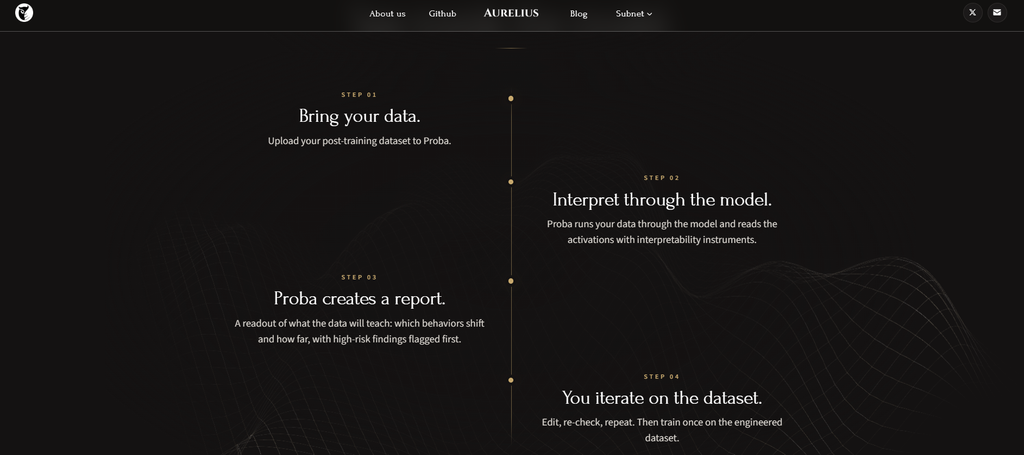
Because Proba uses forward passes without updating model weights, it can return a report in minutes. A team comparing two preference datasets could use those reports to see which one is more likely to increase sycophancy or weaken refusals.
Engineers can then revise examples that appear to push the model in an unwanted direction, strengthen examples that support the intended behavior, and run another check before committing compute.
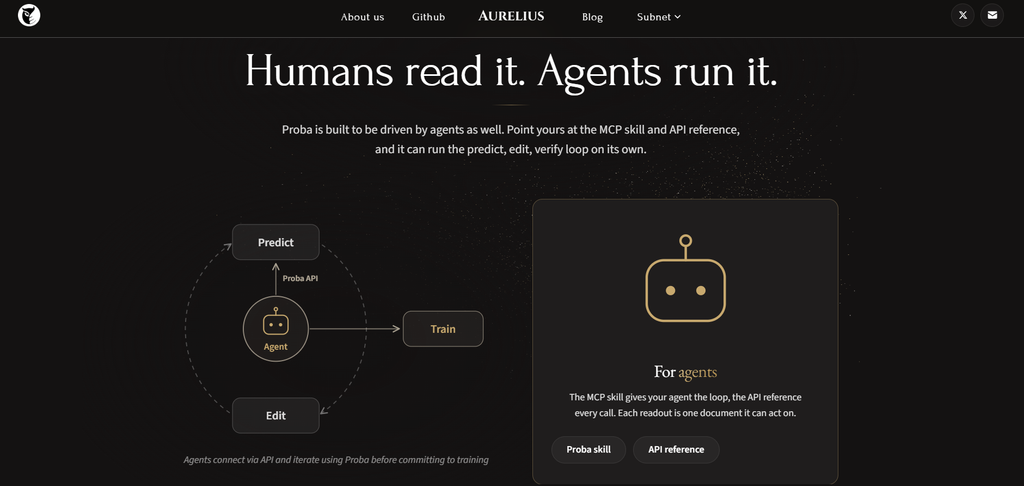
Proba exposes that workflow through an API, so an agent can compare datasets, propose edits, and rerun the analysis automatically.
The estimates give teams a way to decide which datasets are worth training on and which behaviors warrant closer evaluation once the run is complete.
For teams with limited compute, that shifts some of the costliest decisions in post-training to a point where changing course can be as simple as editing the data.
➛ Follow Aurelius (SN37) For More Updates.
Enjoyed this article? Join our newsletter
Get the latest TAO & Bittensor news straight to your inbox.
We respect your privacy. Unsubscribe anytime.
Enjoyed this article?
Join our newsletter
Get the latest TAO & Bittensor news straight to your inbox — every morning before markets open.


No comments yet — be the first.