


Businesses and communities rely on platforms like Slack, Microsoft Teams, and Discord to communicate, share files, and coordinate activities.
However, rising subscription costs, centralized infrastructure, and limited control over data remain significant challenges.
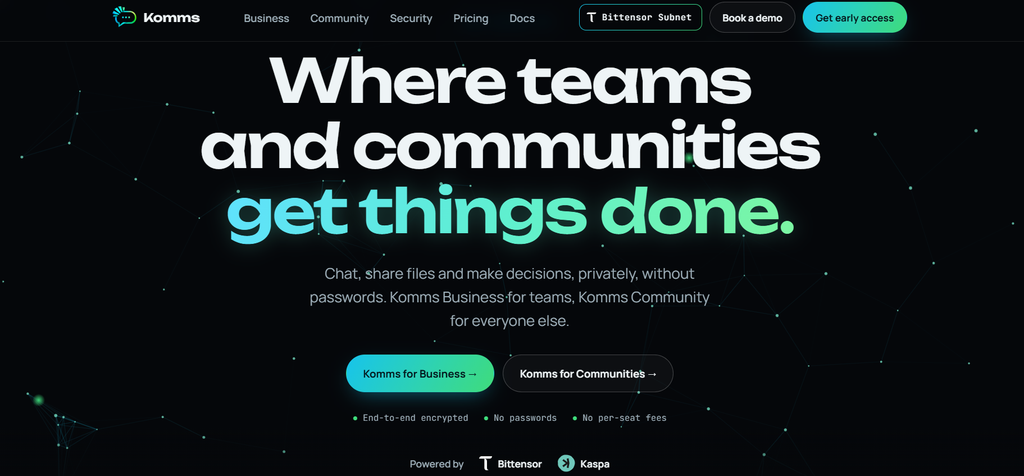
Komms is developing an alternative that addresses these limitations through decentralized infrastructure.
Built on Bittensor’s subnet 27, the platform uses independent network operators to power messaging, file sharing, and collaboration.
It aims to give businesses and communities greater control over their data without charging for every additional user.
What Is Komms?
Komms is a decentralized communication platform designed for businesses, communities, and eventually AI agents.
It offers familiar features such as private messaging, group conversations, channels, file sharing, and workspace management, similar to Slack or Discord.
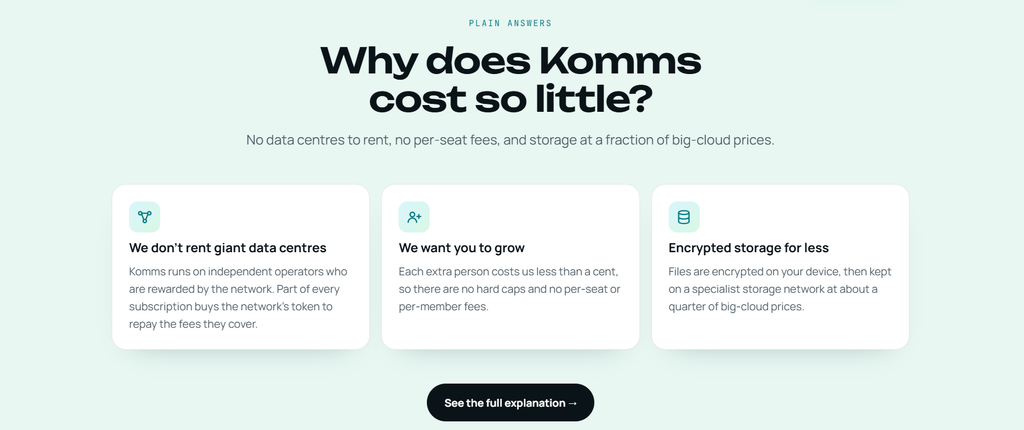
However, its underlying infrastructure is designed to operate through Bittensor’s decentralized network rather than depending entirely on company-controlled servers.
Komms has two products:
1. Komms Business: Private workspaces for companies and professional teams.
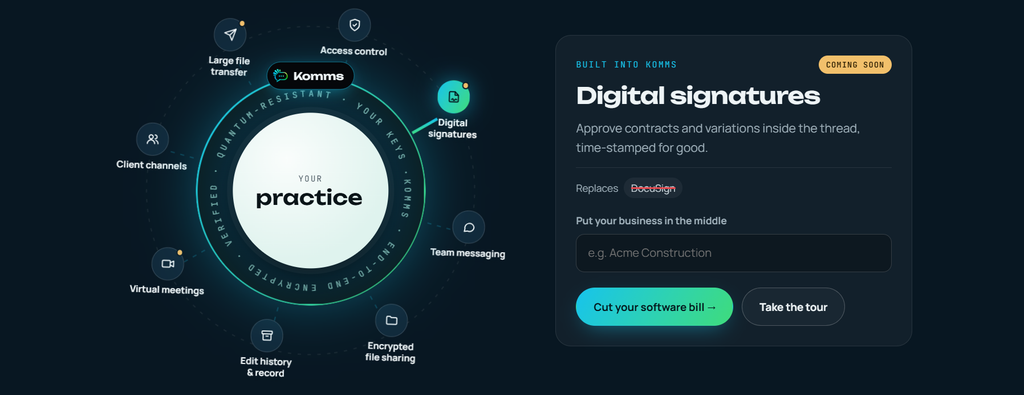
2. Komms Community: Communication servers for creators, crypto projects, clubs, and online communities.
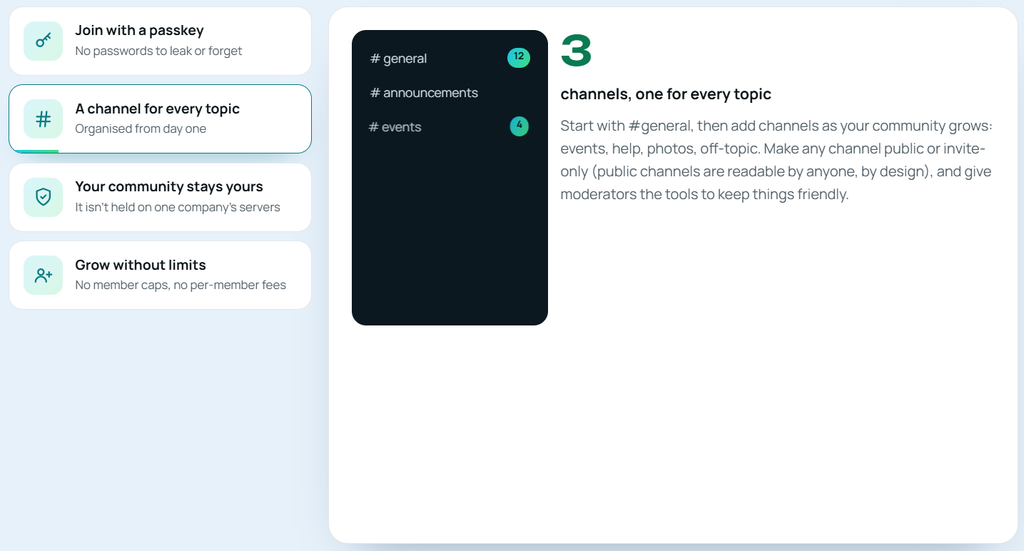
Both products use the same infrastructure, with end-to-end encryption and user-controlled data.
How Bittensor’s SN27 Powers Komms
SN27 powers Komms’ decentralized communication infrastructure. Miners relay encrypted messages, index records, and provide access to stored data, while validators assess their accuracy, reliability, and performance.
Bittensor rewards miners for providing reliable services, reducing Komms’ dependence on centralized infrastructure. Kaspa complements this by recording identities and message fingerprints for independent verification.
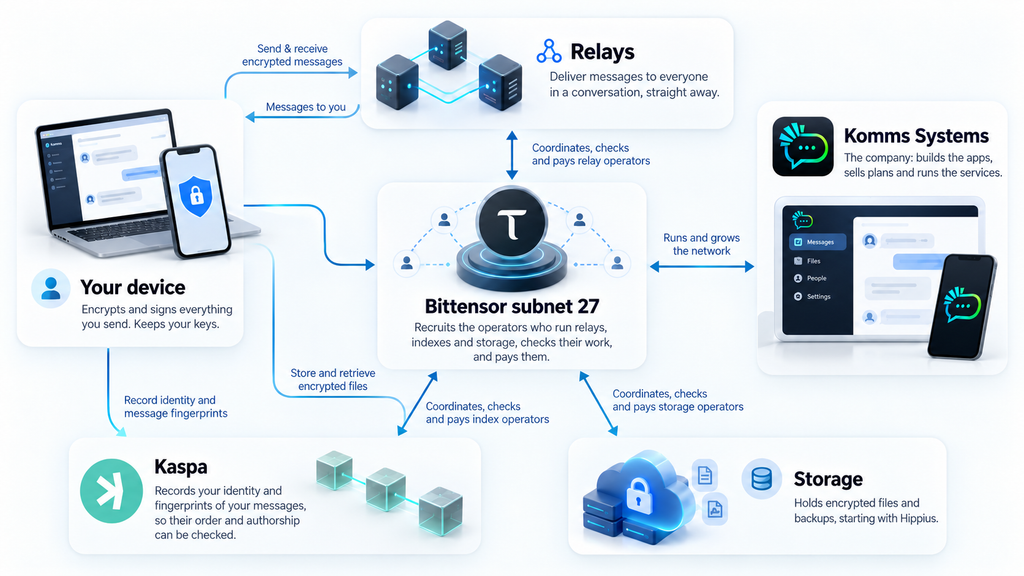
Komms also uses Hippius (SN75) for encrypted file storage. Together, these networks support private messaging, verifiable communication, and decentralized data storage.
Privacy and Data Ownership
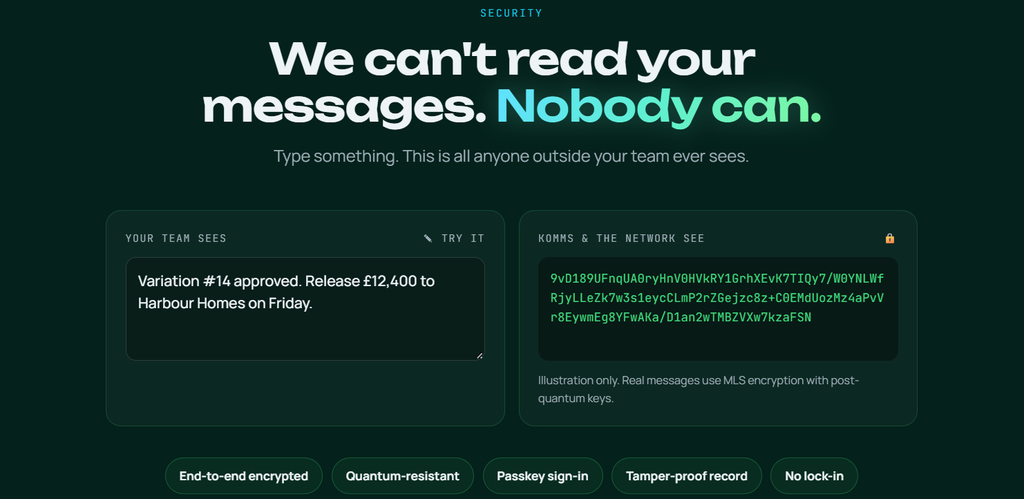
Komms is designed to give users greater control over their conversations and information. Private messages are encrypted before leaving users’ devices, meaning neither Komms nor network operators can read their contents.
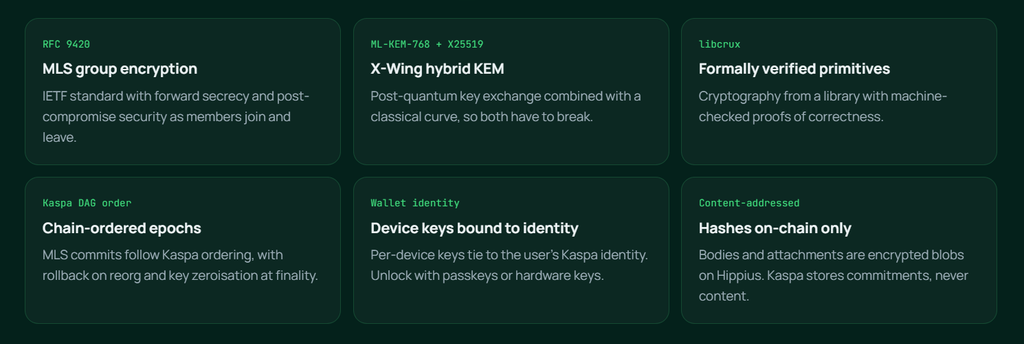
The platform also uses hybrid post-quantum key exchange for direct messages, providing protection against certain future quantum-computing threats.
Users will be able to export their communication histories and independently verify them, reducing dependence on a particular platform.
How Much Will Komms Cost?
Komms is introducing a flat-rate pricing model instead of the per-user subscriptions common among workplace communication platforms.
Businesses pay per workspace, while communities pay per server, regardless of the number of members.
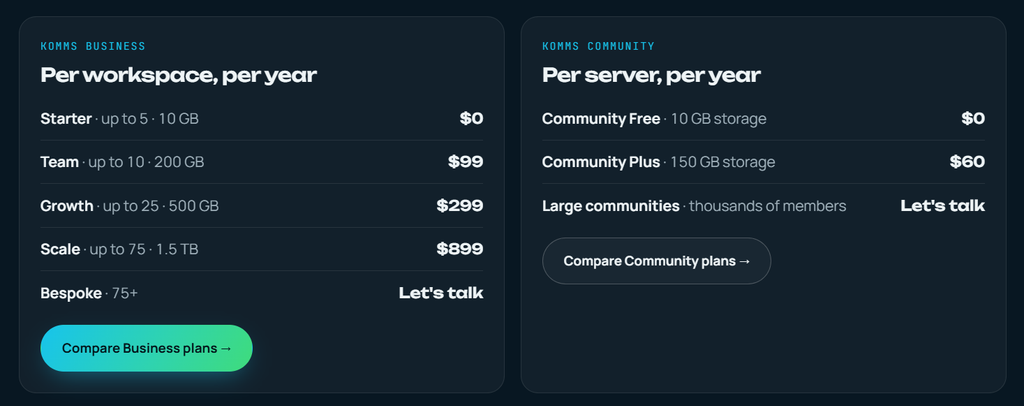
All plans support unlimited members and messaging under fair-use conditions, with storage allowances varying by plan, making Komms attractive to businesses and communities managing large groups.
These pricing details above remain provisional, with paid subscriptions expected to become available at launch.
Who Is Behind Komms?
Komms was co-founded by Chris Hutchinson, Ashton Wood, and Tom Hutchinson. Chris leads marketing, outreach, and community development, drawing on his experience in cryptocurrency and content businesses.

Ashton oversees technical architecture and engineering, with experience in mining infrastructure, hardware, and the Kaspa ecosystem. Tom contributes to technical development and product operations alongside his background in marketing and business management.
Chris and Tom have worked together for more than 15 years across several businesses.
What’s Next for Komms?
Komms acquired SN27 in October 2026 and is currently preparing its decentralized infrastructure for public use. The application remains on testnet, with miner onboarding, incentive-mechanism development, and additional testing underway.
A public beta is targeted for late November 2026, initially focusing on web and desktop messaging, encrypted conversations, and file sharing.
Future plans include mobile applications, encrypted voice and video calls, and communication infrastructure for autonomous AI agents.
Final Thoughts
Komms is exploring how Bittensor’s decentralized infrastructure can power everyday communication applications.
Through SN27, the platform coordinates and rewards independent operators to provide private messaging and collaboration services.
Its integration with Hippius also demonstrates how Bittensor subnets can work together to support commercial products.
This approach could reduce costs and reliance on centralized platforms while giving users greater control over their data.
With public beta approaching, Komms (SN27) will need to demonstrate that its infrastructure can deliver the speed, reliability, and simplicity businesses expect.
Enjoyed this article? Join our newsletter
Get the latest TAO & Bittensor news straight to your inbox.
We respect your privacy. Unsubscribe anytime.
Enjoyed this article?
Join our newsletter
Get the latest TAO & Bittensor news straight to your inbox — every morning before markets open.


No comments yet — be the first.