


Bittensor has introduced Null Consensus, a new system that allows subnets to accommodate up to 2,500 participants, compared to the previous limit of 256. The update gives subnet owners more room to accommodate miners and expand their operations without being restricted by the previous capacity limit.
Previously, subnets could only accommodate 256 registered participants under a single reward mechanism. This meant that once all available slots were occupied, new miners could not join unless existing participants left or were removed.
The restriction has been particularly challenging for subnets where miners occupy available slots to discourage competition, as well as projects that benefit from having more participants.
For example, a subnet collecting data could gather information faster with more miners contributing, while a subnet providing computing power could expand its network of providers. With Null Consensus, these projects can accommodate significantly more participants and potentially increase their output.
However, the increase comes with a change in how miners are rewarded.
Under Bittensor’s existing Yuma Consensus, multiple validators assess miners’ work and help determine how rewards are distributed.
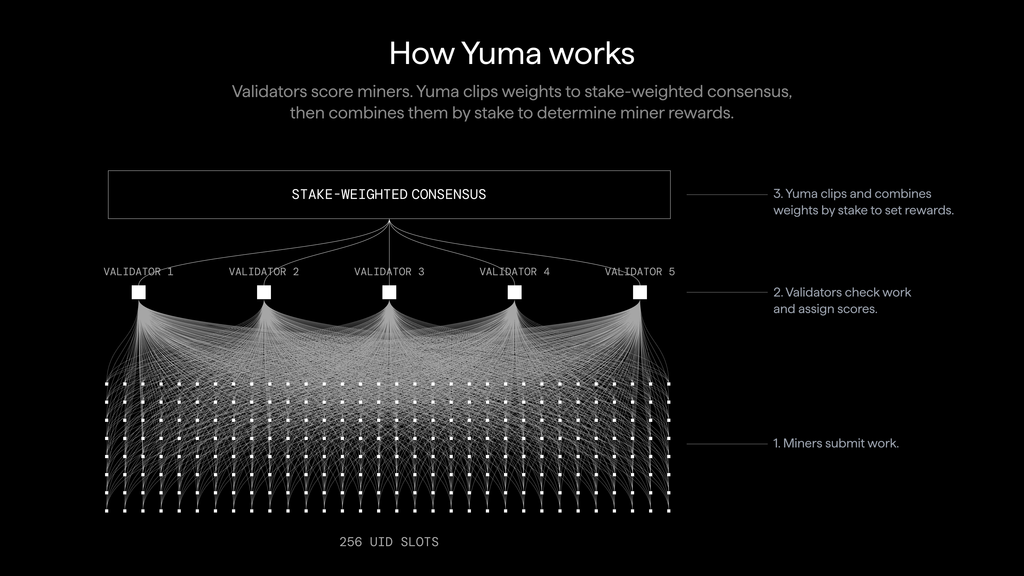
Null Consensus simplifies this process by giving the registered participant with the highest stake weight the sole authority to score miners and determine their share of rewards.
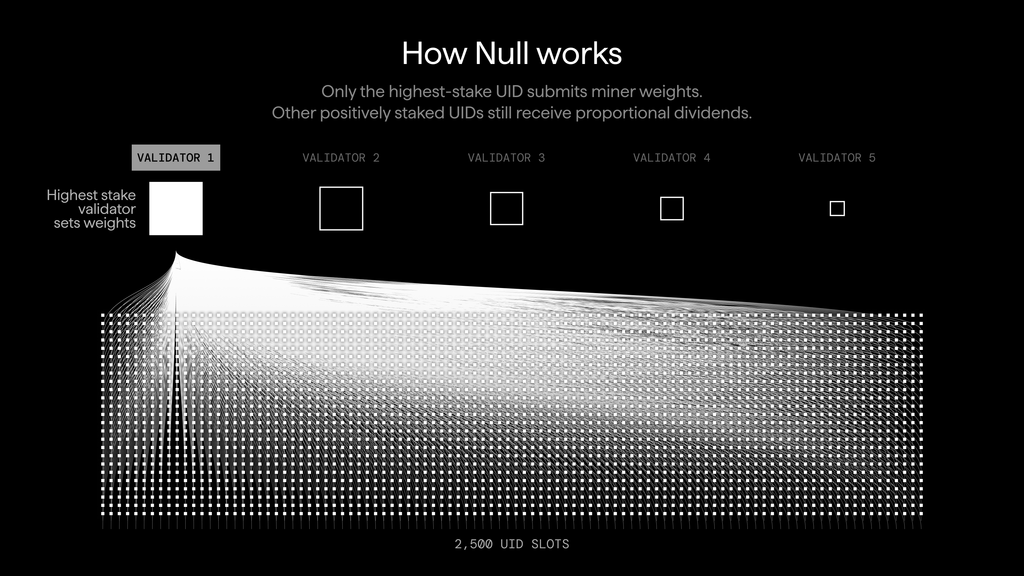
This makes the process simpler, but it also means that reward decisions depend on one validator instead of several. Other participants with stake can still earn validator rewards.
Importantly, Null Consensus is optional. Subnets will continue using Yuma Consensus by default, and owners must actively enable the new system and increase their participant limits. The 2,500 capacity also applies to subnets using a single reward mechanism. Subnets with multiple mechanisms must share that capacity between them (for example, one mechanism can accommodate 2,500 participants, two mechanisms can accommodate 1,250 each, and five mechanisms can accommodate 500 each).
The update also introduces an optional registration method that allows miners to join supported subnets by completing a computational task instead of paying the usual TAO registration fee. This could make participation more accessible to miners with computing resources but limited capital.
Null Consensus does not increase the total TAO rewards distributed by Bittensor. Instead, it gives subnet owners another way to manage participation and distribute rewards.
For subnets that need more miners to collect data, provide computing power, or deliver other services, the update removes a major capacity restriction and creates more room for competition and growth.
➛ Learn more about mining on Bittensor:
Enjoyed this article? Join our newsletter
Get the latest TAO & Bittensor news straight to your inbox.
We respect your privacy. Unsubscribe anytime.
Enjoyed this article?
Join our newsletter
Get the latest TAO & Bittensor news straight to your inbox — every morning before markets open.


No comments yet — be the first.