


Launching a subnet on Bittensor is becoming more accessible, but keeping one active could become more challenging. Two new network adjustments have shortened the protection period for newly registered subnets while allowing registration costs to decline faster.
The changes reduce subnet immunity from 120 to 60 days and cut the registration lock-cost decay period from 16 to 8 days. Together, they could create more opportunities for new projects while increasing competition among existing subnets.
Subnet Registration Costs Will Now Fall Faster
Registering a subnet on Bittensor requires locking a certain amount of TAO. Whenever a new subnet is registered, the cost of registering the next one doubles before gradually declining.
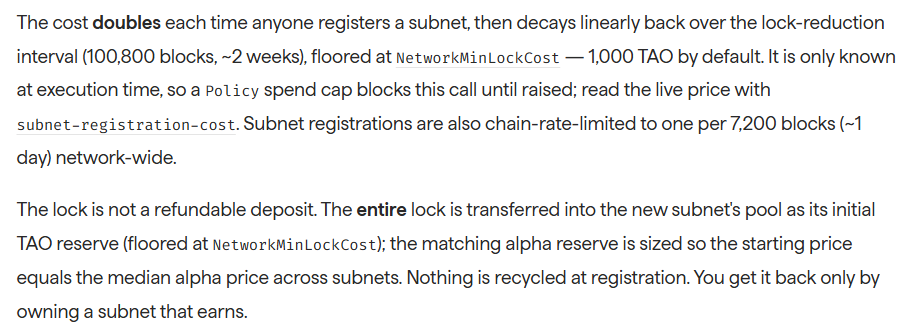
Previously, this cost halved every 16 days. Under the new adjustment, it will now halve every 8 days, allowing registration costs to fall twice as quickly after periods of high demand.
For example, if the registration lock cost reaches 1,000 TAO, it could decline to approximately 500 TAO after eight days without another registration, subject to the network’s minimum cost.
This could make launching subnets more affordable for prospective owners. However, the minimum two-day interval between registrations remains unchanged.
New Subnets Now Have Just 60 Days of Immunity
Bittensor has also reduced the immunity period for newly registered subnets from 120 days to 60 days. Immunity temporarily protects new subnets from deregistration, giving teams time to develop their products and establish themselves within the network.
Once immunity expires, a subnet becomes eligible for deregistration when the network is at capacity and another project attempts to register. Under Bittensor’s price-based deregistration mechanism, the eligible subnet with the lowest moving-average alpha price is generally selected for removal.
This means new subnets now have roughly two months instead of four before facing the possibility of removal.
What Does This Mean for Subnet Owners?
The most immediate impact could fall on subnets registered between 60 and 120 days ago. These projects were previously protected but may now be eligible for deregistration under the shorter immunity period.
Subnets younger than 60 days remain protected until their immunity expires, while those older than 120 days were already outside the previous protection window. For teams planning to register new subnets, the faster lock-cost decay could make entering the network more affordable after periods of increased registration activity.
Importantly, losing immunity does not automatically mean deregistration. A subnet would still need to meet the conditions for removal when the network is at capacity.
A More Competitive Subnet Ecosystem
Together, these changes could make Bittensor more accessible to new projects while increasing pressure on existing subnet owners to remain competitive.
With registration costs declining faster and immunity lasting half as long, the network could see more frequent competition for available subnet slots.
For subnet teams, the message is that there is now less time to establish a competitive position before facing the possibility of deregistration.
➛ Learn more about deregistrations on Bittensor.
Enjoyed this article? Join our newsletter
Get the latest TAO & Bittensor news straight to your inbox.
We respect your privacy. Unsubscribe anytime.
Enjoyed this article?
Join our newsletter
Get the latest TAO & Bittensor news straight to your inbox — every morning before markets open.



No comments yet — be the first.