

Bittensor may have an unusual liquidity problem. Some subnet markets have more liquidity than they need, making token prices less responsive to trading activity.
In Montreal, Yuma Group, a company that supports the development, operation, and growth of Bittensor subnets, introduced a proposed solution called Alpha Subnet Market Reloaded (ASMR).
The mechanism aims to optimize subnet liquidity and improve how accurately Alpha token prices reflect market demand.
Why Too Much Liquidity Is a Problem
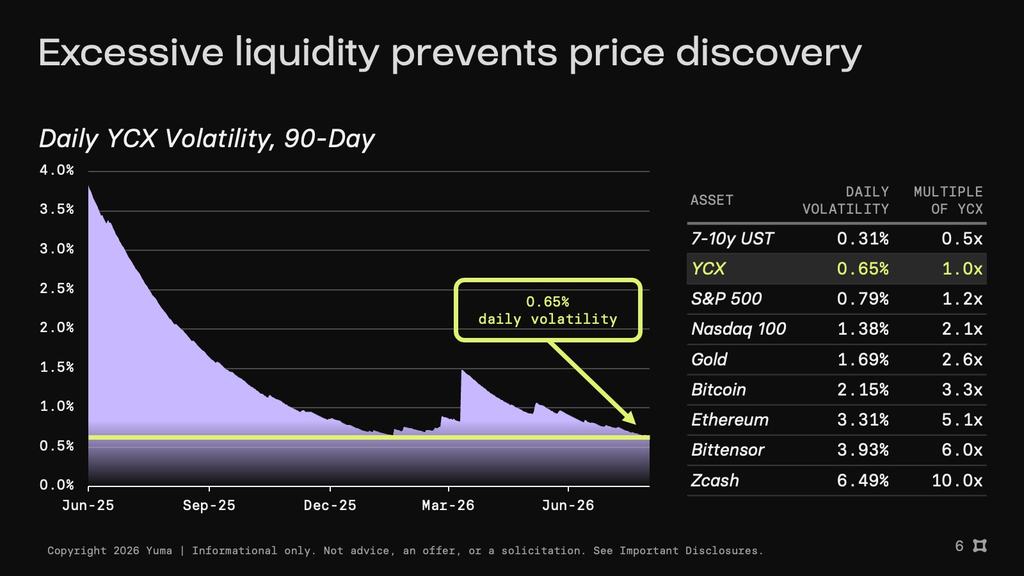
Liquidity measures how easily an asset can be traded without significantly affecting its price. While high liquidity generally makes trading easier, excessive liquidity can weaken price discovery.
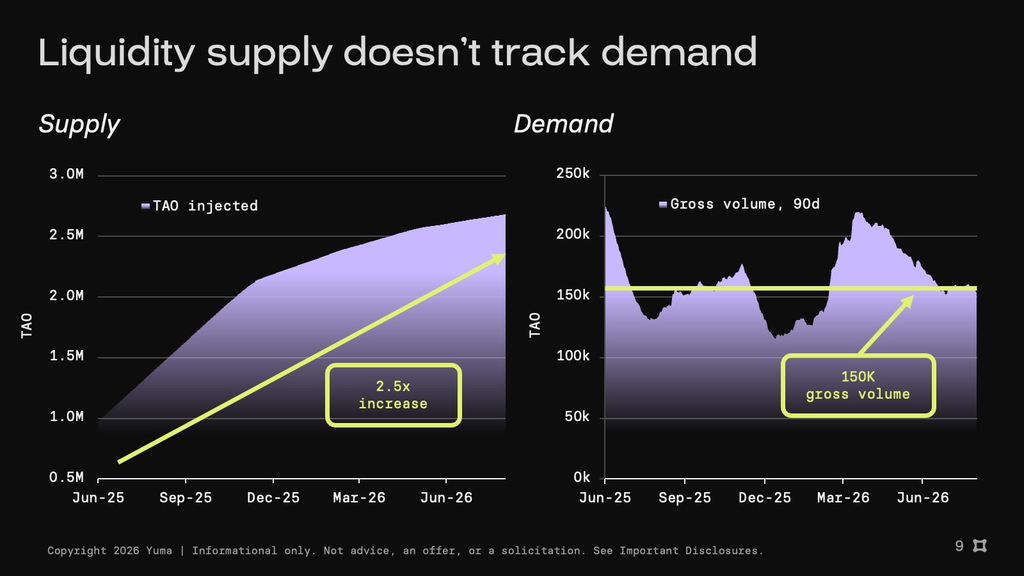
In Bittensor, alpha tokens trade against TAO through liquidity pools. These pools continue receiving protocol-generated liquidity, even when trading activity does not justify their growing size.
Yuma’s research found that its Yuma Composite Index (YCX), a market-cap-weighted index of subnet tokens, was less volatile than the S&P 500.
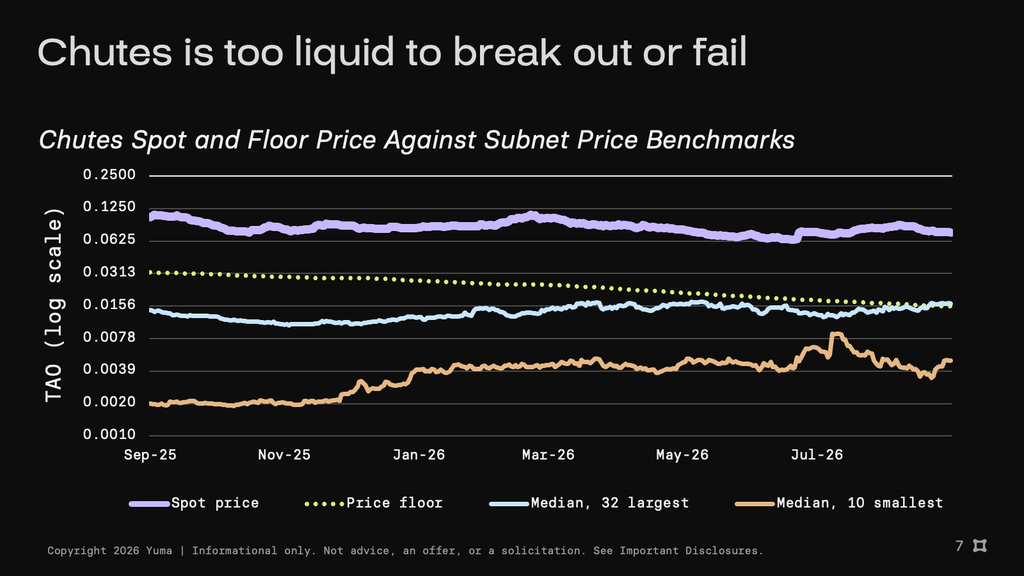
Chutes (SN64) was highlighted as an example. Its deep liquidity absorbs substantial trading activity, limiting both upward and downward price movements.
How ASMR Works
ASMR (Alpha Subnet Market Reloaded) is a proposed mechanism that adjusts the liquidity available in subnet pools based on actual market needs. It would work by:
1. Monitoring liquidity and trading activity across subnet pools.
2. Comparing existing liquidity against benchmarks based on trading volume, fees, and liquidity-provider economics.
3. Recycling excess protocol-owned Alpha when liquidity exceeds market requirements.
4. Using volatility safeguards to prevent excessive price fluctuations.
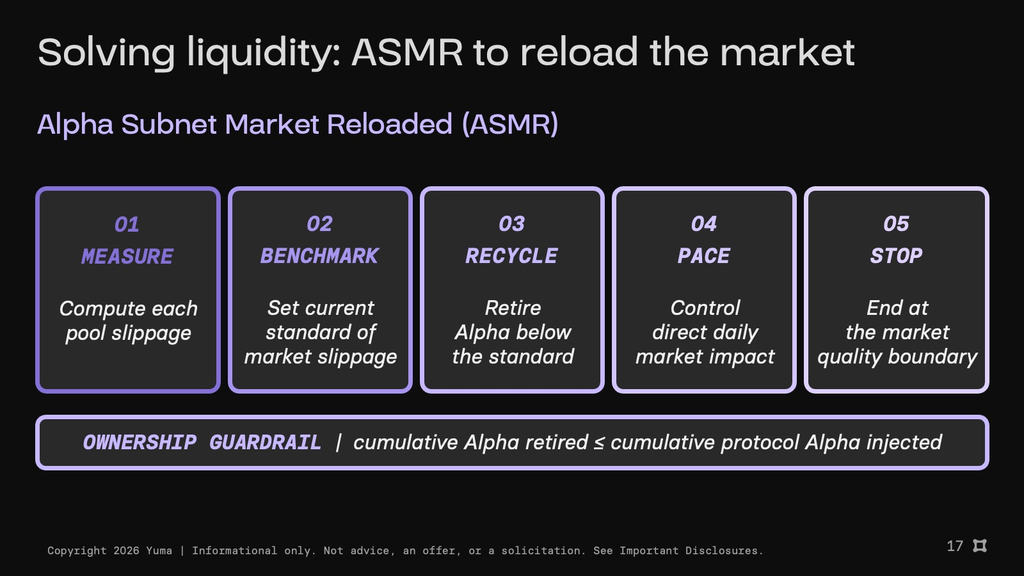
Simply put, ASMR would reduce unnecessary liquidity so subnet prices can respond more effectively to buying and selling activity.
What Yuma’s Simulations Revealed
Yuma estimates that liquidity across parts of Bittensor is approximately four times higher than current trading activity can economically support.
Its simulations showed that implementing ASMR could produce significant changes in token valuations as:
1. The Yuma Composite Index approximately doubled.
2. Chutes’ Alpha token price increased by more than 3×.
3. The proposed framework targeted a volatility boundary of roughly 1%.
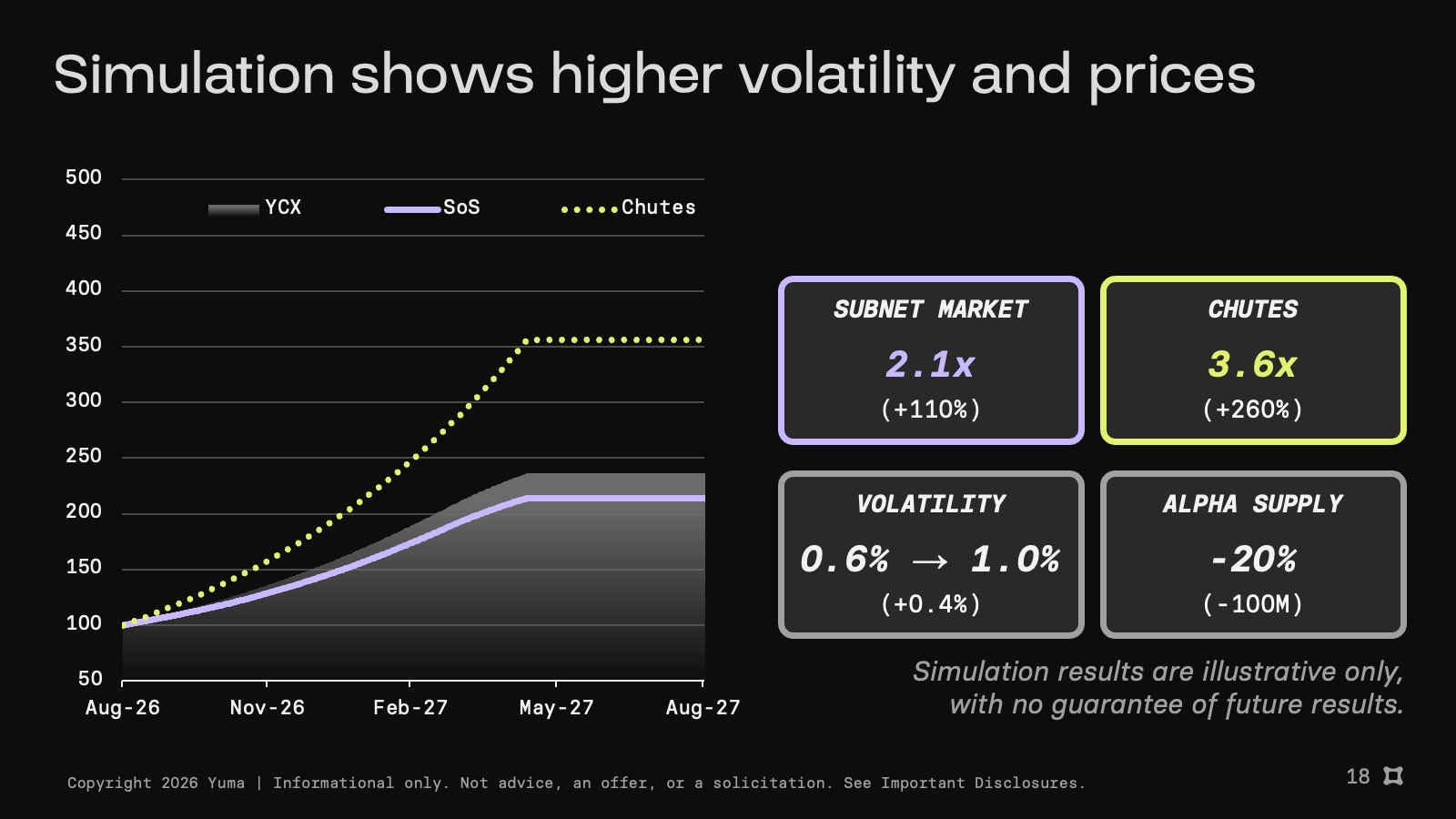
These figures are simulation results, not predictions of actual token performance. They illustrate how adjusting excess liquidity could change market pricing.
Why This Matters for Bittensor
Subnet token prices help investors assess market interest and allocate capital across Bittensor’s decentralized AI economy. When liquidity is excessive, prices may struggle to reflect changes in demand, making it harder to identify which subnets are attracting genuine investor interest.
ASMR could improve these signals by making prices more responsive. However, reducing liquidity also introduces risks, including higher slippage and sharper price movements. Finding the right balance would be essential.
What’s Next for ASMR?
ASMR remains a research proposal and is not yet live on Bittensor. Yuma introduced the concept for public discussion at Exploit Summit, with further research expected to explain its design and potential implications.
The proposal raises an important question about whether subnet liquidity should continue growing automatically or adjust to actual market demand as Bittensor’s economy evolves.
➛ Watch the Live Presentation of ASMR at Exploit Summit Here.
Enjoyed this article? Join our newsletter
Get the latest TAO & Bittensor news straight to your inbox.
We respect your privacy. Unsubscribe anytime.
Enjoyed this article?
Join our newsletter
Get the latest TAO & Bittensor news straight to your inbox — every morning before markets open.



No comments yet — be the first.