


404-GEN (SN17) published its Synthetic 3D Dataset, now the largest open-source 3D asset repository in the world, with more volume than all other existing 3D datasets combined.
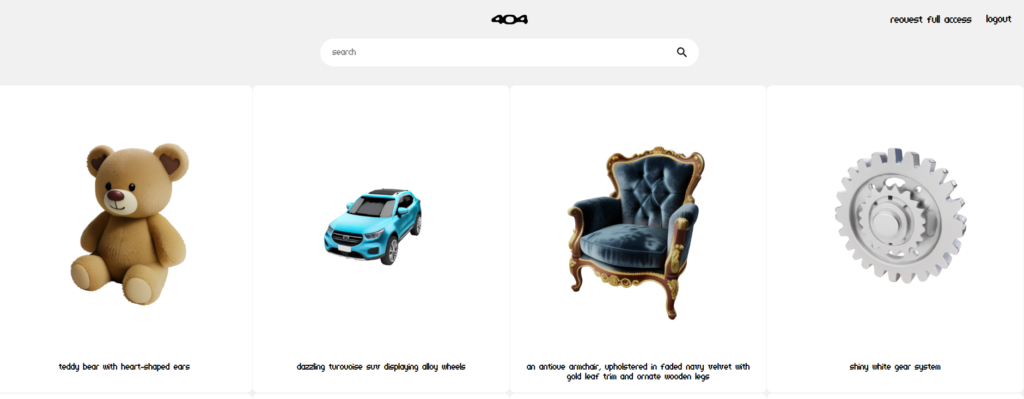
The dataset covers 21.5 million high-fidelity 3D assets across 40 terabytes of storage, generated through Bittensor’s decentralized miner network rather than through centralized studio production. Every asset ships with metadata, usage rights, and ownership attribution built in, making the corpus ready for research, commercial training, and studio use out of the box.
The three-tier access structure covers everything from lightweight research sampling to full API integration into training pipelines.
Why Synthetic 3D Matters
Training better 3D models requires massive volumes of high-quality assets, metadata, and variation that human-created 3D data cannot scale fast enough to supply.
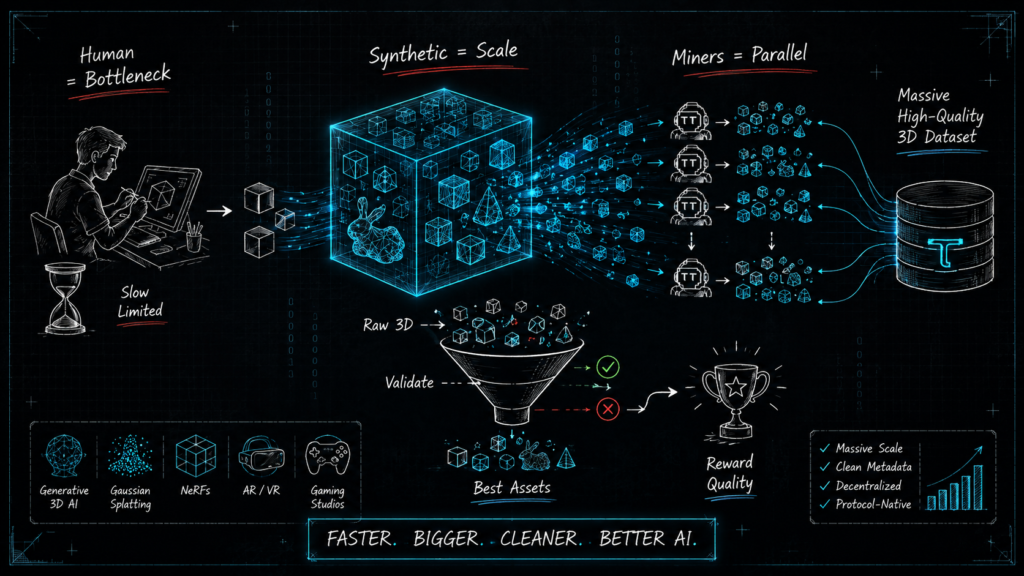
1. Human-created 3D is the bottleneck: Every hand-built asset takes hours to model, texture, and rig, which caps how quickly the field can grow its training corpus.
2. Synthetic data closes the scale gap: Generated programmatically, it can produce the volume that generative 3D AI, Gaussian Splatting research, NeRFs (Neural Radiance Fields), AR/VR (Augmented Reality/Virtual Reality), and gaming studios all need.
3. Decentralized generation adds throughput: Bittensor miners can generate, score, filter, and aggregate 3D content in parallel at a pace no centralized pipeline can match.
4. Quality control runs at the miner layer: The network rewards high-quality outputs and filters low-quality ones before they land in the aggregate dataset.
The result is a corpus produced faster, at greater scale, and with cleaner metadata than any centralized studio operation has ever assembled.
What the Dataset Actually Contains
The current state of the dataset covers the full pipeline any downstream operation would need.
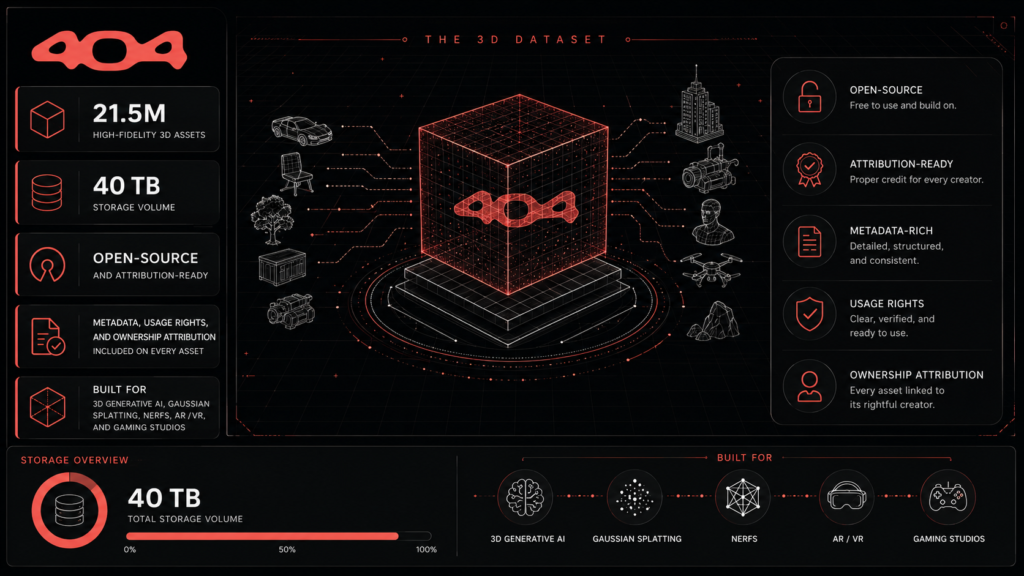
1. 21.5 million high-fidelity 3D assets.
2. 40 terabytes of storage volume.
3. Open-source and attribution-ready.
4. Metadata, usage rights, and ownership attribution included on every asset.
5. Built for 3D generative AI, Gaussian Splatting research, NeRFs, AR/VR, and gaming studios.
Access runs across three tiers depending on how the dataset is being used:
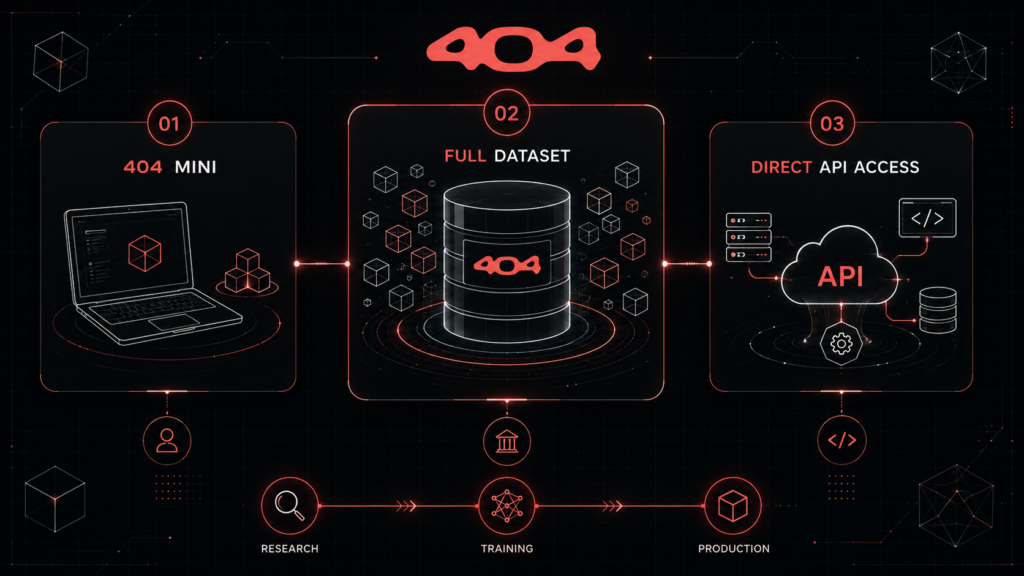
GEN-404’s Synthetic Dataset Access Tiers
1. 404 Mini: A lightweight sample tier for researchers and developers evaluating the dataset or running smaller experiments.
2. Full Dataset Access: The complete 40TB corpus for large-scale institutional research, commercial training, and studio pipelines.
3. Direct API Access: High-speed API integration for researchers, developers, or studios routing directly into their training pipeline.
Where This Fits in 3D AI
The gap between 3D AI research and 2D image AI has always been the data. Text and image models had billions of examples scraped from the open web. 3D never had a comparable corpus because 3D assets are expensive to produce and rarely released openly.
404-GEN’s dataset closes that gap in one release, delivering more 3D data than the entire field had access to before, with the metadata layer that turns raw assets into usable training material. For generative 3D AI, Gaussian Splatting research, NeRF development, AR and VR applications, and any gaming studio building generative pipelines, the dataset is the resource the field has been waiting for.
Bittensor’s decentralized miner network is what made the scale possible, and the open-source release is what makes it usable.
➛ Request for Full Access Request to the Dataset Here
Enjoyed this article? Join our newsletter
Get the latest TAO & Bittensor news straight to your inbox.
We respect your privacy. Unsubscribe anytime.
Enjoyed this article?
Join our newsletter
Get the latest TAO & Bittensor news straight to your inbox — every morning before markets open.



No comments yet — be the first.