


404-GEN (SN17) has reached its third stage of 3D generation, with a new miner competition set to advance its roadmap toward Large Spatial Models.
The subnet has progressed from Gaussian splats to meshes and now procedural code, each step adding greater editability, parameterization, and spatial reasoning.
Unlike centralized 3D generators, every advancement is driven by continuous miner competition, allowing quality to improve over time.
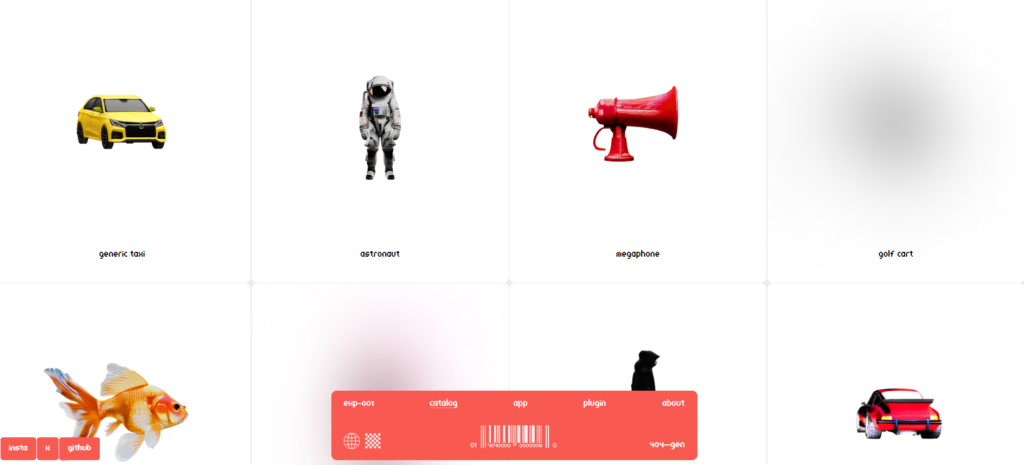
The upcoming competition is expected to move the subnet closer to AI models that truly understand 3D space, object relationships, and physics.
The Three Stages So Far
Each stage unlocks capabilities the previous one could not, creating one of the clearest technical roadmaps in decentralized AI today.
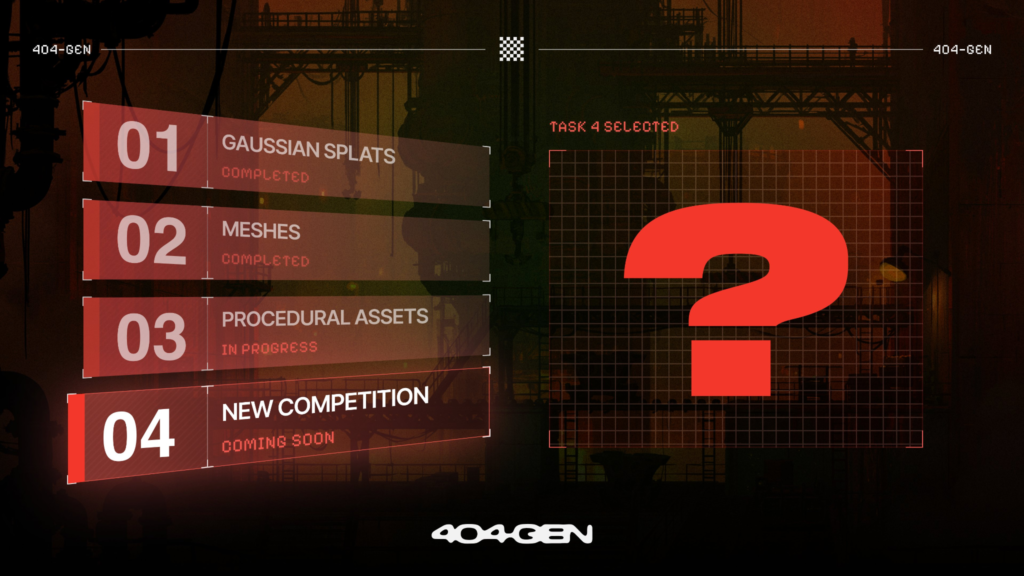
1. Gaussian splats: High-fidelity 3D reconstruction and visual realism at scale.
2. Meshes: Editable geometry, physics compatibility, and production-ready assets that integrate directly with game engines and 3D workflows.
3. Procedural code: Parameterized, programmable assets that support variation, structural reasoning, and dynamic generation instead of fixed outputs.
Rather than simply generating increasingly realistic 3D scenes, every stage moves the subnet closer to AI that can understand, manipulate, and reason about three-dimensional environments.
Where the Next Competition Likely Goes
The next step toward Large Spatial Models is adding the capabilities that make 3D useful beyond visualization.
1. Spatial understanding: Models that understand where objects exist in relation to one another within a scene.
2. Object relationships: Reasoning about how assets interact instead of treating every object as an isolated entity.
3. Physics simulation: Behavior that mirrors the real world closely enough for robotics, simulation, gaming, and other practical applications.
A competition targeting these capabilities would move 404-GEN beyond generating individual 3D assets and closer to generating, understanding, and reasoning about complete 3D worlds.
Where This Points
The climb from splats to meshes to procedural code only makes sense because continuous miner competition runs underneath it, compounding improvements between each stage.
The next competition is where the subnet crosses from producing 3D assets to producing spatial reasoning, and that shift is what turns 404-GEN (SN17) into infrastructure for real-world adoption rather than a specialized creative tool.
For anyone tracking how Bittensor subnets translate mining incentives into structured technical progress, this is one of the sharper examples currently shipping.
➛ Read About The Dream, the Game Developed with 404-GEN’s Assets Here:
Enjoyed this article? Join our newsletter
Get the latest TAO & Bittensor news straight to your inbox.
We respect your privacy. Unsubscribe anytime.
Enjoyed this article?
Join our newsletter
Get the latest TAO & Bittensor news straight to your inbox — every morning before markets open.


Be the first to comment