
Subnet.ai launched in beta with the goal of becoming the research platform Bittensor investors rely on before allocating capital.
The release combines advanced subnet discovery, unified search across subnets, validators, and wallets, detailed emissions attribution, company-level earnings, and a risk index highlighting whale concentration.
While the team continues refining its pipeline against the Taostats API, any metric that cannot be verified on-chain is clearly flagged instead of estimated.
The roadmap expands into subnet lineage, deeper health scoring, portfolio intelligence, and community-driven corrections, positioning Subnet.ai as a comprehensive intelligence layer for the Bittensor ecosystem.
What’s Already Live
The beta ships with research surfaces no other platform in the ecosystem currently packages together in one place.
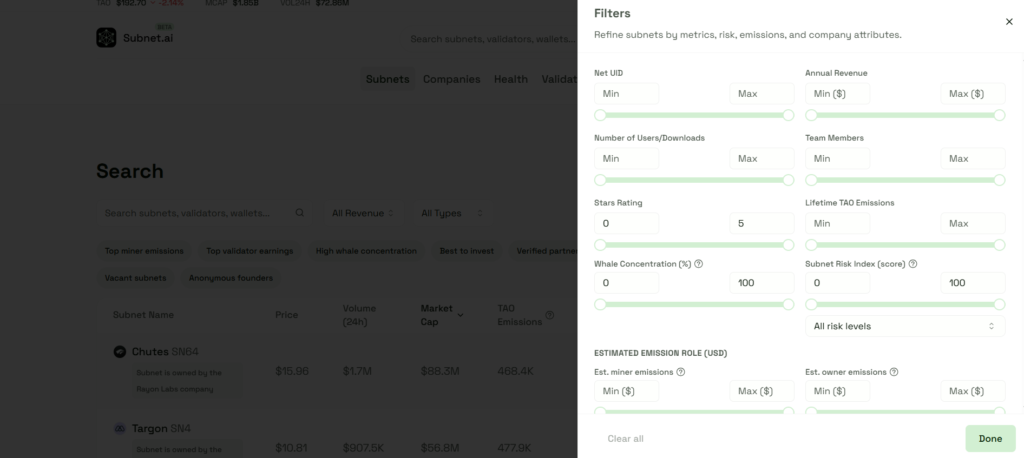
1. Explore filters: Subnet discovery across revenue status, annual revenue, users, team size, lifetime emissions, whale concentration, risk index, estimated role emissions, company ownership, verified partnerships, vacant slots, founder identifiability, and live-versus-past subnet profiles. One-click presets surface the sharpest cuts instantly.
2. Unified search: One search box handles subnets, validators, and wallets from the navigation bar.
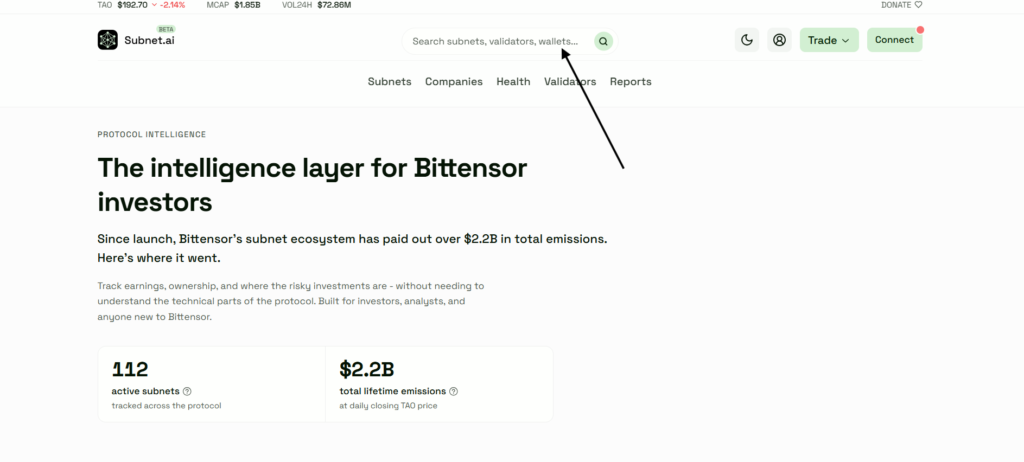
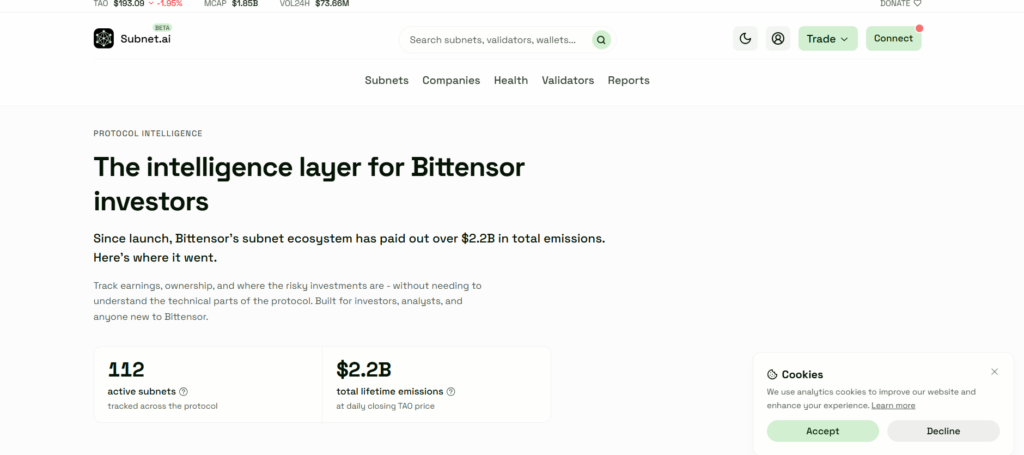
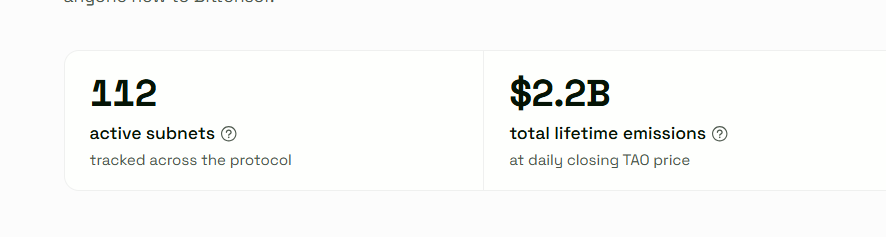
3. Emissions attribution: $2.2B in lifetime emissions across 112 active subnets, split by who actually receives them (owner, miners, delegators, validator commission) rather than only the headline number.
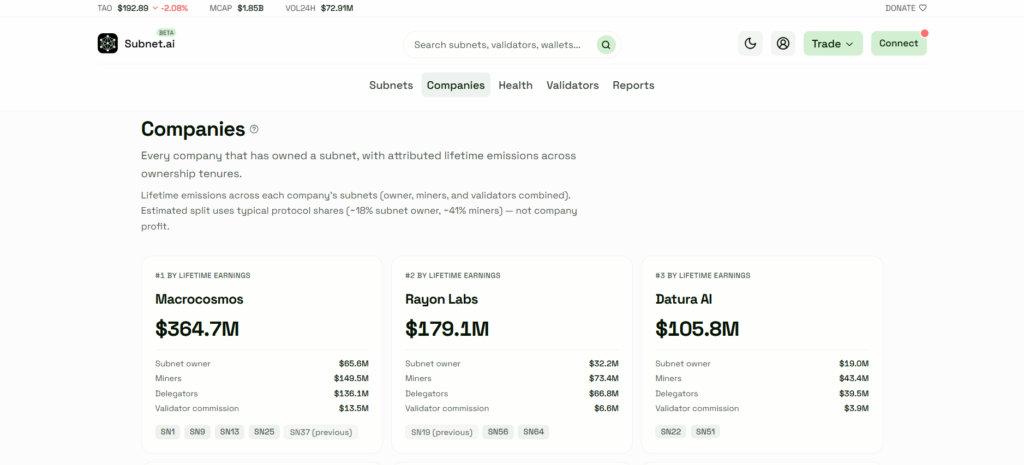
4. Company-level earnings: Multi-subnet operators ranked by lifetime emissions across their entire portfolio, with previously-owned subnets attributed to the correct ownership window.
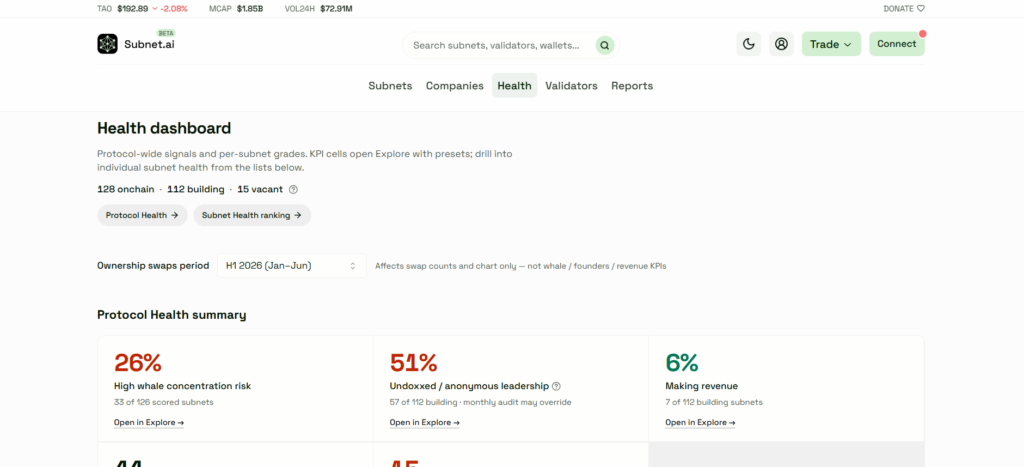
5. Protocol health scoring: Composite scoring across 112 subnets. Current readings: 25% carry high whale concentration risk, 51% have no identifiable leadership, 6% generate revenue.
6. Subnet Risk Index: Per-subnet risk on a 0-to-100 scale, with the top-10 wallet share of alpha shown openly.
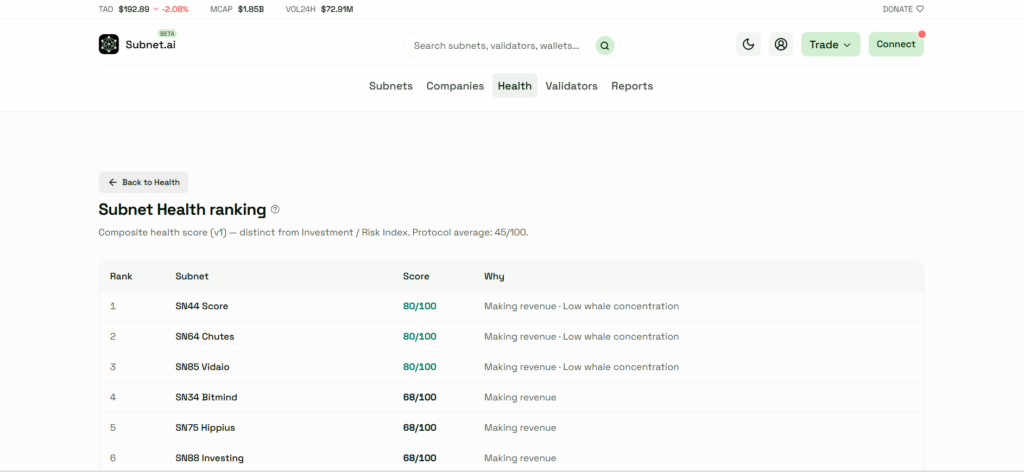
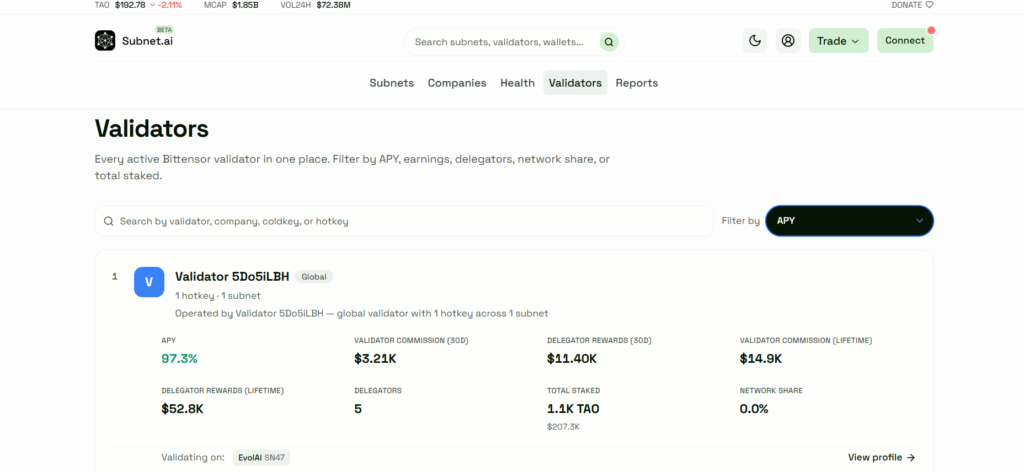
7. Validators explorer: Coldkey-grouped operators with earnings and share per validators.
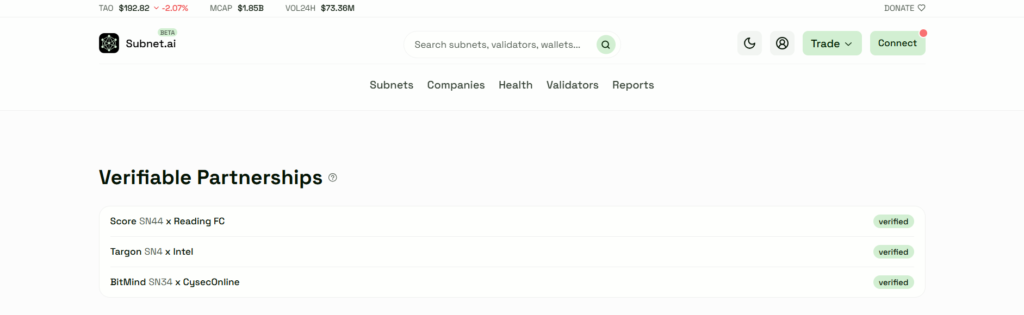
8. Verifiable partnerships: Claimed commercial deals marked verified only when a public record exists to back them.
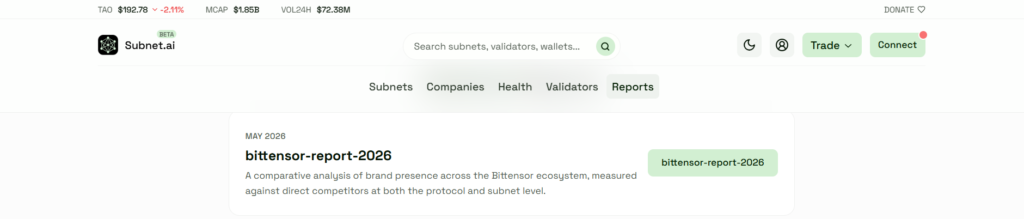
9. Research reports: The first covered the state of the Bittensor ecosystem with published methodology. The second drops July 31st and covers Bittensor in H1 2026.
The beta is candid about its limits. Some subnet pages are thin, some figures lag live chain state, and ownership attribution on recently-acquired subnets stays unverified until chain records can confirm it. The team would rather flag uncertainty than paper over it.
What’s Being Built On Top
The next wave extends the platform from discovery into the questions that actually decide whether a subnet is worth backing.
1. Netuid lineage coverage: A prior-era page for every subnet that has changed hands, complete with description, ownership-window emissions, swap date, associated coldkeys, and team.
2. Sharper health metrics: Beyond whale risk and founder identity into emissions received versus capital raised externally, emissions versus revenue generated, users versus revenue, model quality against non-Bittensor competition, and team survival rates over time.
3. Social signal integration: Subnet-level X account data feeding the Brand Mentions layer currently sitting empty on subnet pages.
4. Personalized portfolio intelligence: Connect a wallet and every health and risk reading resolves against actual holdings rather than the aggregate ecosystem picture.
5. Community notes: Structured, rewarded contribution of verifiable facts and corrections. Every submission gets reviewed before publication, and contributors will earn from the work.
Trading, swapping, and staking already run through the wallets integration on the platform. What is being built on top is a different product entirely, and the team is holding those details until they can ship rather than describe.
The Layer Bittensor Has Been Waiting For
The ecosystem has produced dozens of tools that solve one piece of the diligence puzzle without ever assembling them into a single research surface.
Subnet.ai’s beta is the sharpest attempt yet to fix that, and the honesty about what is unverified is what separates real research infrastructure from another dashboard.
Emissions by recipient, ownership across portfolios, whale concentration surfaced without apology, and risk scoring anyone can inspect all sit on the same page for the first time.
For anyone allocating capital across subnets, running a validator with real stake behind it, or building a subnet worth defending, the platform is live at subnet.ai now, with the H1 2026 report landing July 31st.
Enjoyed this article? Join our newsletter
Get the latest TAO & Bittensor news straight to your inbox.
We respect your privacy. Unsubscribe anytime.
Enjoyed this article?
Join our newsletter
Get the latest TAO & Bittensor news straight to your inbox — every morning before markets open.


No comments yet — be the first.