

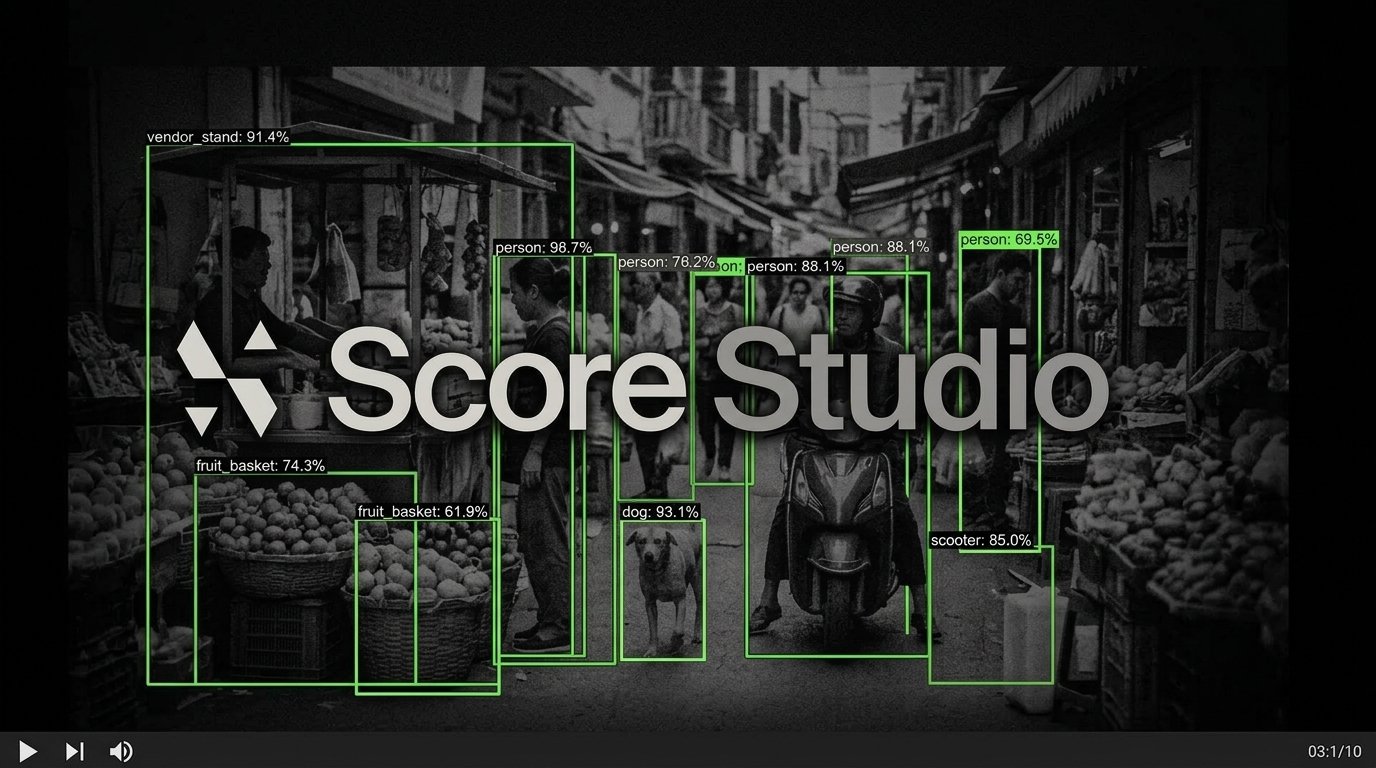
On September 17, Score launched Score Studio, opening its computer-vision stack to the public and putting it on Product Hunt on the same day.
The idea is straightforward. Building computer-vision software usually means stitching together several different tools. You need somewhere to collect and label images, another environment to train models, tools to test them, and infrastructure to deploy them.
Score Studio puts those pieces together.
You can upload images or video, create and refine labels, train a model, evaluate its performance, and deploy it from the same platform. If you do not want to train a model yourself, you can also commission one through Score’s Model Foundry and Vision Lab.
Score Studio is therefore more than another place to access an AI model. It is intended to be a complete workspace for building computer-vision applications.
How Does Bittensor Help Score Studio
The connection to Bittensor is what makes the product particularly interesting.
Score operates Subnet 44, where miners compete to produce computer-vision models for specific tasks and validators evaluate their performance. Those tasks can range from object detection and tracking to segmentation and counting.
Studio puts a product layer on top of that network.
Instead of interacting directly with miners and validators, a developer can simply use Studio and access models produced through the Score ecosystem. When the right model does not exist, a user can describe the problem, set requirements, and fund a new model through the subnet.
This creates a direct path from real-world demand to decentralized model development.
Score began with football analytics but has expanded into areas including manufacturing, fuel retail, agriculture and physical security. Its enterprise product, Manako, is already using Score’s computer-vision technology for real-world camera deployments.
Studio opens that same technology to a much broader group of users.
What can you do with it?
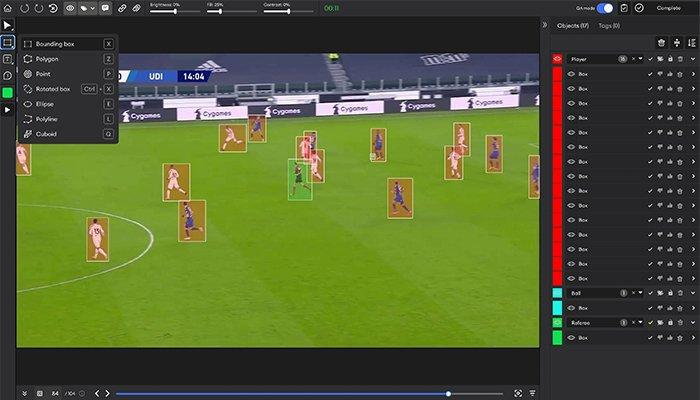
The simplest way to understand Studio is to imagine that you have a camera problem.
Perhaps you want to count vehicles entering a site, detect objects in a warehouse, monitor a production line or track players on a football pitch.
You can bring your footage into Studio, prepare the data, train or select a model, check its predictions and deploy it.
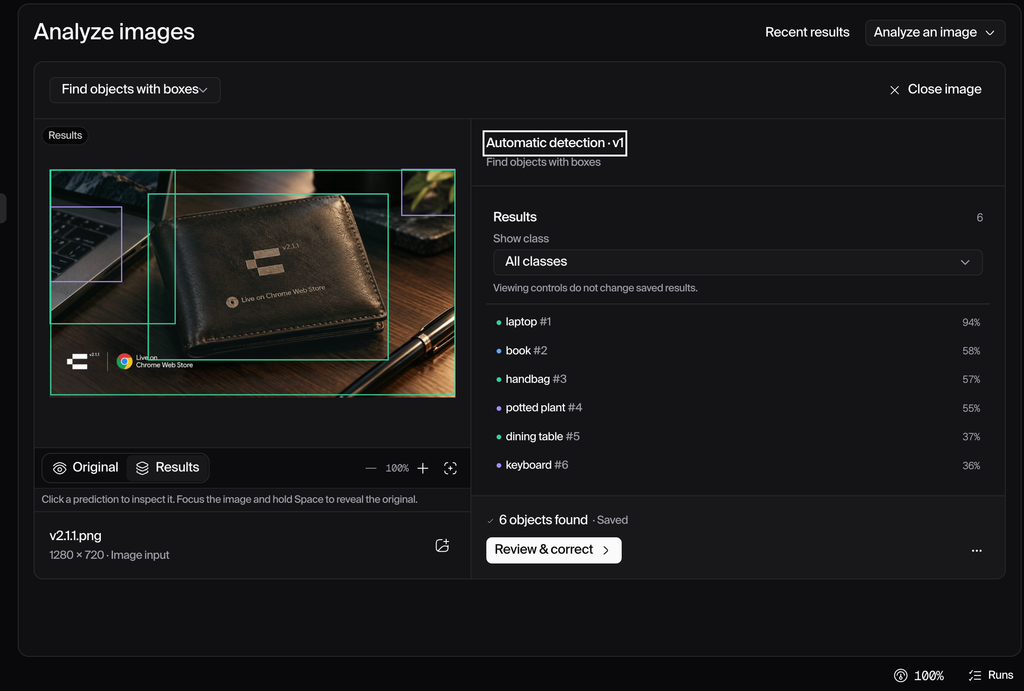
The platform also supports AI-agent workflows through an MCP server, allowing tools such as Claude, ChatGPT, Gemini and Cursor to access Score’s vision capabilities. Score has also released a dedicated Cursor plugin.
That opens another use case. Instead of building an entire computer-vision pipeline before an AI agent can work with visual data, developers can give the agent access to specialist vision capabilities through Studio.
Score calls this “the computer vision layer for agents.”
Studio is also a showcase for Bittensor’s subnet economy
Score is using other Bittensor subnets as part of the product’s infrastructure.
SayGm (SN28) provides inference, while Hippius (SN75) provides storage. New Studio users can access both without having to separately configure those services.
That is a useful example of what subnet collaboration can look like in practice.
The user sees one application. Behind it, different subnets are providing different services.
Score had also previously confirmed integrations with other subnets including Chutes (SN64), Engy (SN53) and Lium (SN51).
Why this matters for Bittensor
For years, much of Bittensor’s activity has been difficult for outsiders to see. There are miners competing for emissions, validators evaluating them, and subnet owners building specialized markets.
Score Studio gives that infrastructure a much simpler front end.
A developer does not need to understand how SN44 works to use its computer-vision capabilities. They can simply bring a problem and start building.
That is important because decentralized AI ultimately needs more than good models. It needs products that people can use.
OpenTensor highlighted this point in its launch coverage, describing Studio as a way of opening Score’s research capabilities to independent engineers.
Other Bittensor builders have made a similar argument. Mog, co-owner of Taostats, Hippius and SayGm, praised Score’s use of other subnets as a step toward greater subnet-to-subnet collaboration.
More about Score (SN44):
Enjoyed this article? Join our newsletter
Get the latest TAO & Bittensor news straight to your inbox.
We respect your privacy. Unsubscribe anytime.
Enjoyed this article?
Join our newsletter
Get the latest TAO & Bittensor news straight to your inbox — every morning before markets open.


No comments yet — be the first.