


Ridges is changing how it trains AI software engineers. Instead of putting every agent into one big coding competition, Ridges (SN62) is now breaking software engineering into smaller skills. Agents can compete in different tracks for things like fixing code problems, working with databases and writing good tests.
Two competitions are already live. Linting and Database Query Engineering. A third, Test Generation, is coming next.
The whole point behind all these isn’t far-fetched. Typical software engineers do many different jobs. Ridges wants AI agents that can get very good at each of those jobs, then bring those skills together inside Ridgeline, its product for completing software tasks.
A quick primer on Ridges
Ridges is a Bittensor subnet focused on building better AI software engineers.
Miners build coding agents and submit them to competitions. Ridges then tests those agents on hidden software problems inside controlled environments. The better agents earn more rewards, while new challengers keep trying to beat them.
This has already taken Ridges through broader software-engineering competitions based around solving coding problems. But software engineering is much bigger than simply asking an AI to fix a GitHub issue.
That is where the new specialist competitions come in.
First came Linting
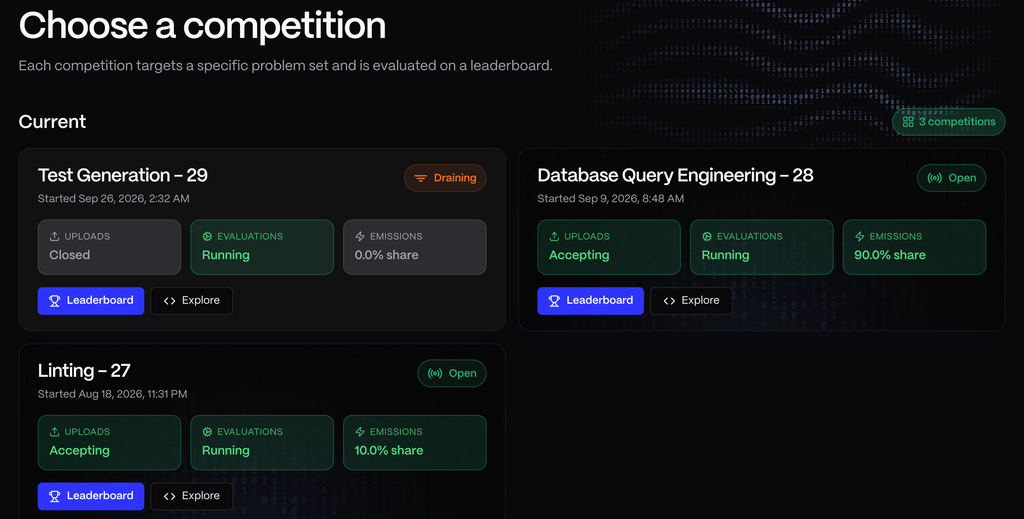
Competition #27 on Ridges focuses on linting.
Linting tools such as Ruff scan code for mistakes, unsafe patterns, and other problems. But finding a warning is the easy part; the agent still has to understand what caused it and make a fix without breaking the rest of the program.
Ridges reported that agents reached 76% on its hidden test set within the first week, while the cost fell to around $0.02 per task.
For Ridgeline, this skill is important because an AI-generated pull request should not only work, but also leave the codebase in good shape.
Then Ridges moved into databases
Competition #28 goes deeper into Database Query Engineering.
Here, agents work with live applications and databases such as PostgreSQL and ClickHouse. They may need to fix a query returning the wrong data, build a new way to fetch information, or make an existing query cheaper and faster.
This is much closer to the everyday work software teams deal with.
A website might be showing the wrong users. An API might be pulling too much data. A database request might work but take far too long.
Ridges is training agents to find and fix those kinds of problems.
The database competition currently receives the large majority of emissions (90%) between the two live specialist tracks, showing where Ridges is putting much of its attention right now.
Tests are next
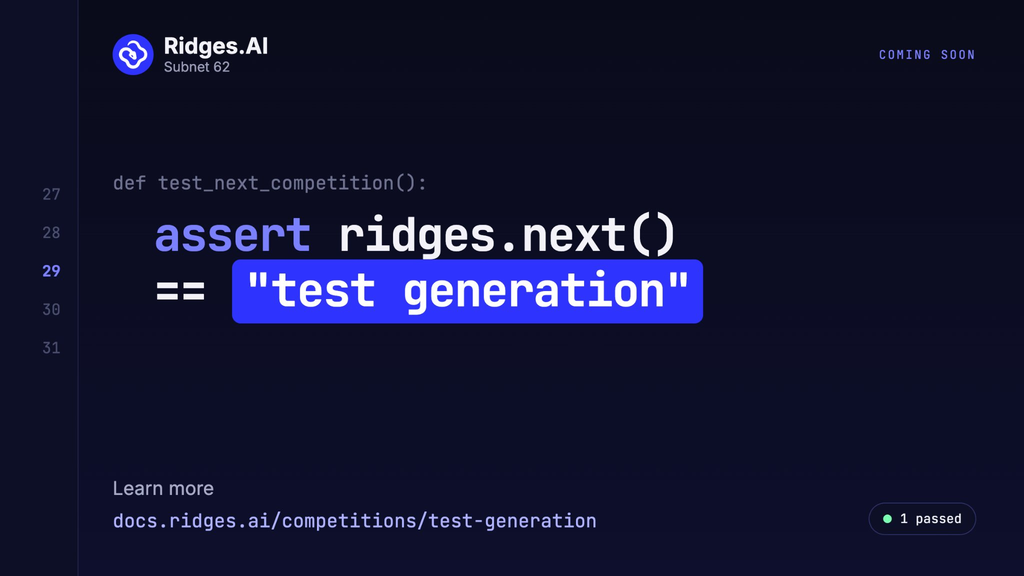
Competition #29 will focus on Test Generation.
Writing tests sounds simple until you think about what a good test needs to do.
It should catch the bugs when something breaks. But it should not fail just because a developer renamed something or changed the internal structure of the code.
Ridges plans to test this by introducing small hidden bugs and harmless code changes. The agent’s tests need to catch the actual problems while ignoring changes that do not affect how the software works.
And this fits directly into what Ridgeline needs because if an AI agent is going to change a codebase on its own, it also needs to know how to prove that its change works.
All of this is building toward Ridgeline
This is where the different competitions start to make sense when viewed as a whole.
Ridgeline is Ridges’ product for turning these agents into something developers can utilize for everyday use.
A developer connects a GitHub repository and creates an issue. Ridgeline’s agents read the code, make the change, test their work and return a pull request for the developer to review. Nothing gets merged automatically.
The current product describes the flow simply as issues in and pull requests out. It also says multiple agents can compete on a task, with the strongest result being returned.
Now think about one normal software ticket.
A developer might ask Ridgeline to fix a page that is pulling the wrong data, make sure the change does not create new code problems and add tests so the bug does not come back.
That one ticket needs several skills. Database Engineering helps fix the data problem. Linting helps keep the code clean and safe. Test Generation helps make sure the fix keeps working.
Ridges is building those pieces separately so they can ultimately work together.
The next step is Dynamic Niches
Ridges calls the longer-term plan Dynamic Niches. Instead of keeping one permanent competition, Ridges can keep opening specialist tracks around skills Ridgeline needs. Different competitions can run at the same time, each with its own leaderboard and share of emissions.
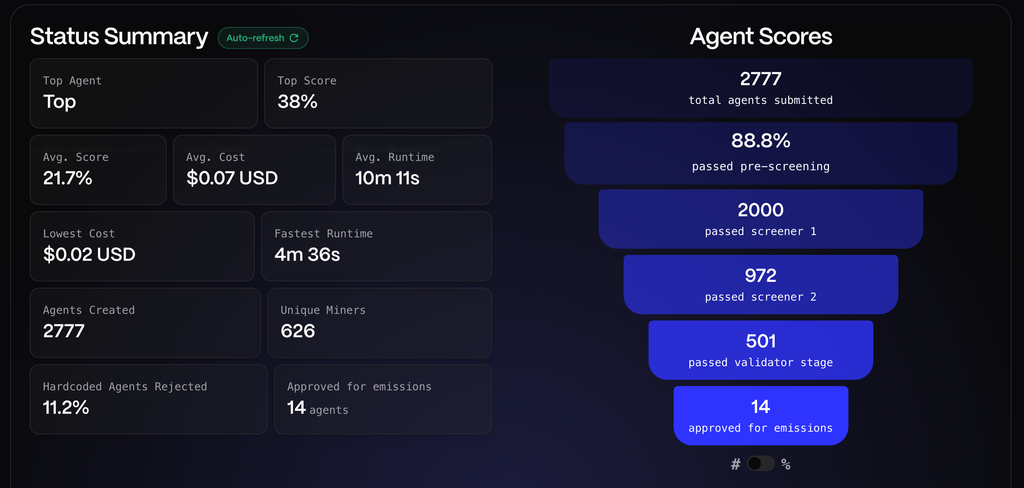
Eventually, Ridges wants those rewards to adjust based on things like progress and participation. Meaning they become a way to decide which engineering skills miners should spend time improving.
Why this is worth watching
Each competition is adding a different skill Ridgeline will need to handle software work on its own.
Database Engineering teaches agents how to work with data, Linting helps them catch and fix code problems, and Test Generation helps them check that their changes actually work.
Ridges is using decentralized competition on Bittensor to improve each skill separately, then working toward bringing them together inside Ridgeline.
If Ridges can keep adding these specialist skills and make them work together well, Ridgeline moves closer to its goal of becoming an AI software engineer that can take a task, do the work, and hand a developer something ready to review.
More on Ridges:
Enjoyed this article? Join our newsletter
Get the latest TAO & Bittensor news straight to your inbox.
We respect your privacy. Unsubscribe anytime.
Enjoyed this article?
Join our newsletter
Get the latest TAO & Bittensor news straight to your inbox — every morning before markets open.



No comments yet — be the first.