

Access to high-performance GPUs remains a major obstacle for AI developers.
Training models, fine-tuning existing systems, and running inference can require hardware that is expensive to buy and maintain.
Traditional cloud providers offer another route, though their pricing and commitments may be a poor fit for teams whose computing needs vary considerably between projects.
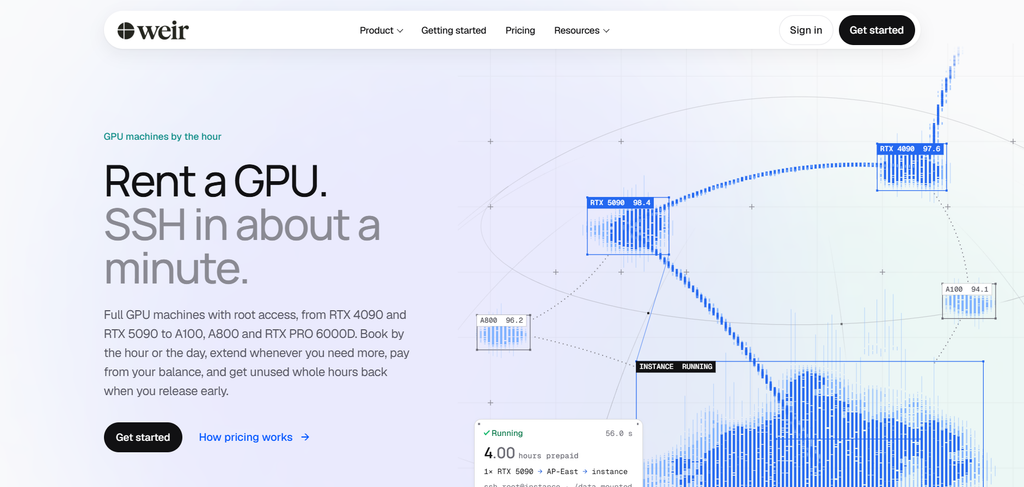
Weir (SN36) addresses this challenge through a GPU rental marketplace built on Bittensor.
The platform connects independent hardware owners with developers and businesses that need computing resources for a limited period.
Customers can book capacity as needed, while providers gain a way to earn from machines they make available through the subnet.
What Is Weir?
Weir (SN36) provides complete GPU virtual machines with root access over SSH (Secure Shell).
Customers can install software, configure system services, and adapt their environments to the work they plan to run.
Standard images come with Ubuntu, NVIDIA drivers, CUDA, Python, Docker and Git, so renters can start from a configured system and customise it as needed.
Renters can use the machines to train models on custom datasets, serve predictions, run simulations and render graphics.
Subnet operators can also host eligible Bittensor workloads. Weir’s policy permits Bittensor mining and prohibits proof-of-work cryptocurrency mining, a distinction that matters when choosing a machine to run jobs that keep GPUs active for extended periods.
How Does SN36 Supply and Verify GPUs?
Hardware owners join SN36 as miners by running Weir’s open-source node agent.
The software registers their GPUs and manages their participation in the network. Validators check machines against the subnet’s requirements before those machines become eligible for listing, giving customers a way to browse hardware and select a configuration suited to their workload.
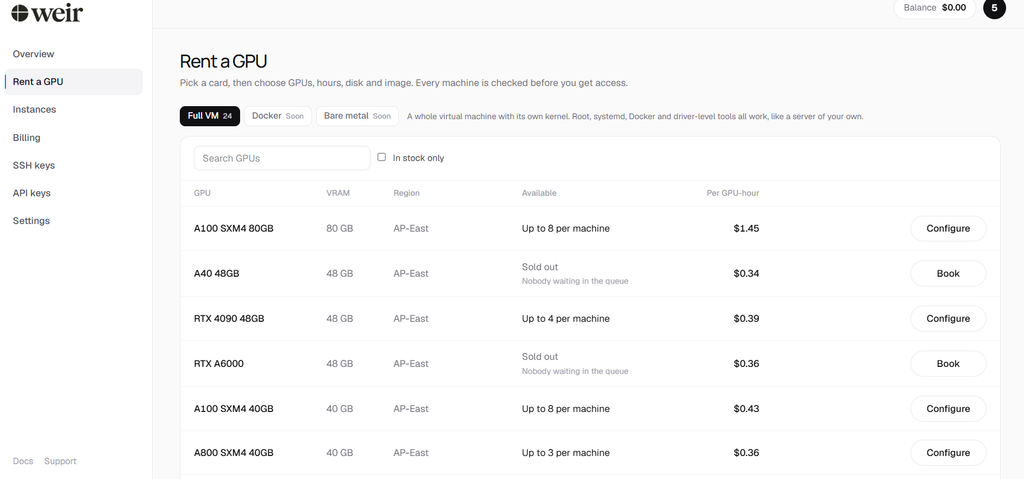
Weir’s published lineup includes NVIDIA RTX 4090 and 5090 cards, A40, A100, A800 and V100 accelerators, and professional RTX PRO 5000 and 6000D models.
The range gives customers options across price, performance and GPU memory.
The configurations a customer can book depend on the machines available in the marketplace when they place an order.
What Happens When a Customer Rents a Machine?
Customers register with an email verification code or authenticate by signing a message with a Bittensor wallet.
Before running a machine, users add an SSH public key and fund their account. They then choose the GPU count, CPU, memory, operating system, bandwidth, storage and rental duration.
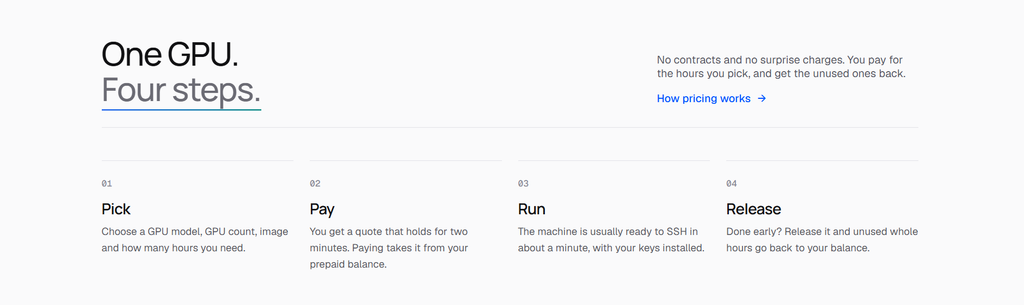
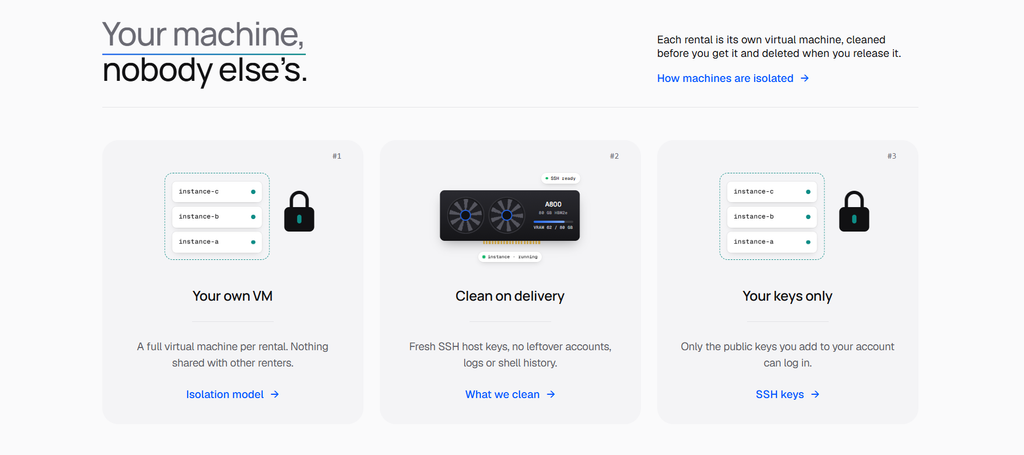
Weir provisions each renter in an isolated virtual machine with fresh SSH host keys.
The process removes previous renters’ accounts, logs and shell history.
Customers with a data disk can access it and keep files across restarts. Releasing the machine normally deletes its data unless the customer chooses to retain the disk.
How Does Weir Handle Payments and Billing?
Weir deducts rental charges from a prepaid account balance, and account top-ups cannot be withdrawn or refunded.
Customers can deposit TAO through a linked Bittensor wallet. For stablecoin deposits, the platform supports USDT on Tron, BNB Chain, Solana and Ethereum.
Customers can also fund their balance with USDC on Base, Solana, Ethereum and BNB Chain.
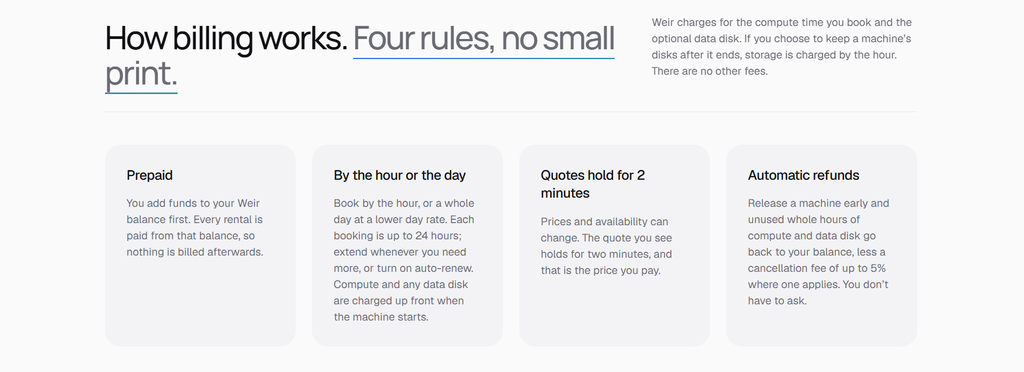
Prices are calculated per GPU-hour. Customers can book up to 24 hours at a time, extend an active rental or enable automatic renewal.
Full-day bookings qualify for a discount. When customers release a machine early, unused whole hours are credited to their balance after any applicable cancellation fee. The release hour counts as used.
How Does Weir Earn Revenue and Reward GPU Providers?
Weir (SN36) earns fees when customers pay to rent machines, while Bittensor emissions fund the subnet’s incentives.
Weir assigns 10% of the reward allocation to rented GPUs. Distribution depends on GPU-hours consumed and the weight of each GPU model.
Jobs under ten minutes are ineligible, and payouts are capped by the associated platform fees.
Eligible idle GPUs can receive up to 90% of the reward allocation. This pool gives providers an incentive to keep capacity available when customer demand is uneven.
Any allocation left over goes to the network fund, which supports standby capacity, customer credits, promotions, payment processing, validator operations, and continued development of the marketplace software.
How Is Weir Different From Other Bittensor Compute Subnets?
Lium (SN51) is Weir’s closest competitor, but the two rent different environments.
Lium primarily offers GPU containers and pods with per-second billing, which suits short jobs that can run in a packaged environment.
Weir rents full virtual machines by the hour, giving developers root access to install system packages, configure services, and manage the operating system.
Targon (SN4) and Green Compute (SN110) give customers different reasons to choose a provider.
Targon uses hardware-backed isolation to protect sensitive workloads while Green Compute verifies the renewable energy behind its GPU supply.
Weir’s proposition is general-purpose infrastructure for teams choosing a machine by its GPU model, memory and price, then running their own software stack.
What Could Drive Weir’s Growth?
Docker-only rentals and bare-metal servers are on Weir’s roadmap.
Docker rentals would give teams a way to launch packaged workloads without configuring a guest operating system.
Bare-metal servers would serve teams that need direct access to the physical machine, such as developers who want to benchmark their software without a virtualisation layer in place.
Adding rental formats could bring in customers with different requirements, but the commercial test is whether bookings recur often enough to sustain the marketplace.
Providers need enough paid work to justify committing their available hardware. Weir, in turn, needs sufficient rental fees to cover more of its operating costs as the provider network grows.
➛ Check Out Weir (SN36): Website · Docs · Twitter (X)
Enjoyed this article? Join our newsletter
Get the latest TAO & Bittensor news straight to your inbox.
We respect your privacy. Unsubscribe anytime.
Enjoyed this article?
Join our newsletter
Get the latest TAO & Bittensor news straight to your inbox — every morning before markets open.


No comments yet — be the first.