

Prediction markets were supposed to become the internet’s most honest forecasting system. Instead of polls or pundits, markets would reveal what people actually believe by forcing participants to back their views with capital. In theory, this creates a powerful mechanism for discovering truth.
But lately, Vitalik Buterin, co-founder, Ethereum ($ETH) and Bitcoin Magazine, has begun to question whether prediction markets are drifting away from that mission.
His concern is that many platforms are converging toward what he calls “corposlop”: short-term speculation, sports betting, and crypto price gambling that generates revenue but produces very little real information.
The deeper issue for him is not morality, but misaligned incentives. However, fixing those incentives may require a different kind of infrastructure.
One that looks a lot like the decentralized intelligence networks emerging on Bittensor ($TAO).
The Structural Problem With Today’s Prediction Markets
Every prediction market depends on two types of participants. First are the informed traders who analyze information and try to correct mispriced probabilities. While these actors push markets toward accuracy, for them to profit, someone else must consistently lose.
Right now, most platforms rely heavily on naive participants (the second type of participants) with strong opinions but poor forecasts.
This model works financially, but it creates a subtle feedback loop. Platforms begin attracting attention-driven bets and emotionally charged narratives because those markets generate the most activity.
Over time, the system slowly drifts away from information discovery toward entertainment.
Vitalik argues that prediction markets reach their real potential when they serve a different audience entirely: Hedgers.
Prediction Markets as Risk Management Tools
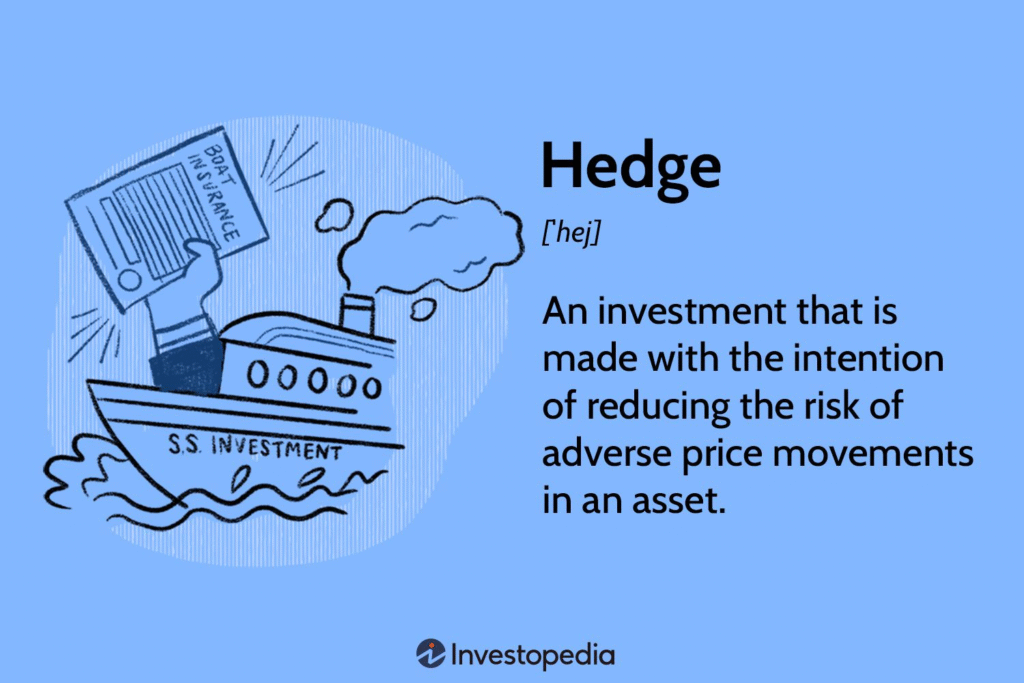
For hedgers, prediction markets are not gambling venues, they are insurance mechanisms. Imagine an investor holding shares in a biotech company that depends heavily on regulatory policy.
If an upcoming election threatens that policy environment, the investor could use a prediction market to hedge the risk by taking the opposite position.
Even if the trade loses money on average, it stabilizes the overall portfolio.
This is where prediction markets become powerful. Instead of extracting value from uninformed traders, they provide risk management infrastructure for real world decisions.
Vitalik extends the concept even further to note that in a mature system, prediction markets could allow individuals to hedge the cost of their future expenses directly. People might hold portfolios of prediction market positions tied to housing, energy, or healthcare prices rather than relying on fiat backed stablecoins.
If such markets were reliable enough, they could function as a new layer of financial stability.
But there is a catch.
The Timing Problem
Prediction markets often become accurate eventually, but the problem is when. Studies of millions of trades on Polymarket show that the largest pricing errors occur early in a market’s life. As resolution dates approach, probabilities gradually converge toward reality.
That timeline works for gamblers, not for institutions.
Executives planning strategy, investors hedging positions, or journalists interpreting political risk all need reliable signals months before outcomes are resolved. Yet, traditional markets tend to lose conviction the further they are from resolution, drifting toward neutral probabilities rather than clear forecasts.
This is the core limitation preventing prediction markets from becoming true financial infrastructure.
Why Bittensor ($TAO) Changes the Dynamic
Bittensor ($TAO), the decentralized intelligence network, approaches the problem from a different direction.
Rather than treating forecasting as a side activity for traders, Bittensor creates incentivized intelligence production. Participants compete to generate the most valuable outputs, while validators evaluate their quality and rewards are allocated accordingly.
This competitive architecture is already being used to coordinate AI models, data generation, and groundbreaking machine learning research across specialized subnets.
Applied to prediction markets, the same structure could produce something much more powerful than passive trading: An ecosystem actively optimizing for better forecasts.
Instead of relying purely on speculation, markets could be supported by networks of specialized forecasting agents competing to surface accurate information.
Almanac: Forecasting Built for Early Signal
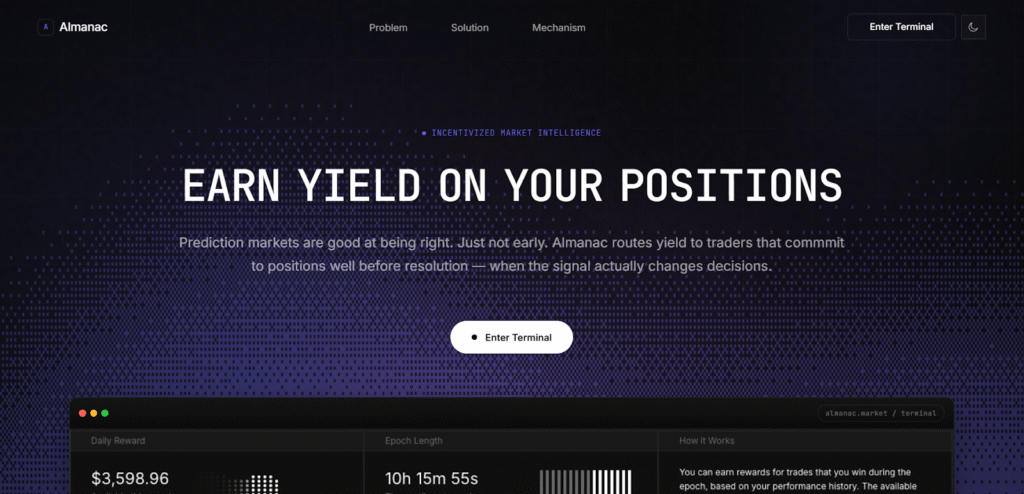
One of the projects exploring this idea is Almanac (Bittensor Subnet 41), a forecasting platform designed to operate within the Bittensor ecosystem.
Where traditional prediction markets reward traders primarily for being correct at resolution, Almanac focuses on accuracy across time. The platform introduces mechanisms that incentivize participants to take and maintain positions earlier, when the information value of forecasts is highest.
Its approach emphasizes:
a. Time-Weighted Scoring (rewarding early accurate predictions),
b. Consistency in Incentives (encouraging traders to maintain stable forecasts over long horizons), and
c. Signal Persistence (favoring participants who demonstrate ongoing informational advantage).
This structure shifts the focus away from last-minute speculation and toward continuous information discovery.
In other words, the market begins converging when the signal is actually useful.
Rebuilding Prediction Markets Around Signal
Vitalik’s critique of prediction markets is ultimately a call to rethink what the product is supposed to be. Platforms built around speculation will naturally drift toward entertainment-driven markets, but systems designed for hedging and decision-making require something entirely different: Reliable early signals about the future.
That shift demands new incentive models and, potentially, new infrastructure.
By turning intelligence itself into a competitive resource, Bittensor ($TAO) offers a framework where forecasting becomes an active production process rather than a passive side effect of trading.
Projects like Almanac represent an early attempt to bring that idea into prediction markets.
With more “Almanacs,” the next generation of these markets may look very different from today’s speculative platforms.
A generation that pushes for less gambling, propagates more signals. Perhaps, the kind of information infrastructure prediction markets were always meant to become.
Enjoyed this article? Join our newsletter
Get the latest Bittensor & TAO ecosystem news straight to your inbox.
We respect your privacy. Unsubscribe anytime.



Be the first to comment