


AI has advanced through a simple formula built around bigger models, more data, and more computing power. That approach has delivered major gains, but the next phase may depend on efficiency, specialization, and distributed intelligence.
A UNU (United Nation University) analysis, drawing on MIT research, examines the constraints emerging around conventional AI development. These challenges make systems such as Bittensor (TAO) increasingly relevant as AI explores new ways to build and coordinate intelligence.
The question is now how efficiently intelligence can be built, and not how much bigger AI can become.
The Three Limits Behind AI’s Scaling Problem
The limits become easier to understand when looking at three areas of model development.
1. Width refers to the number of parameters a model can use to represent information. Wider models can reduce interference between different concepts, while the cost of increasing their capacity rises quickly. Beyond a certain point, additional parameters deliver only marginal improvements.
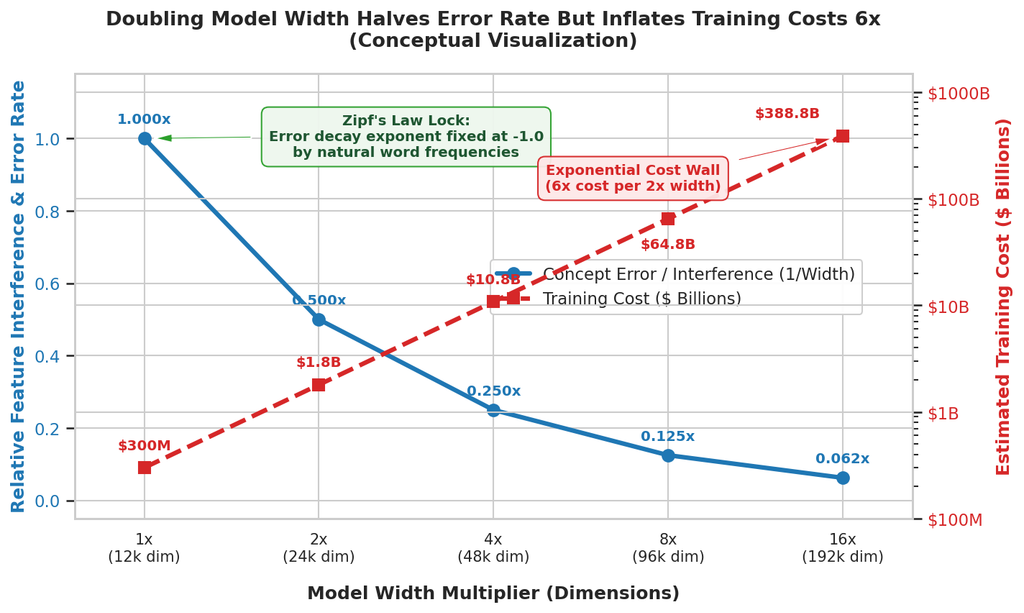
2. Depth refers to the number of layers inside a model. Adding layers can improve performance, although each new layer tends to contribute less than the one before it. Without mechanisms that encourage meaningful specialization, deeper models may devote more computation to refining existing capabilities rather than developing new ones.
3. Training time creates another limit. Models generally improve with more training, yet each incremental gain demands more computation than the last. Eventually, achieving a modest reduction in error can require a disproportionately large increase in training.
These limits create a simple problem for the traditional approach. The next improvement can cost dramatically more than the previous one.
The Shift From Bigger Models to Smarter Systems
The research points toward AI systems that are more specialized, efficient, and capable of combining different forms of intelligence. Several approaches already reflect this direction:
1. Sparse architectures activate only the parts needed for a task.
2. Specialized models focus computation on narrower problems.
3. Synthetic data expands training beyond existing datasets.
4. Interactive systems learn through tools, environments, and real world feedback.
While these approaches differ technically, they share a common principle. AI can become more efficient by dividing complex capabilities into systems designed for specific purposes. That opens the door to AI networks where different systems specialize, compete, and contribute to a larger whole.
Why Bittensor’s Architecture Fits
Bittensor (TAO) applies this principle at the network level through specialized subnets. Each subnet can focus on a particular form of machine intelligence, including inference, prediction, data processing, and other AI services.
The structure creates several useful incentives:
1. Specialization keeps systems focused on specific problems.
2. Competition rewards better performance and efficiency.
3. Distributed resources spread computing across independent operators.
4. Open experimentation gives new AI approaches room to develop.
Miners produce outputs, validators assess their quality, and TAO rewards useful contributions. This creates an incentive system where stronger services can attract more participation and resources.
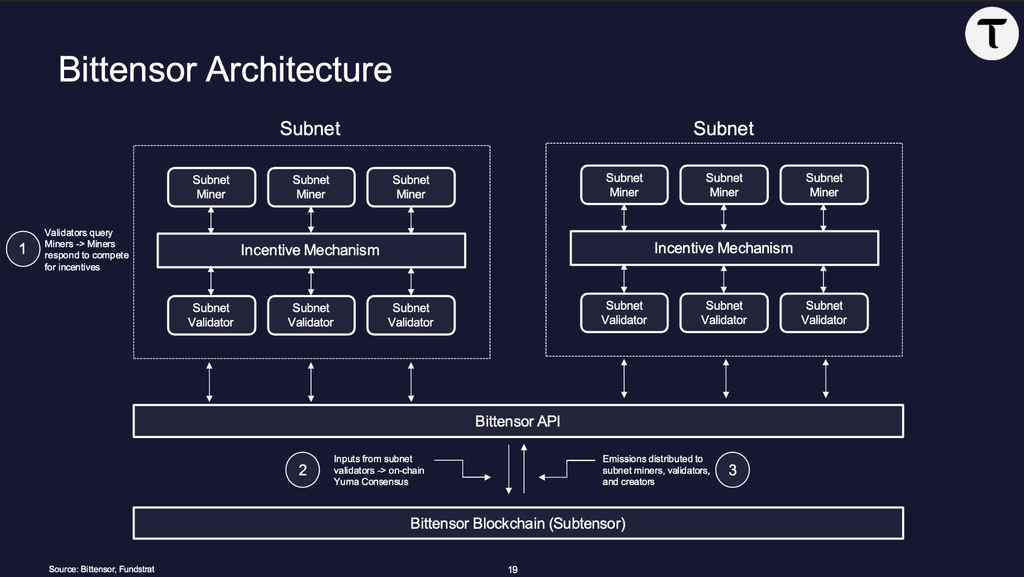
Bittensor offers a different way to organize development around many specialized systems, and does not remove the technical constraints facing AI.
Scaling AI Beyond the Bigger-Is-Better Era
The next phase of AI may depend less on building a single enormous model and more on combining specialized systems that can improve independently. The limits of width, depth, and training time suggest that conventional scaling cannot remain the only engine of progress.
More efficient architectures, specialized intelligence, better training methods, and distributed systems are likely to play a growing role in pushing AI forward.
Bittensor fits into this emerging direction by creating an open network where specialized AI systems can compete, improve, and earn rewards for producing useful results. The shift, then, is not that scaling has stopped. It is that scaling alone may no longer be enough.
➛ Read UNU’s Thesis on Why AI Scaling Hits a Wall Here.
Enjoyed this article? Join our newsletter
Get the latest TAO & Bittensor news straight to your inbox.
We respect your privacy. Unsubscribe anytime.
Enjoyed this article?
Join our newsletter
Get the latest TAO & Bittensor news straight to your inbox — every morning before markets open.



No comments yet — be the first.