

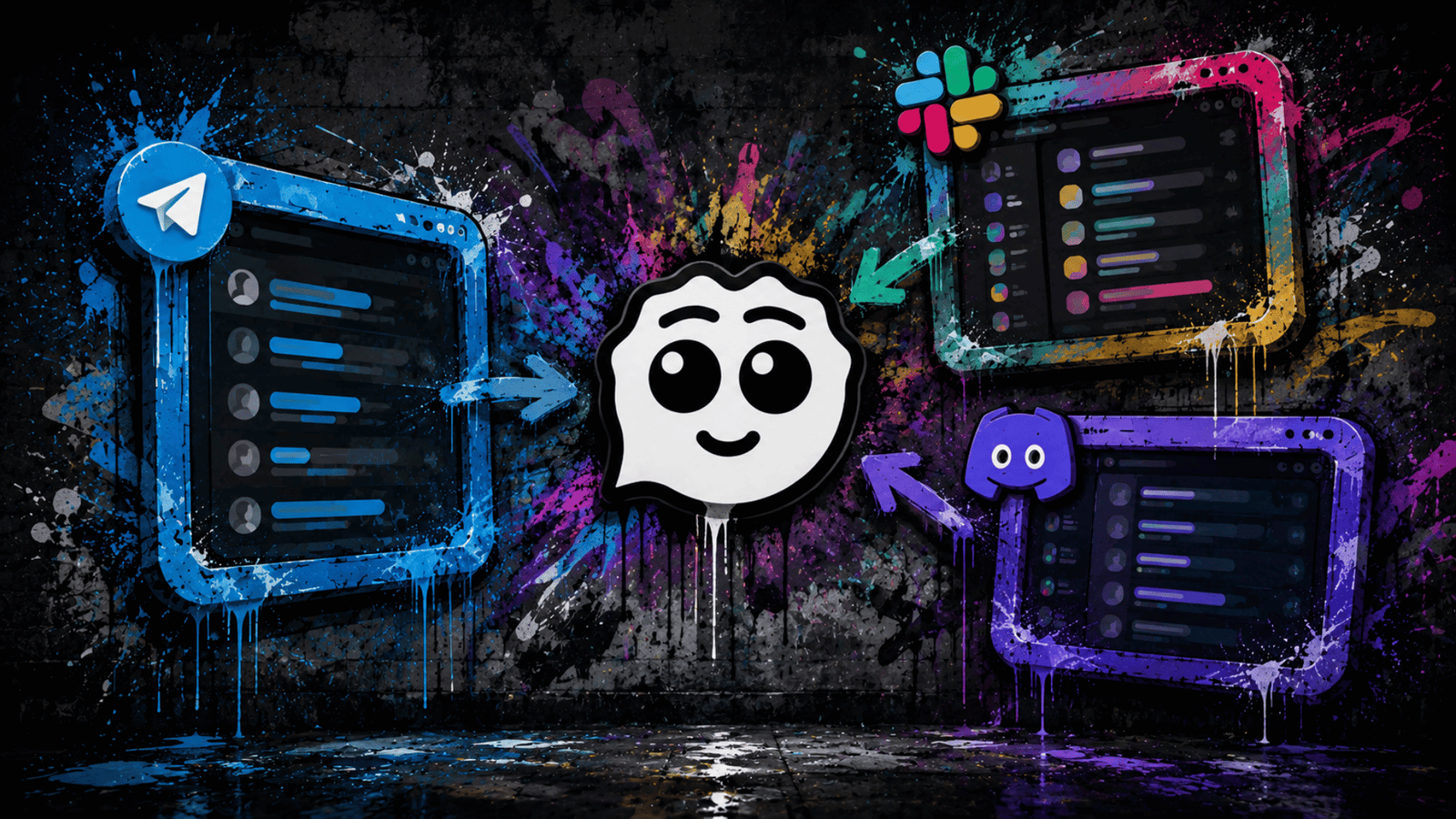
A specification changes in a Telegram thread, a bug gets flagged in a Discord channel, a client updates requirements over a Slack call. None of that context ever reaches the repository where your coding agents operate every day.
Ditto V2 closes that gap by connecting every chat service you use into one memory exposed through MCP (Model Context Protocol) for any agent to query.
The early access waitlist is open now, with connected services defaulting to read-only until the permission is explicitly changed.
How the Memory Layer Works
Ditto V2 operates between your team’s communication tools and whatever agent needs the context to do its job properly.
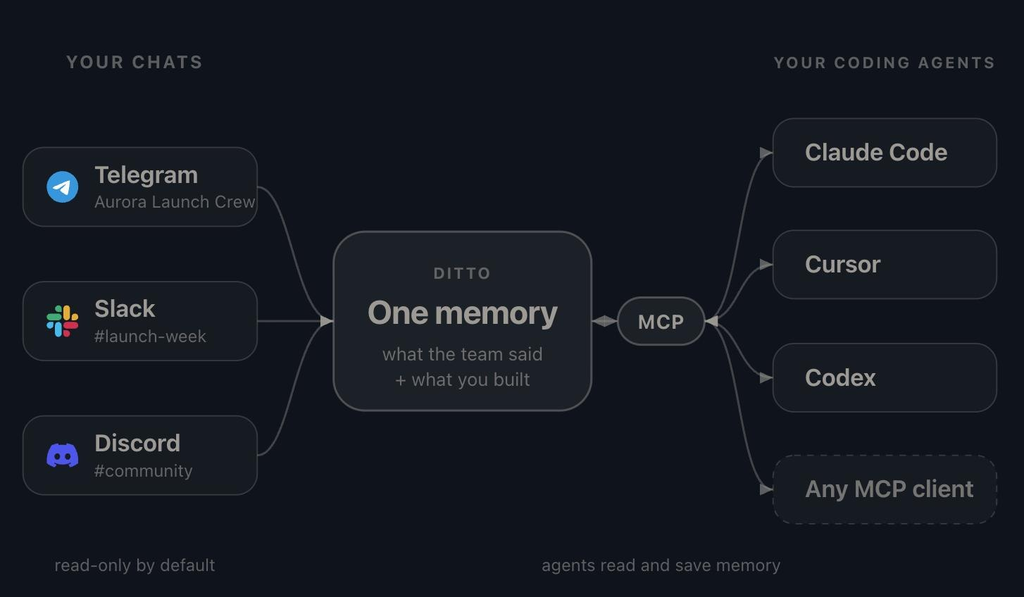
1. Every connected service feeds into one unified memory: Slack, Discord, Telegram, and other conversations all become searchable material for downstream tools, and not isolated silos.
2. Coding agents query the memory through MCP alongside their existing code context: Mid-refactor questions like “what got decided about the launch review” pull answers from wherever that decision happened originally.
3. You choose which services connect and stay in control of scope: Every new connection begins read-only, and nothing gets granted write permissions without explicit action approving the change.
4. The same memory serves any MCP-compatible client: Whatever tool you use for agent work reaches the same team knowledge base without separate integrations for each surface.
Agents see both the code and the conversations around the code, not one half of the picture.
The Composer Toggle Nobody Else Sees
Every connected chat carries a toggle in the message composer, switching between talking in the group and talking about it privately.
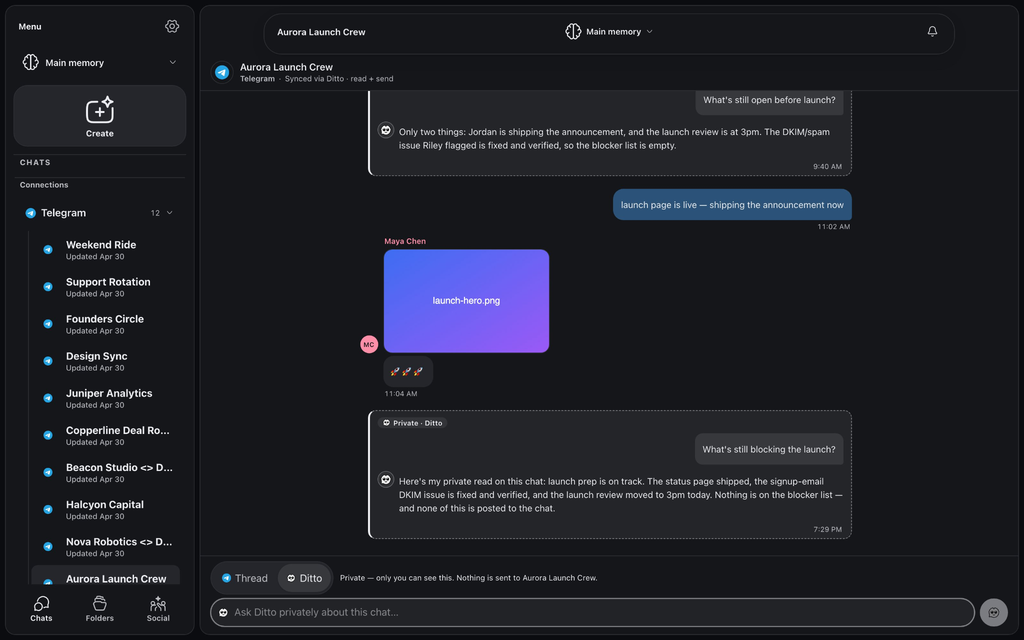
1. Thread mode sends your message to the group like any other reply: Ordinary chat behavior with no changes to how the rest of the participants experience the conversation happening around them.
2. Ditto mode routes your question to memory privately instead: You get an answer pulled from the whole synced history, instead of being taken from messages personally scrolled through.
3. Answers appear as private cards nobody else in the group can see: No notification, no indicator, no trace that you queried anything from inside their conversation.
4. The composer displays which mode is active before you type: No accidental broadcasts of what should have stayed private, no confusion about where a message will land.
Ask what’s blocking a launch from inside the group where the launch is being argued about, and get an answer visible only to you.
Joining the Early Access Waitlist
Ditto V2 is rolling out gradually through early access, and not opened to everyone at once. Anyone whose coding agents currently operate blind to team conversations can join the waitlist for access as spots become available.
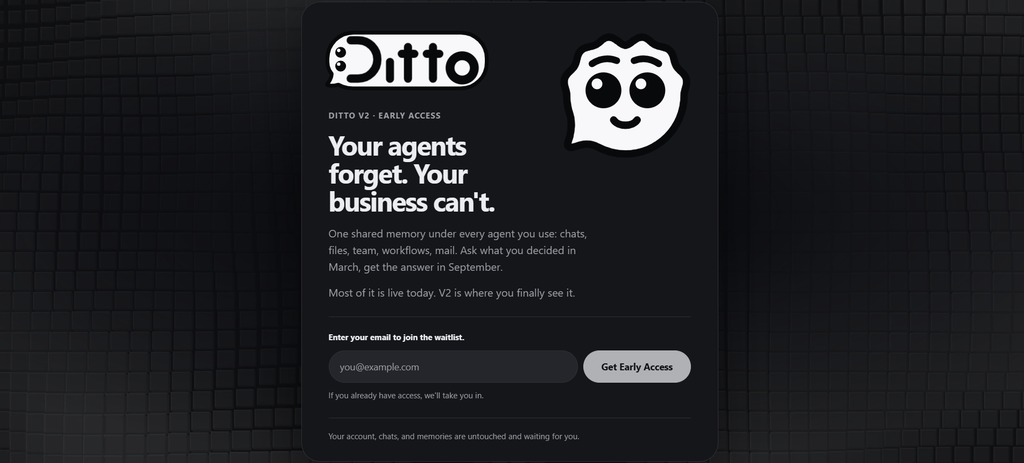
Sign up on Ditto’s early access page to join the queue for the next allocation round. Read-only defaults would come pre-applied on every invitation, keeping existing communication workflows protected during testing.
➛ Request for Early Access Into Ditto V2 Here.
Enjoyed this article? Join our newsletter
Get the latest TAO & Bittensor news straight to your inbox.
We respect your privacy. Unsubscribe anytime.
Enjoyed this article?
Join our newsletter
Get the latest TAO & Bittensor news straight to your inbox — every morning before markets open.


[…] Ditto V2 now connects to more than 1,342 apps, including Google Workspace, Notion, Linear, and Jira. These connections work consistently both inside team chats and across automated workflows. […]
[…] users, but persistent memory creates a less obvious question: where does all that data live? For Ditto (SN118), an AI assistant designed to retain context across conversations, the answer is now Hippius (SN75), […]
[…] Agents to Get the Context Living Inside Chats With Ditto V2 […]