
Deepfake fraud has rapidly evolved into a systemic risk across finance, crypto, and identity systems, where attackers now exploit face-based vectors to bypass biometric verification with alarming success.
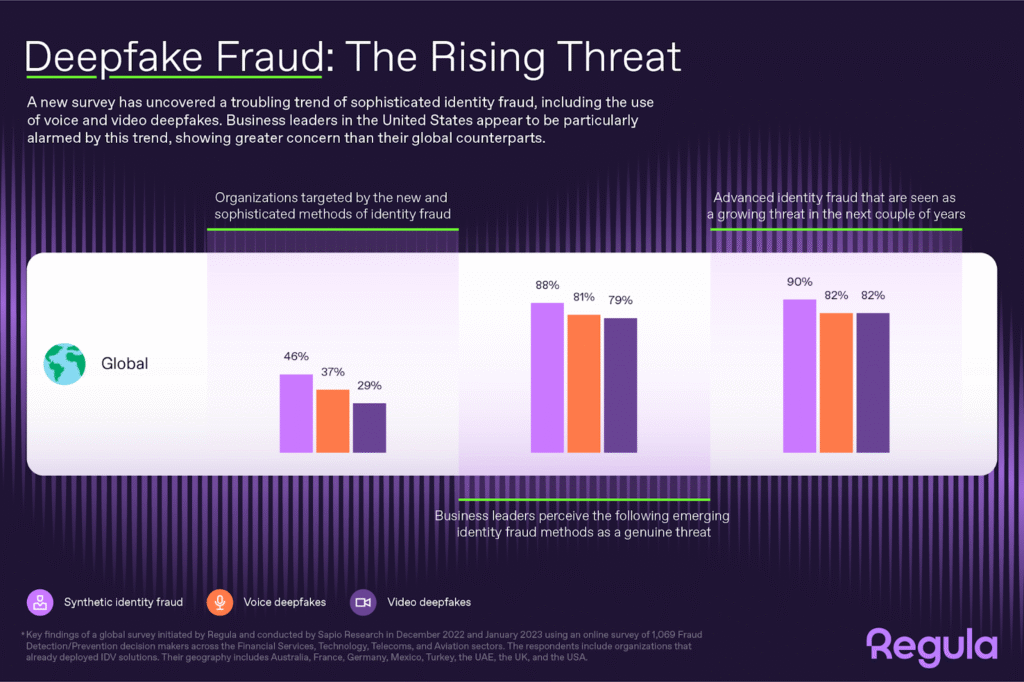
High-profile incidents and accelerating fraud metrics point to a clear gap, which is that existing detection tools are built for general AI content, not biometric-grade identity validation.
Yanez MIID (Bittensor Subnet 54) and Bitmind (Bittensor Subnet 34) formalize a strategic partnership to address this exact failure point by building a fine-tuned face deepfake detection model on Bittensor, designed specifically for real-world identity systems where precision is critical and failure is costly.
For the ecosystem, this marks a transition toward specialized, production-grade AI that targets defined market demand rather than broad experimentation.
A Focused Collaboration Built for Real-World Deployment
The partnership is structured around complementary strengths that converge on a single, difficult problem. Bitmind contributes a proven AI-generated content detection model with enterprise exposure and strong subnet performance, while Yanez brings over two decades of biometric expertise and proprietary face datasets used in identity verification systems.
Through prior integration, both teams identified a clear gap, which is the lack of models trained specifically on biometric-grade face data for detecting advanced face-swap and virtual camera attacks.
The joint model is designed for direct deployment in high-stakes environments such as onboarding, KYC, and account access, with a focus on:
a. Fine-tuning on biometric-grade face datasets,
b. Targeting face-based deepfake attack vectors,
c. Integrating into existing identity pipelines, and
d. Delivering enterprise-level accuracy and reliability.
This is not a general detector but a purpose-built system addressing a known and growing attack surface, demonstrating how Bittensor subnets can collaborate to produce market-ready solutions.
From Detection to a Decentralized Trust Layer
Beyond detection, this work feeds into a broader objective, which is building a decentralized Trust Layer for the internet where systems can verify that an entity is a real, unique human. This becomes critical as generative AI erodes the reliability of digital identity.
Two immediate applications stand out:
a. Web3 Systems: solving sybil attacks in DAO voting, airdrops, and reward distribution through proof of uniqueness, and
b. Agent-Driven Payments: ensuring transactions are authorized by humans and cannot be spoofed or repudiated.
The Bitmind partnership accelerates this vision by strengthening a core primitive within that stack. What begins as deepfake detection extends into foundational infrastructure for identity and trust, positioning Bittensor ($TAO) as a network not just for intelligence, but for verifiable interaction in an AI-native internet.
Enjoyed this article? Join our newsletter
Get the latest Bittensor & TAO ecosystem news straight to your inbox.
We respect your privacy. Unsubscribe anytime.


Be the first to comment