

For a long time, the conversation around Bittensor revolved around emissions, rankings, and short-term alpha.
That phase is fading, and it’s being replaced by a metric far more durable: utility-driven demand.
As the ecosystem matures, certain subnets are no longer theoretical experiments. They are shipping products, powering infrastructure, and solving real problems for real users.
When a subnet begins delivering practical value, something important happens: Demand stops being purely speculative, it becomes structural.
Below are the four subnets, based on a succinct computation by Alchemist – τ, that illustrate this shift, each addressing a distinct layer of the AI economy.
1. Subnet 71 (Leadpoet): AI That Finds Revenue
Leadpoet operates as a decentralized AI sales intelligence platform. Its core function is to autonomously identify and qualify potential customers for businesses by deploying AI sales agents across a distributed network.
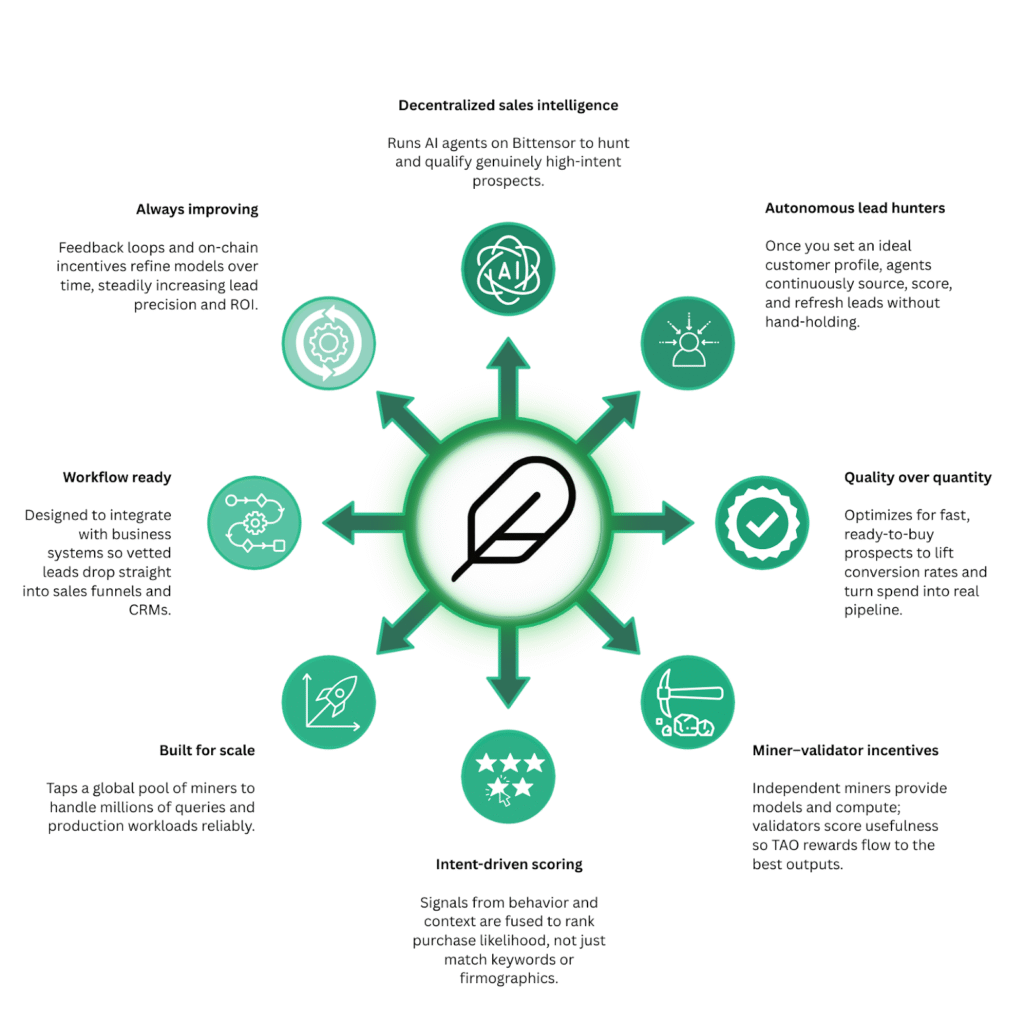
Instead of companies manually prospecting or relying on fragmented tools, Leadpoet runs intelligent agents that:
a. Discover relevant leads,
b. Evaluate intent and fit, and
c. Deliver qualified prospects to growth teams.
The result of this is a measurable commercial output.
For small and medium businesses, as well as fast moving startups, qualified lead generation is not an abstract AI experiment, it directly impacts revenue. That clear linkage between subnet output and business value creates organic demand from outside the crypto ecosystem.
This is what sustainable adoption looks like.
2. Subnet 64 (Chutes): Decentralized Inference Infrastructure
If Leadpoet represents application level utility, Chutes represents foundational infrastructure.
Chutes provides serverless AI inference in a decentralized format through which developers can deploy and run models without managing GPUs, servers, or scaling logic.
The experience mirrors traditional cloud APIs, but with open, distributed economics behind it.
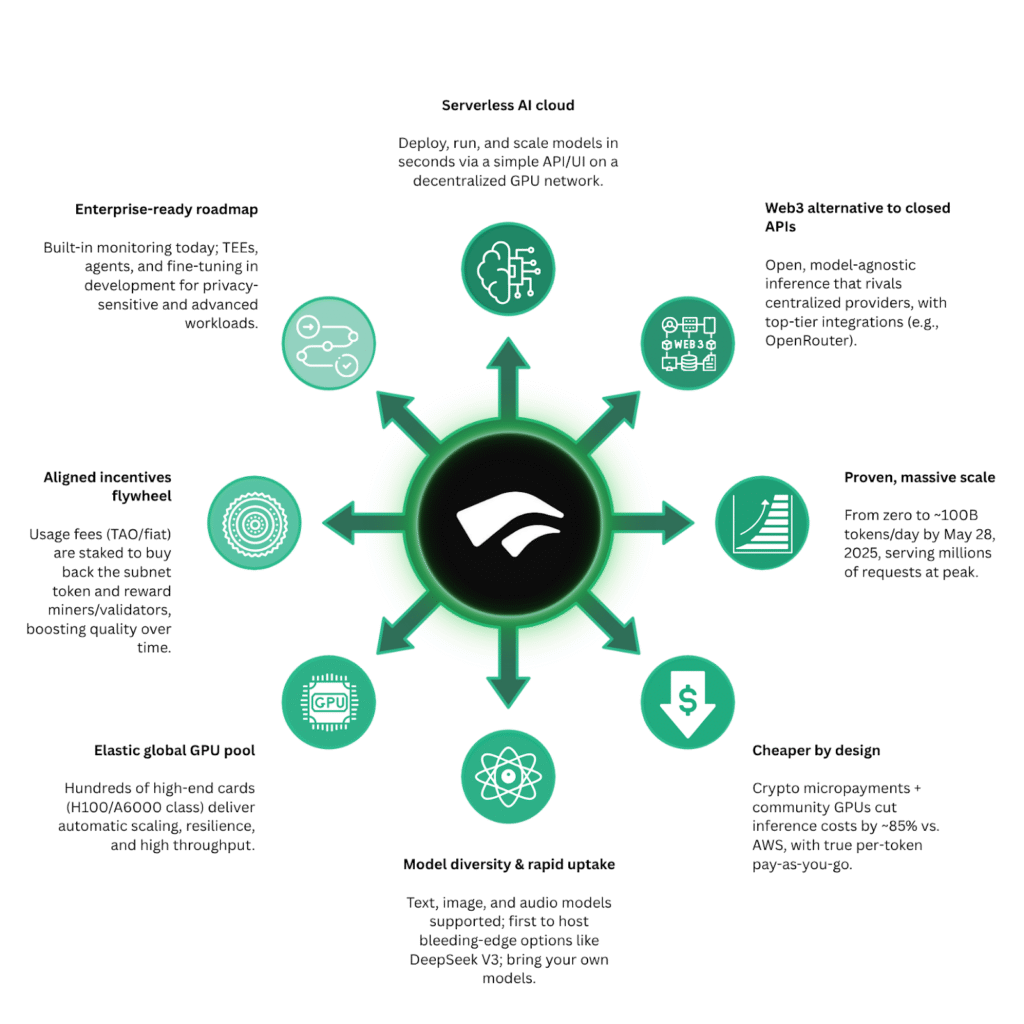
In practice, this means:
a. No server management,
b. No infrastructure overhead,
c. Pay per use AI execution, and
d. Scalable model deployment.
For builders integrating AI into apps, speed and cost matter. Removing infrastructure complexity lowers friction and broadens participation. Chutes positions itself as an open alternative to centralized cloud AI APIs.
As AI applications expand, demand for flexible inference layers expands alongside them. Infrastructure demand compounds.
3. Subnet 58 (Handshake): Payments for Autonomous Agents
As AI agents become more capable, a new challenge emerges: how do agents discover services and pay for them autonomously?
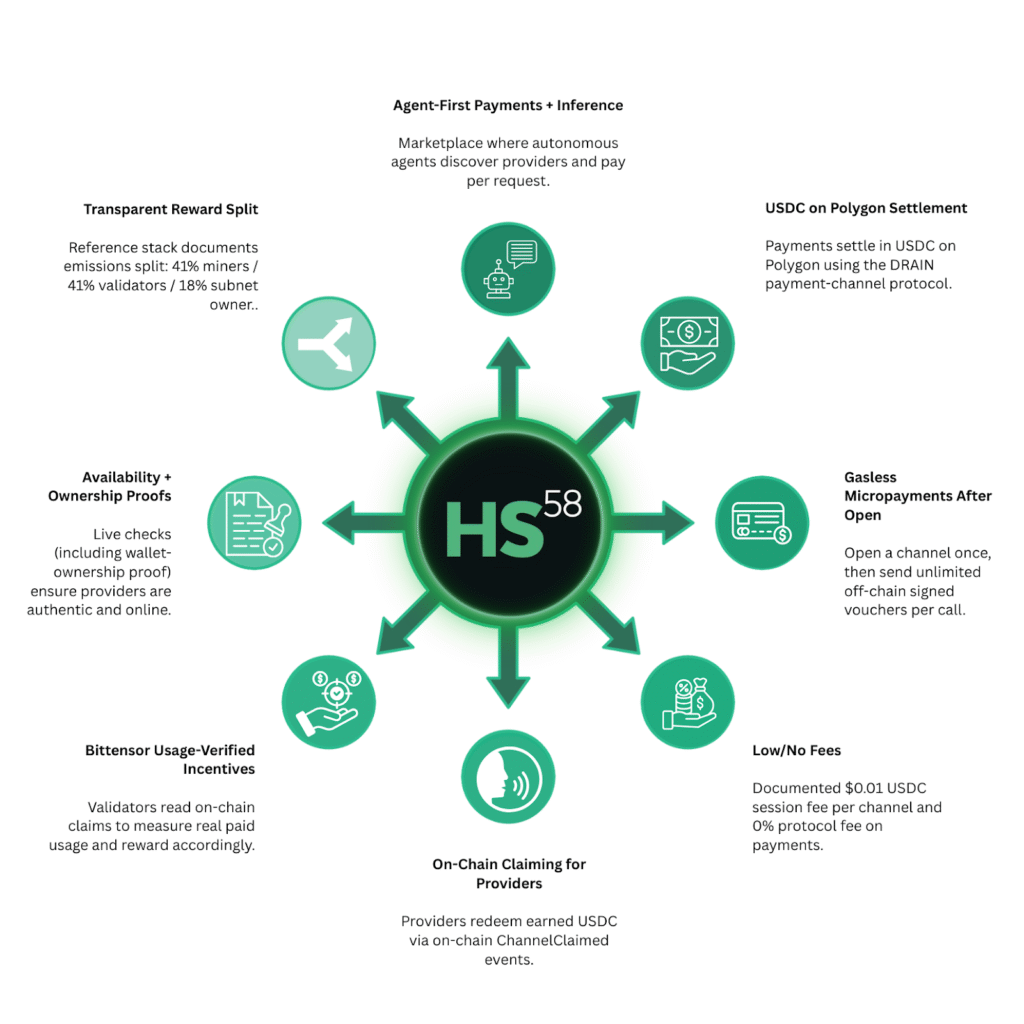
Handshake addresses this directly by focusing on agent-first payments and inference discovery. It offers off-chain payment channels through which autonomous agents can:
a. Locate service providers,
b. Negotiate access, and
c. Execute payments seamlessly.
This creates a programmable economic layer designed specifically for machine-to-machine interaction. Instead of humans coordinating transactions, agents transact independently.
The significance here is that if the future involves networks of AI agents collaborating and competing, then frictionless payment rails become essential infrastructure.
Handshake is building the marketplace layer for that world.
4. Subnet 82 (Hermes): Making On-Chain Data Usable
Raw blockchain data is abundant, but structured, actionable blockchain data is not. Hermes solves this problem.
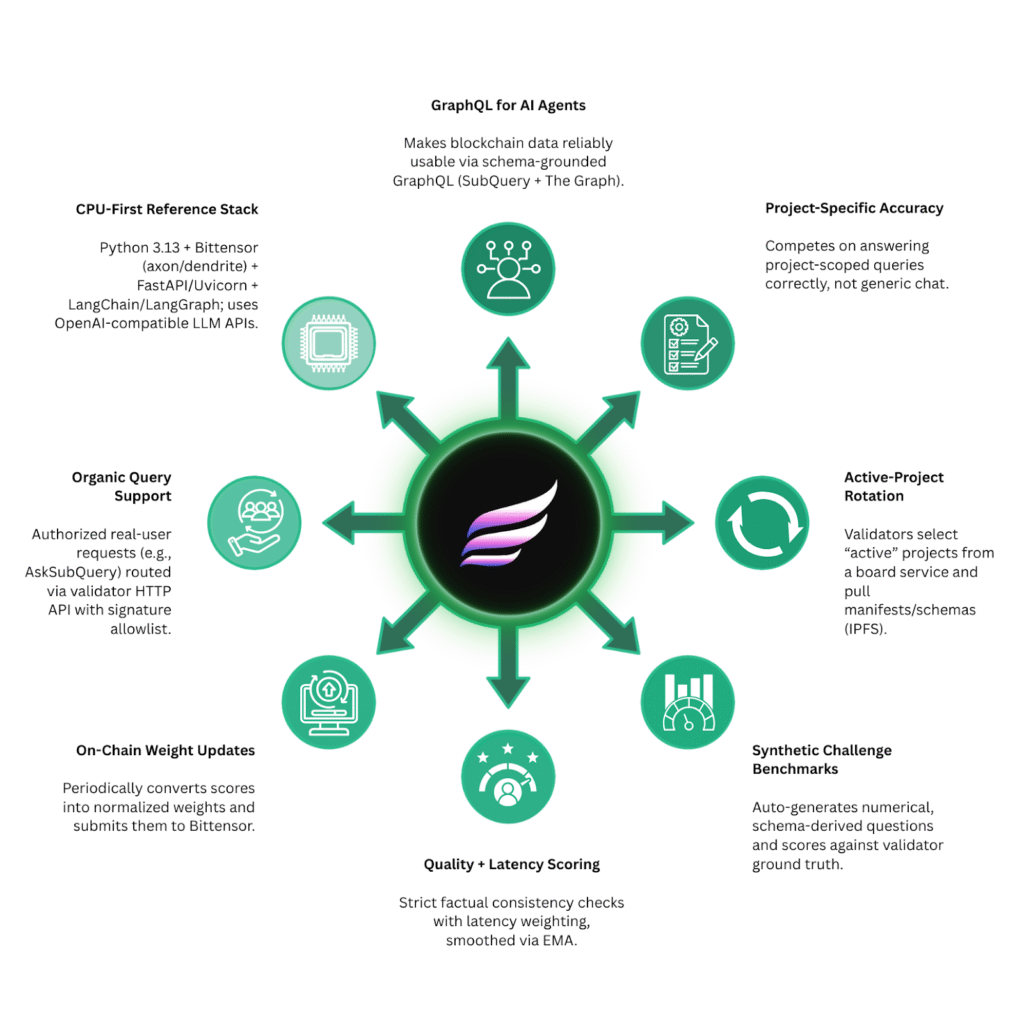
It indexes and organizes on chain information so AI agents can reason over it effectively. Without structured access, agents cannot meaningfully interpret market activity, wallet flows, or network metrics.
Hermes transforms raw data into:
a. Queryable datasets,
b. Structured intelligence, and
c. Fresh, machine readable inputs.
For advanced agent systems interacting with decentralized markets, this capability is foundational. Data is the substrate of intelligence, and Hermes ensures that substrate is usable.
A Pattern Emerging
While these subnets operate in different domains, a common thread connects them. They are not optimizing solely for emissions, they are building revenue-generating AI applications, decentralized inference infrastructure, agent-native payment systems, and structured on-chain data layers
Each solves a concrete problem.
When a subnet’s output integrates into real workflows, three things follow:
a. Builders have reason to integrate it,
b. Users have reason to depend on it, and
c. Capital has reason to stay.
That is how demand becomes sticky.
The Shift From Speculation to Substance
Bittensor’s early phase was exploratory, during which experiments dominated, and emissions were the primary draw.
Now the ecosystem is entering a different chapter where subnets that demonstrate real-world utility create a feedback loop because utility attracts usage, usage attracts integrations, and integrations attract durable demand.
This shows that while speculation may ignite attention, only utility sustains it.
As more subnets anchor themselves to tangible output, the entire network strengthens. Demand grows not because emissions are high, but because services are needed.
That distinction matters.
The next phase of Bittensor will likely be defined less by which subnet pays the most today, and more by which subnets people cannot operate without tomorrow.
And that is where true demand begins.


Be the first to comment