

If you’ve been staking alpha in Bittensor subnets, you’ve probably glanced at the Subnets Deregistration List on TaoStats and felt a small knot in your stomach. Subnets do get deregistered; it’s a core part of how the network self-regulates. So what actually happens to the alpha you’re holding when one disappears?
The short answer: you get your TAO back automatically. But the details matter, and knowing them ahead of time can save you from unnecessary panic.
The Automatic Liquidation Process
When a subnet is deregistered, the Bittensor protocol handles the entire unwinding for you. There is no manual claim, no form to fill out, and no deadline you need to hit. Here’s the sequence:
- All alpha tokens in the subnet are destroyed. The subnet ceases to exist, and so do its alpha tokens.
- Your alpha is converted to TAO based on the subnet’s TAO reserve at the time of deregistration.
- TAO is distributed proportionally to every alpha holder in that subnet.
- Funds land directly in your coldkey free balance, ready to restake or use however you see fit.
This is fundamentally a liquidation event, not an emission or reward. Your alpha tokens stop existing, and you receive TAO instead. Unlike mining rewards that might require manual interaction, this process is entirely hands-off.
For a deeper technical walkthrough, the Bittensor documentation on subnet deregistration covers the protocol-level mechanics.
The Liquidation Haircut: You Might Not Get Back What You Expect
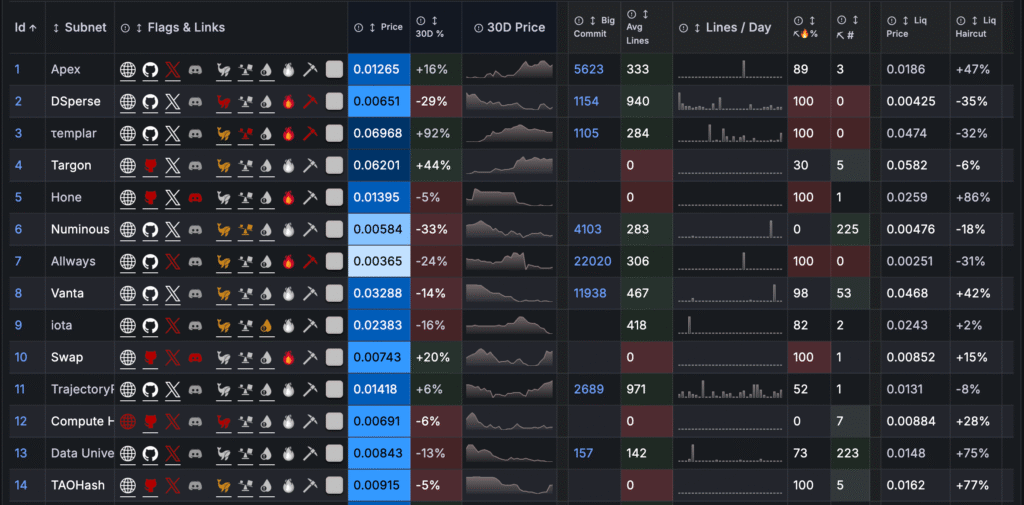
Here’s the part that catches people off guard. The TAO you receive back is determined by the subnet’s TAO reserve and the dynamics of the liquidation, not by whatever price you originally paid for your alpha. This is sometimes referred to as the liquidation haircut.
Depending on the subnet’s reserve health at the time of deregistration, you could receive less TAO than you put in. This is especially true for subnets that have been declining in activity and whose reserves have thinned out.
If you want to estimate your exposure, TAO Flute’s Subnets Overview dashboard provides real-time data on liquidation price and haircuts. Checking in on this periodically, especially for subnets you’re heavily invested in, is a good habit.
How to Tell Which Subnets Are at Risk
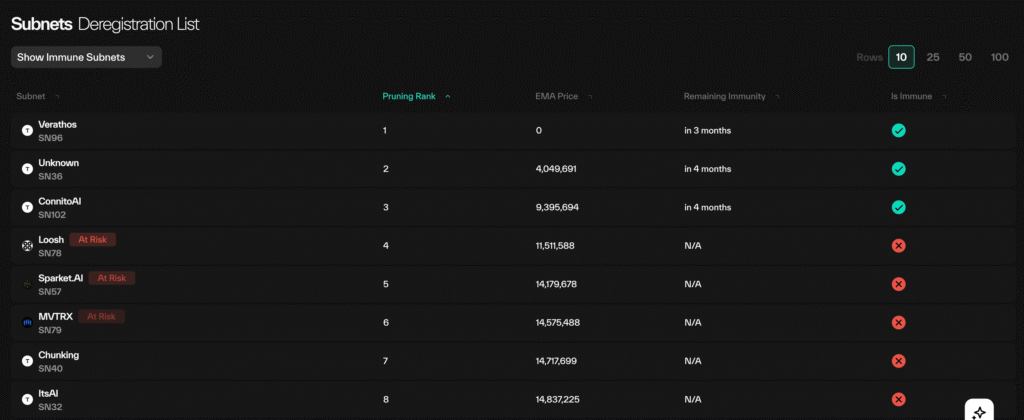
You don’t have to be caught off guard. The TaoStats Subnets page maintains a deregistration list that ranks subnets by their pruning rank, which is essentially their proximity to being cut.
The table above shows each subnet’s pruning rank, EMA price, remaining immunity, and whether it’s currently immune. Subnets still within their immunity window are protected and have a green checkmark. Subnets with no immunity left show “N/A” and are explicitly tagged as “At Risk.”
If you hold alpha in subnets with no immunity remaining and a low pruning rank, it’s worth paying close attention.
Why EMA Price Is the Number That Matters
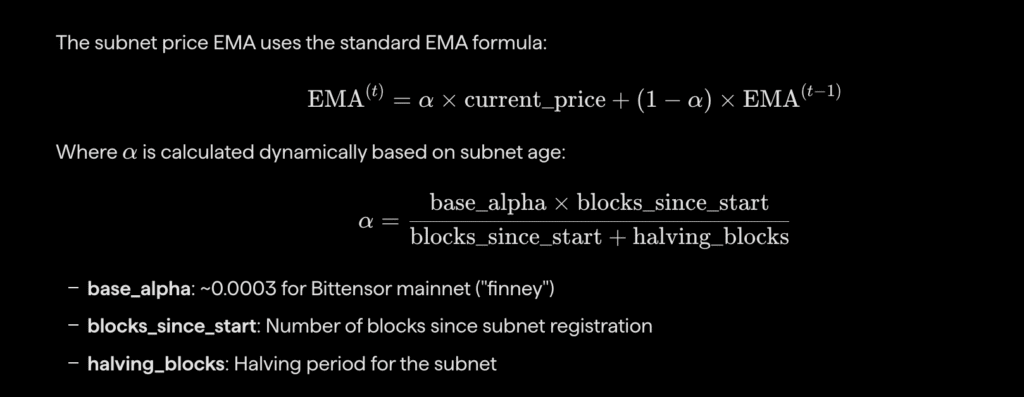
The metric that ultimately decides which subnet gets cut is its EMA (Exponential Moving Average) price. When all 128 subnet slots are filled and a new subnet wants to register, the protocol looks for the non-immune subnet with the lowest EMA price and deregisters it to make room.
EMA price is a smoothed average that accounts for a subnet’s price history over time. The protocol calculates it using a dynamic smoothing factor that adjusts based on how long the subnet has been alive. Younger subnets have a more reactive EMA; older subnets have a more stable one. This means a subnet can’t game its way out of deregistration with a brief spike in alpha-buying activity. It needs sustained demand for its alpha to keep the EMA price healthy.
In more practical terms, a subnet with a low EMA price is one where market demand for its alpha has been consistently weak. It’s the network’s signal that capital is better deployed elsewhere. When that subnet gets pruned, its alpha stakes and liquidity are dissolved, and TAO is redistributed. The result is more efficient capital allocation across the network, where emissions stop flowing to dead subnets and get redirected to stronger projects.
New subnets get a 4-month immunity period after registration, giving them time to build traction before they’re exposed to the pruning mechanism. Once that window closes, survival depends entirely on maintaining a competitive EMA price relative to other subnets.
For the full technical breakdown of how EMA price is calculated and how the deregistration selection works, the Bittensor documentation on subnet deregistration goes deep into the protocol-level mechanics.
Tracking the Flow After Deregistration
One of the frustrations in DeFi and crypto more broadly is the “black box” problem, where something happens on-chain, and you’re left piecing together what occurred from raw transaction data.
Platforms like TAO.app help here by giving you a clear view of your wallet activity, including the full liquidation-to-deposit flow when a subnet deregisters. If you want to verify that the conversion happened and the TAO arrived, checking your wallet activity there is a straightforward way to do it.
Key Takeaways
If a subnet you’re staked in gets deregistered:
- Your alpha is automatically liquidated and converted to TAO.
- The TAO goes directly to your coldkey; no action required.
- The amount you receive depends on the subnet’s TAO reserve, not your entry price.
- Use TAO Flute to monitor liquidation price and estimate potential haircuts.
- Use TaoStats to keep an eye on which subnets are approaching deregistration.
The Bittensor protocol is designed to handle this cleanly. The best thing you can do as an alpha holder is stay informed: know where your alpha lives, how healthy those subnets are, and what to expect if one gets pruned.
Enjoyed this article? Join our newsletter
Get the latest Bittensor & TAO ecosystem news straight to your inbox.
We respect your privacy. Unsubscribe anytime.



Be the first to comment