

There is a quiet arms race happening beneath the surface of the AI boom.
While companies compete to build bigger and more capable language models, another market is expanding just as fast: detection. The need to distinguish human-written content from AI-generated text is no longer theoretical. It is commercial, institutional, and increasingly urgent.
On the 85th episode of Ventura Labs’ podcast, Sergey Volnov, CEO of It’s AI (Bittensor subnet 32), laid out how he is positioning his company at the center of that battle. His approach is about focus, benchmarking discipline, and building a specialized product that competes head-to-head with incumbents like GPTZero and Turnitin.
The thesis is that as AI improves, detection must evolve even faster.
From Olympiad Medals to AI Infrastructure
Sergey’s technical foundation runs deep. He began in competitive computer science, earning national victories and a bronze medal at the International Olympiad in Informatics. From there, he moved into machine learning roles in banking and later led AI development teams in Singapore, building conversational AI agents capable of guiding real-estate sales.
The progression matters.
He was not drawn to detection because it was fashionable, he noted that he was already building AI systems when he recognized a second-order opportunity. As large language models (LLMs) like ChatGPT and Gemini surged, the parallel demand for verification tools was underdeveloped.
While major tech companies raced to build generative models, far fewer focused exclusively on detecting them.
That asymmetry created a gap.
Why Detection is a Structural Market
Sergey frames detection as a proportional market, meaning that as generative AI expands, so does the need to authenticate content: Education, journalism, enterprise communications, and compliance systems all require clarity.
Two observations better shaped his conviction:
a. Early detection tools were inconsistent in quality, and
b. Many institutions believed reliable detection was nearly impossible.
That combination of demand and skepticism created opportunity.
Instead of building another generative product, he chose to compete in what he calls an infinite game: AI versus AI detectors.
How the Subnet Works
Operating within Bittensor, Sergey explained that Subnet 32 (It’s AI) coordinates miners and validators in a competitive detection environment.
Miners are tasked with more than binary classification; by curating models, they determine whether a text is AI-generated or human-written, perform segmentation, identifying which specific portions are AI-generated, and handle mixed documents containing both human and AI-authored segments.
This segmentation requirement increases the complexity and real-world usefulness of the output.
Validators, on the other hand, generate and curate datasets across verified human-written texts sourced from pre-AI internet archives, AI-generated samples created using multiple state-of-the-art models, and hybrid texts combining both
Because validators know the ground truth, they can score miners objectively and distribute incentives based on accuracy.
Crucially, the system evolves since new state-of-the-art language models are periodically introduced into validation, and incentive mechanisms are updated to ensure miners continuously adapt.
The result is a live, decentralized benchmarking loop.
Benchmarking: Competing at the Top
Accuracy is not claimed casually, Sergey points to two major benchmarks used in measuring accuracy:
a. The MGTT benchmark, an aggregation of roughly 15 academic datasets, and
b. The RAID benchmark, a widely referenced independent evaluation set.
On RAID, It’s AI and GPTZero are nearly identical, both around 98% accuracy. On MGTT, which includes RAID among other datasets, It’s AI ranks first.
The distinction is that single benchmark performance can vary, but aggregated evaluation provides a broader statistical picture.
For institutions making procurement decisions, even fractional differences in accuracy can influence outcomes.
Product Strategy: B2C and B2B
Detection may be a technical product, but distribution is strategic. It’s AI operates a SaaS (Software-as-a-Service) model structured across three tiers:
a. Individual Subscriptions: This tier is for teachers, students, and writers who can subscribe monthly and receive word scanning allowances.
b. Developer and SME (Small and Medium-Sized Enterprises) Plans: This gives ‘room’ for API access that allows for integration into third-party platforms and applications.
c. Enterprise Licenses: This is for educational institutions who purchase annual licenses priced per student, with unlimited teacher access.
Beyond pricing, usability matters. Sergey emphasizes that Subnet 32 has:
a. Clear segmentation visualizations,
b. Seamless user interface,
c. Integrations such as Moodle LMS plugins, and
d. Full Arabic language support.
The last point reflects geographic expansion strategy. By localizing for the Middle East and establishing presence in the UAE (United Arab Emirates), It’s AI is pursuing B2B (Business to Business) contracts through conferences, pilots, and direct institutional engagement.
Competing with GPTZero on benchmarks is one axis, competing on proximity, localization, and integrations is another.
Competing with Turnitin
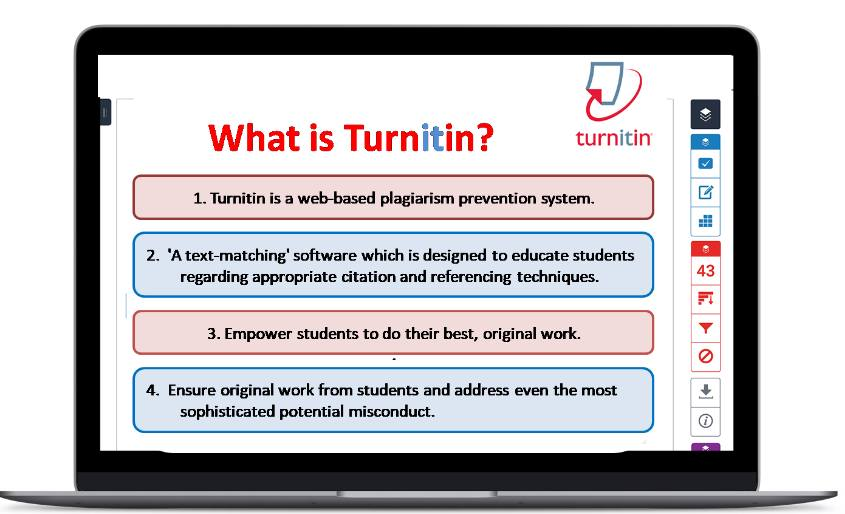
Turnitin dominates plagiarism detection across education, with tens of thousands of institutional clients. However, AI detection is only one feature within its broader platform.
Sergey sees specialization as an advantage.
Turnitin’s primary focus remains plagiarism and educational infrastructure. Detection quality, he argues, benefits from singular focus. By dedicating all R&D (Research and Development) to AI detection alone, smaller teams can iterate faster and outperform generalist platforms.
This philosophy also explains another decision.
Why the Core Remains Closed Source
Some Bittensor subnets open source their models, Subnet 32, under the tutelage of Sergey has chosen not to.
The reasoning behind this decision is that detection accuracy is the core intellectual asset, and open sourcing it would lower competitive barriers and allow rivals to replicate or integrate the technology.
In his view, decentralization governs validation and incentive design, and the commercial layer remains proprietary.
It is a business choice aligned with survival.
The Advantage of Specialization
Perhaps the clearest through line in Sergey’s philosophy is restraint. He has deliberately avoided expanding into image or video detection, even though those markets exist. The reason is not technical limitation but a thought through strategic discipline.
Different modalities mean different customers, sales cycles, and product expectations. His advice to other subnet owners is direct:
a. Know your clients,
b. Know your product,
c. Become exceptional in one domain first, and
d. Expand only when growth is stable and self-sustaining.
Diversification before dominance risks dilution, and in competitive markets, focus compounds.
The Battle for Benchmark ‘Supremacy’
When asked whether acquisition by Turnitin could eventually make sense, Sergey did not dismiss the idea. But scale comes first, other issues such as revenue, institutional clients, and market credibility must precede exit conversations.
For now, the mission is to win the AI versus AI detector race, maintain top-tier benchmark performance, expand strategically in high-demand education markets, and preserve technical edge through continuous subnet evolution.
In an ecosystem where many chase breadth, It’s AI is choosing depth. In the detection economy, depth may be the ultimate differentiator.


Be the first to comment