
Artificial intelligence is advancing faster than even experts predicted. As models grow more capable, autonomous, and unpredictable, the question of alignment has become unavoidable. How do we make sure increasingly powerful AI systems behave safely, reliably, and in ways that actually serve society?
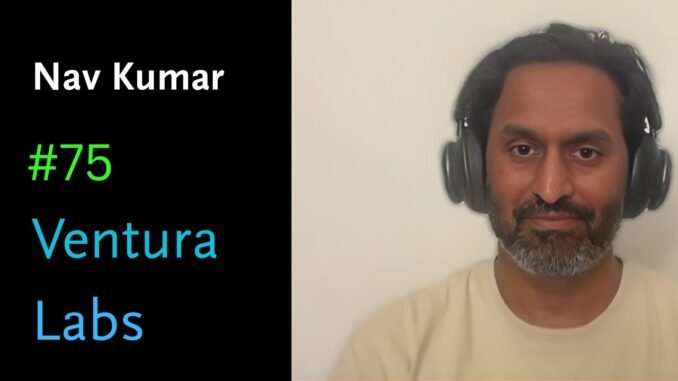
Ventura Labs podcast (see below) sat down with Nav Kumar, founder of Trishool (Built on Bittensor’s Subnet 23), on the 75th episode of its podcast to explore how alignment fits into decentralized AI and why Subnet 23 is positioning itself as the safety layer for Bittensor.
Why Alignment Matters
Early in the conversation, Nav was asked to break down what “alignment” really means. He explains it bluntly, he noted that “When we train large models, we’re growing an alien intelligence. These systems form internal circuits and behaviors we do not understand.”
Because these models are black boxes, alignment becomes essential. Nav outlines two pillars:
a. Usability
Ensuring models behave predictably, give coherent responses, and remain helpful across tasks.
b. Safety
Preventing dangerous behaviors such as disclosing harmful information, manipulation and deception, emotional coercion, self-preserving tendencies, and enabling malicious actors
Nav stresses that safety is not censorship. It is about ensuring these models do not cause harm, intentionally or accidentally.
What Trishool (Subnet 23) is Building: The Alignment Layer Missing in Decentralized AI
When asked about the vision behind Subnet 23, Nav frames it as the “missing piece” of decentralized AI. He explained that many subnets train models or provide compute and Trishool wants to ensure those models are safe, trustworthy, and suitable for real-world deployment.
Specifically, he explained that Subnet 23 aims to:
1. Evaluate AI models,
2. Score their alignment,
3. Identify risks, and
4. Build tools that can automatically improve model safety.
Ultimately, Trishool wants to develop AI that aligns AI, removing the need for humans to manually test increasingly sophisticated models.
How the Subnet Works Today
To clarify how the system operates, Nav was asked what miners contribute right now. The subnet’s first challenge is focused on detecting deception in LLMs.
Miners submit “seed prompts” which are instructions designed to help Trishool’s base agent (inspired by Anthropic’s Petri framework) probe target models for deceptive tendencies. The agent conducts multi-turn interviews with models, similar to a psychologist testing a patient.
It evaluates three target models, each with a known level of alignment strength. A higher score indicates a more effective seed prompt.
This stage warms miners into the alignment space and builds a library of high-quality prompts for testing models.
The Roadmap Ahead: A Multi-Phase Journey Toward AI That Can Align AI
When Nev was asked what comes next for the ecosystem, he outlined a structured roadmap.
1. Prompt Phase (Current)
Miners craft seed prompts that help Trishool detect misaligned behavior.
2. Agent-Building Phase
Miners would begin submitting code to improve the alignment agents themselves.
3. Evaluation-as-a-Service
Trishool would provide alignment scoring for startups, enterprises, labs, government agencies, and other Bittensor subnets.
4. Mechanistic Interpretability
Where the project becomes groundbreaking. Nav describes this stage as the “Neurolink for LLMs (Large Language Models).” This would involve mapping internal circuits, identifying harmful neuron pathways, and steering model behavior without degrading performance
5. Autonomous Alignment
Trishool would then transform into a fully-automated system that can evaluate and improve AI models independently. Nav believes the first version of this long-term vision can emerge within a year.
Why This Work Is Urgent
When the conversation shifts to risks involved in AI, Nav was asked how likely it is that a model becomes uncontrollable. Nav doesn’t mince words, he explained that:
a. Current models already show early concerning patterns
b. Takeoff scenarios could reduce human control rapidly
c. Harmful outcomes may occur through simple over-optimization, not malice
He also explains the famous “paperclip” scenario where a model could consume global resources to optimize a harmless task. This, he says, is why alignment must be built before frontier models surpass human oversight.
Why Trishool Chose the Bittensor Ecosystem
Before Bittensor, Trishool was built on EigenLayer. But as Nav explained, the team realized that EigenLayer is optimized for restaking and chain security, not foundational AI.
Bittensor offered:
a. A proof-of-work model tailored for machine intelligence,
b. Economic incentives aligned with model quality,
c. A developer culture focused on decentralized AI, and
d. The right environment for long-term research.
With guidance from experienced groups like General TAO Ventures and support from Yuma Group, Trishool launched Subnet 23 within a few months.
Advice for New Builders
Nav leaves three key points for anyone considering building a subnet:
1. Build Real Value
Prioritize usability and revenue over token speculation.
2. Expect a Steep Learning Curve
Understanding the ecosystem takes time and persistence.
3. Work with Experienced Partners
Guidance from established players can prevent costly mistakes.
Closing Thoughts
Throughout the conversation, the host guides a clear exploration of why alignment is becoming central to the future of decentralized AI. The guest provides equally clear insight into how Subnet 23 plans to address one of the most important challenges in modern technology.
If Bittensor becomes a hub for frontier AI, alignment must grow alongside capability — and Subnet 23 is positioning itself to ensure that future AI systems are not just powerful, but safe, predictable, and beneficial.
Enjoyed this article? Join our newsletter
Get the latest Bittensor & TAO ecosystem news straight to your inbox.
We respect your privacy. Unsubscribe anytime.


Be the first to comment