

Bittensor is not a network you understand by checking a dashboard once a day, because it behaves more like a live intelligence market than a static system. Subnets launch, pivot, and compete for emissions, capital rotates aggressively, and entirely new categories of products emerge before most participants fully understand what is happening.
In an environment like this, access to information is not an advantage, because everyone has it. The real edge comes from being able to interpret that information faster, connect signals across layers, and act with clarity while others are still catching up.
Here is a structured intelligence stack that gives users full coverage across Bittensor’s key layers, such as the narrative, data, discovery, system mapping, and execution.
a. The TAO Daily
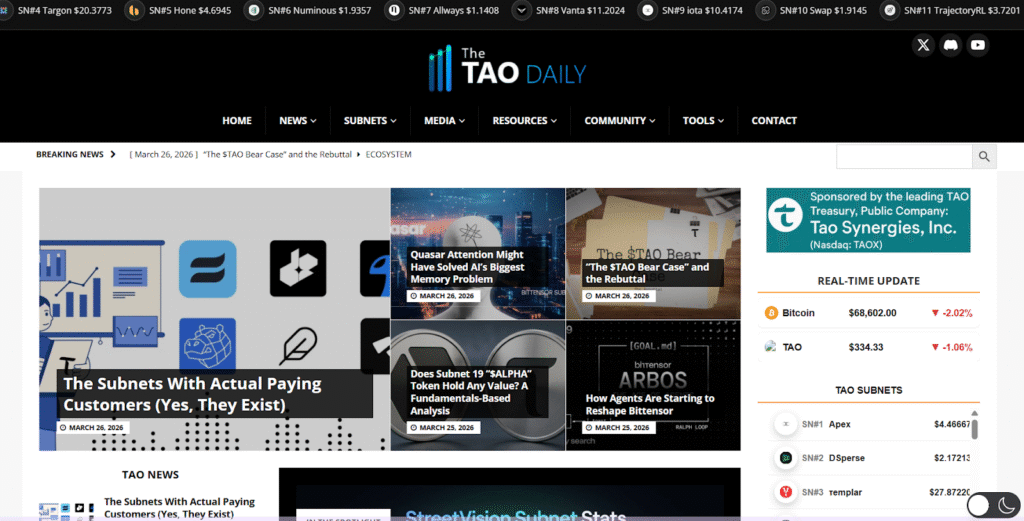
The TAO Daily functions as the narrative engine of the ecosystem, converting a fragmented and highly technical flow of information into structured, coherent insight. Instead of forcing users to piece together updates from scattered sources, it delivers consistent coverage and long-form breakdowns that make the network legible without diluting its complexity.
b. Taostats
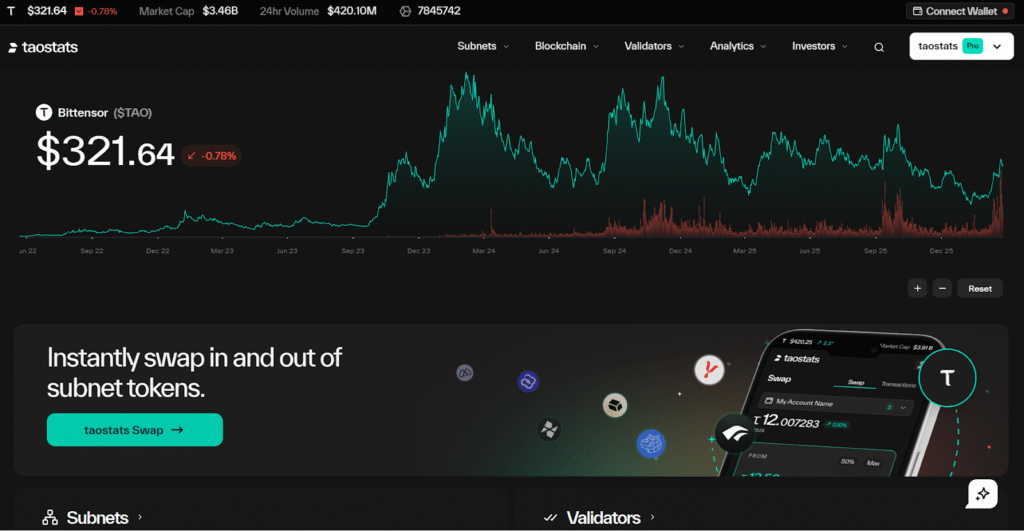
Taostats is the foundation for any serious analysis within Bittensor, because it exposes the network’s economic and operational reality in real-time. It provides full blockchain visibility, subnet-level performance metrics, validator and miner tracking, and staking data across the dTAO framework.
c. SubnetAlpha
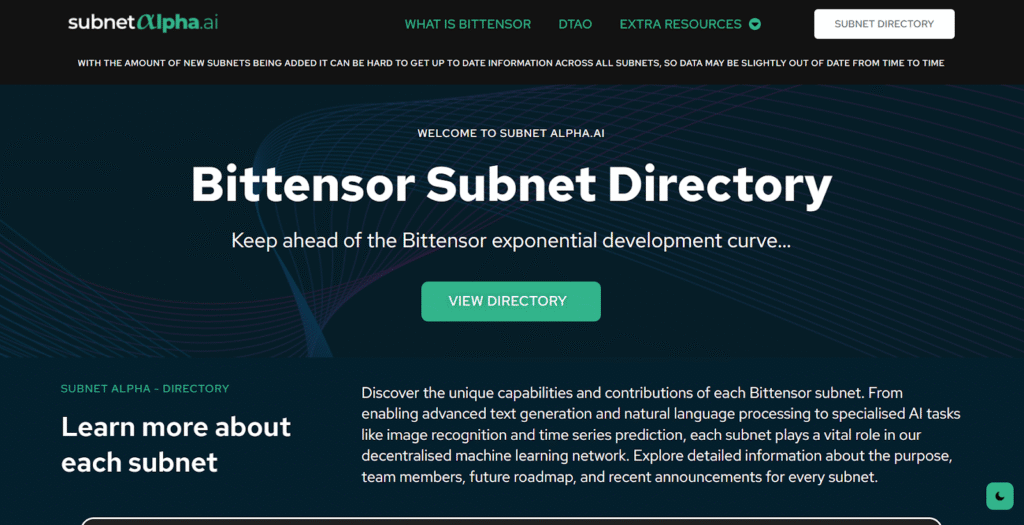
SubnetAlpha solves one of the most overlooked problems in Bittensor, which is understanding what subnets are actually trying to do and why they matter. It provides structured insight into use cases, teams, positioning, and ongoing development, alongside direct access to documentation and ecosystem touchpoints.
d. Subnets Synergies Map
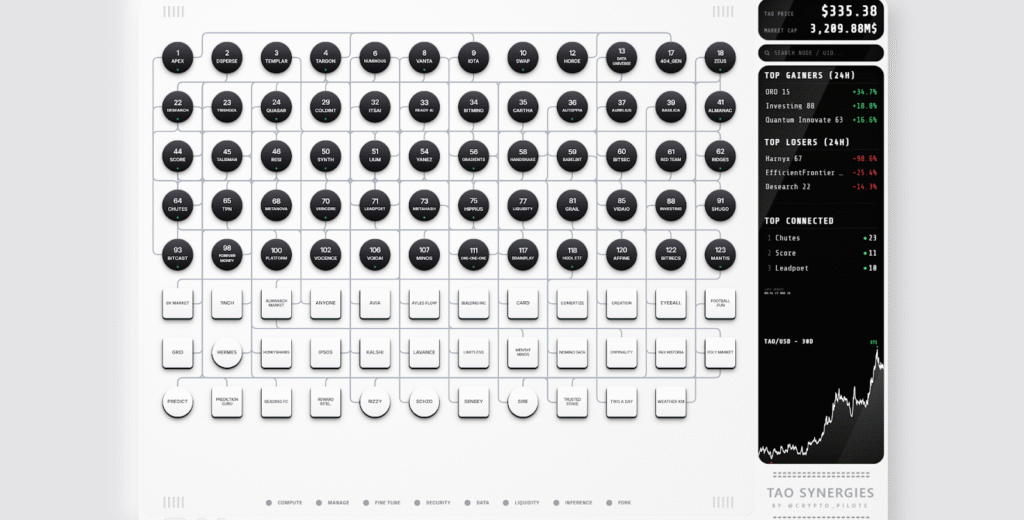
The Subnets Synergies Map shifts perspective from isolated analysis to system-level thinking, which is where real insight in Bittensor exists. By visualizing relationships between subnets and combining them with key metrics and market trends, it reveals how different components interact, reinforce each other, and contribute to overall value creation.
e. Magellan (Bittensor Mind Map)
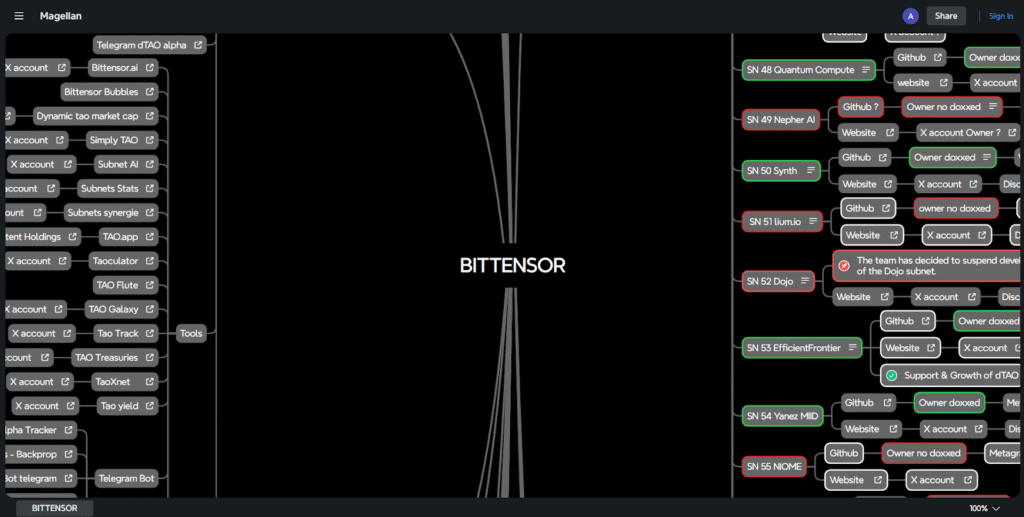
Magellan is a framework for understanding Bittensor as a connected and evolving system. It aggregates ecosystem knowledge, maps relationships, and continuously updates to reflect structural changes across the network.
f. Yuma AI

Yuma AI operates as an ecosystem accelerator, connecting builders with capital, technical support, and strategic exposure. It plays a direct role in enabling projects to launch and scale within Bittensor.
Its importance lies in supporting the supply side of the network, ensuring that high-quality ideas have the resources required to become real, functioning subnets.
g. TAO.app
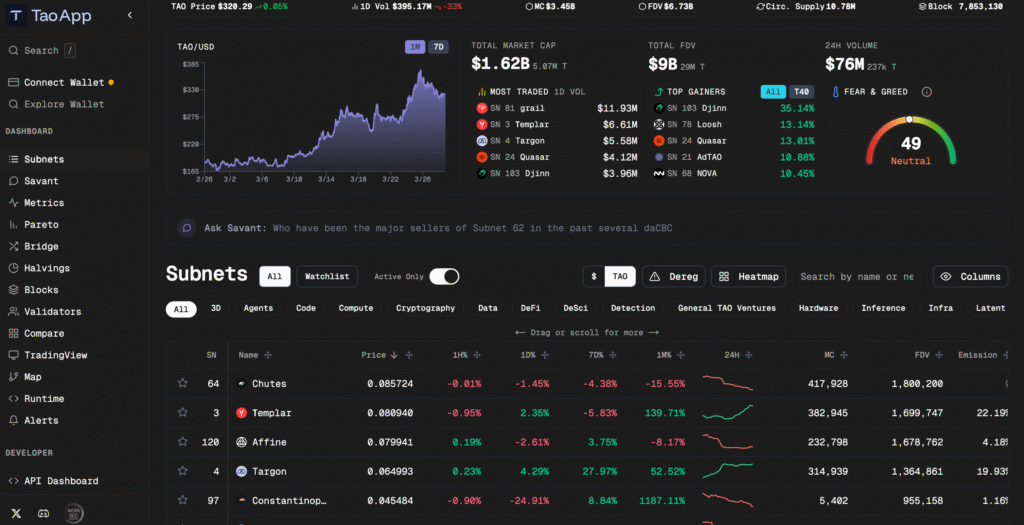
TAO.app combines subnet tracking with AI-powered interaction, offering portfolio tools, comparative analysis, and an integrated chatbot that helps interpret network data in real time. It moves beyond static dashboards by introducing a layer of intelligence that assists users in navigating complexity more efficiently.
h. Backprop Finance
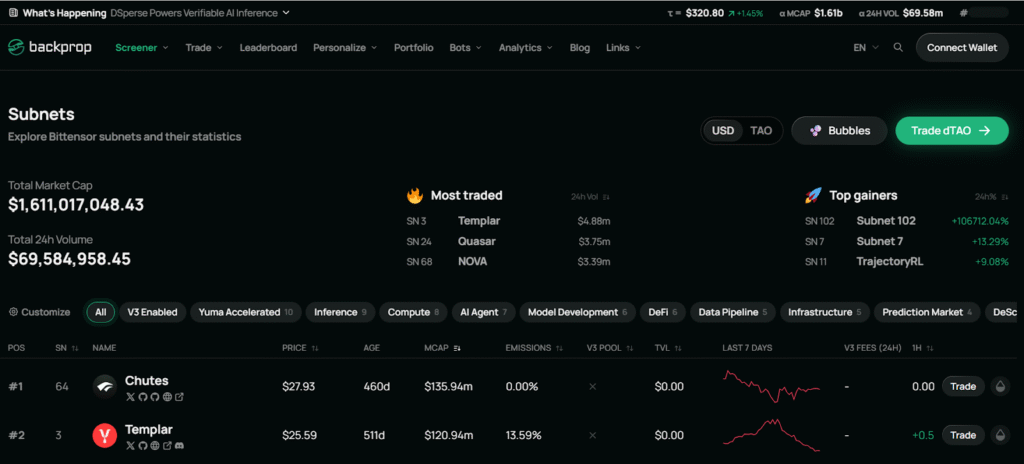
Backprop Finance brings professional-grade financial infrastructure into Bittensor, functioning as both a decentralized exchange and a full trading terminal for subnet tokens. It offers real-time price tracking, advanced analytics, whale monitoring, and portfolio visualization, alongside curated subnet intelligence.
i. TaoMarketCap
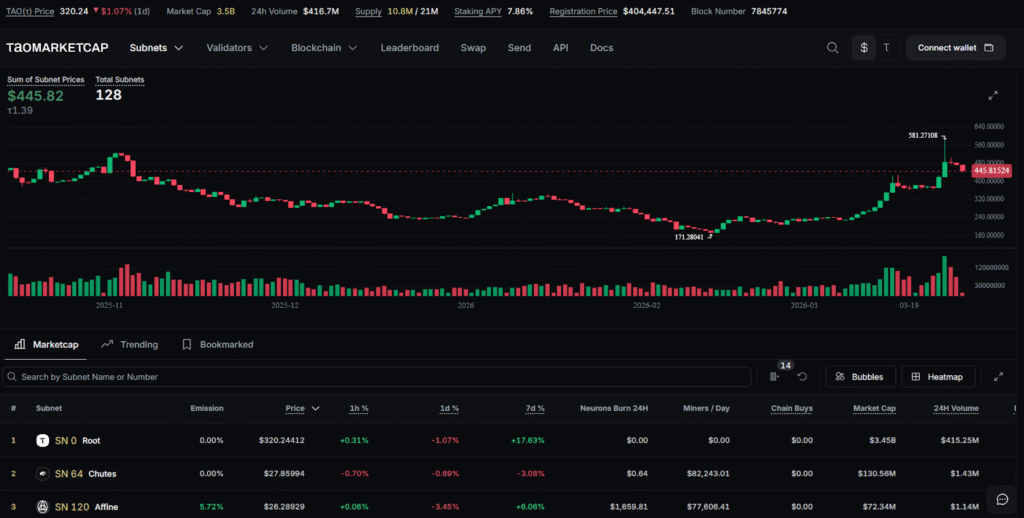
TaoMarketCap simplifies the complexity of subnet economics into a clear, market-style overview that highlights emissions, valuations, and relative positioning. It allows users to quickly identify which subnets are gaining traction and which are losing relevance without needing to dig through raw data.
j. Dynamic TAO MarketCap (DTM)
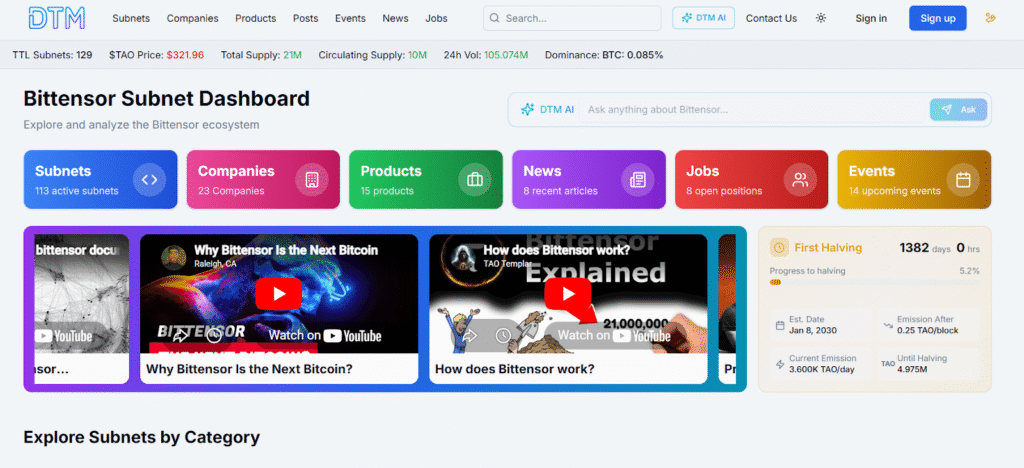
Dynamic TAO MarketCap (DTM) focuses specifically on real-time valuation and emission dynamics, offering a clearer view into how value is distributed and evolving across subnets. It provides insight into the relationship between token performance and underlying incentive structures.
k. tao.bot
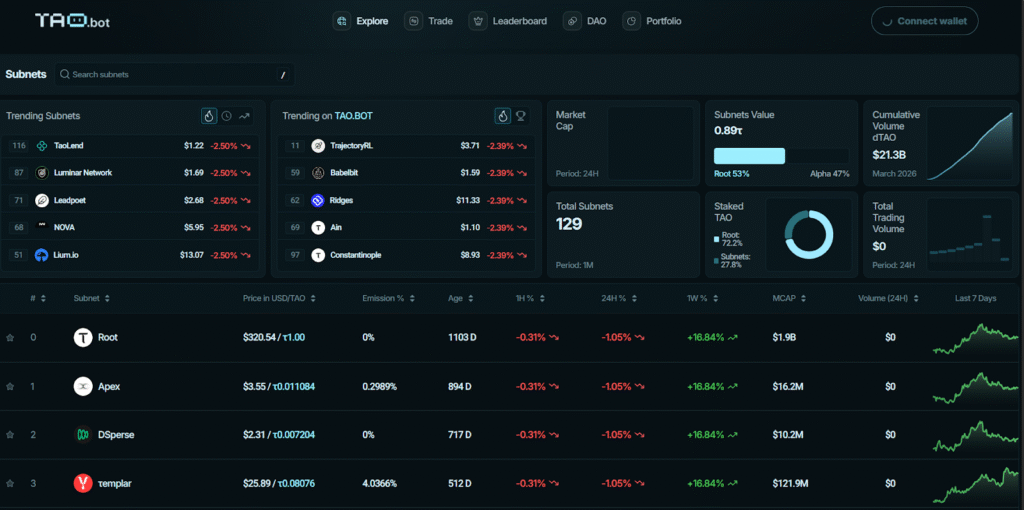
tao.bot streamlines the execution layer by combining a Uniswap-style trading interface with integrated discovery and analytics. It allows users to trade subnet tokens, explore network data, and monitor validators within a single environment.
l. Tao Yield
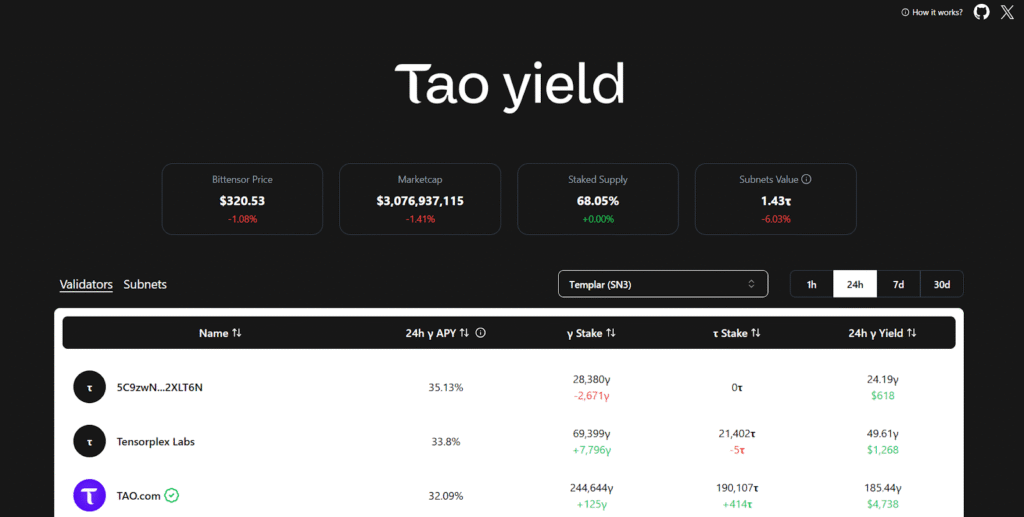
Tao Yield focuses on optimizing staking outcomes by providing clear insight into validator performance, APY calculations, and effective take rates. It uses on-chain data to deliver accurate comparisons across validators, helping users make informed delegation decisions.
For participants engaged in staking, it transforms what is often a passive activity into a more deliberate and optimized process.
m. Bittensor.ai
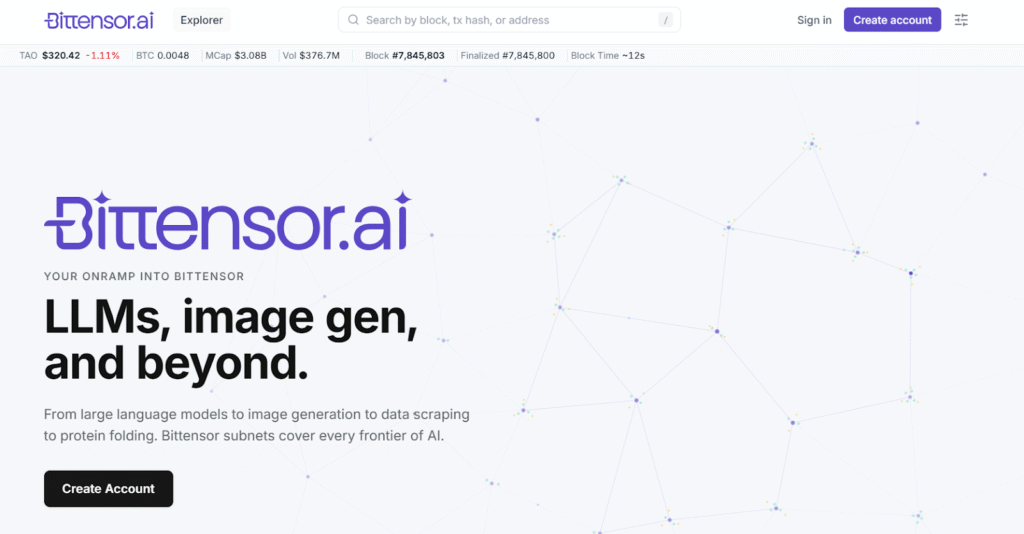
Bittensor.ai serves as an official entry point into the network, providing a subnet directory, blockchain explorer, and access to live activity across the system. It offers essential visibility into teams, transactions, and network structure.
It anchors understanding and provides the foundation from which deeper exploration begins.
n. Learn Bittensor
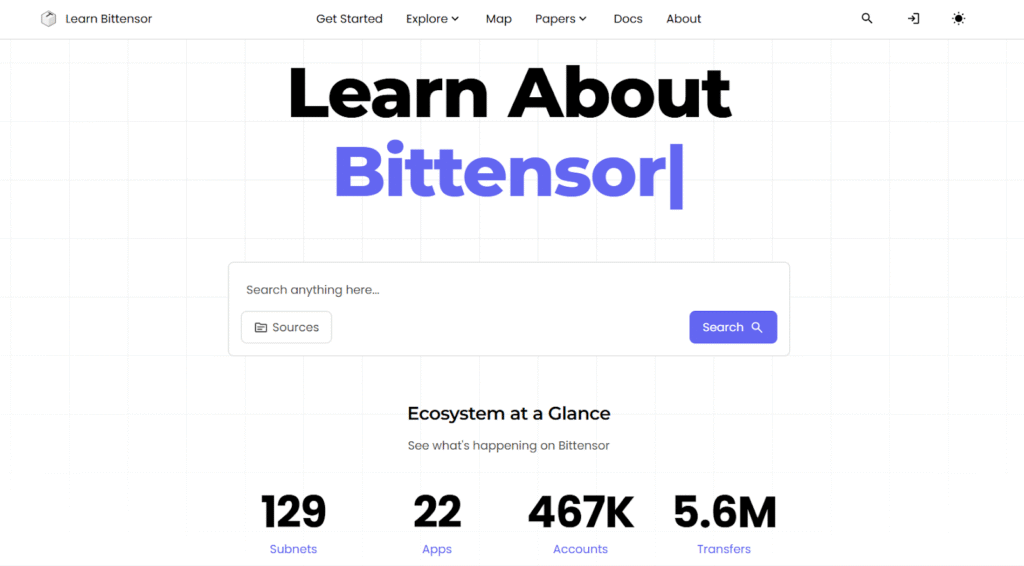
Learn Bittensor provides structured educational content designed to make the network accessible without oversimplifying it. Through guides, tutorials, and subnet explainers, it helps users build a solid conceptual foundation.
This makes it an essential starting point for newcomers, while still offering clarity for more experienced participants refining their understanding.
The Stack That Lets You See Clearly
Bittensor does not reward passive participation, because the network evolves too quickly for surface-level awareness to remain useful. The advantage comes from building a structured view of the system, where narrative, data, discovery, and execution are all connected.
This stack is designed to give you that view.
In Bittensor, the difference is not who has access to information, but who can see what it actually means first.
Enjoyed this article? Join our newsletter
Get the latest Bittensor & TAO ecosystem news straight to your inbox.
We respect your privacy. Unsubscribe anytime.



Be the first to comment