
Full credit: TAO Templar
In this YouTube video, Travis takes a deep dive into Bittensor Subnet 41, Almanac, questioning both its value proposition and whether it even needs to exist as a subnet in the first place. Framed as an “information incentivization layer for prediction markets,” Almanac initially appears to be little more than a PolyMarket clone. But as the discussion unfolds, the nuance lies in the incentive design and whether that design can generate a cleaner signal and long-term potential within the Bittensor ecosystem.
What Is Almanac?
Almanac operates as a prediction market interface closely integrated with Polymarket, leveraging its existing markets and liquidity. Users can place bets on political, cultural, crypto, and sports outcomes much like they would on PolyMarket itself.
The key distinction is that some participants on Almanac are registered Bittensor miners. These miners don’t just earn from correct predictions; they can also earn subnet emissions if they demonstrate consistent, high-ROI performance under Almanac’s incentive mechanism.
In short, traders can earn twice:
- Profits from accurate predictions.
- TAO emissions for sustained predictive edge.
Currently, between $30,000–$50,000 per week is distributed to miners who demonstrate strong signal and consistency.
The Core Question: Why Does This Need to Be a Subnet?
Travis’ central skepticism revolves around a simple but important question:
Why is this a Bittensor subnet and not just a 1% fee version of Polymarket?
To answer that, he explores market microstructure, specifically the difference between makers and takers:
- Makers provide liquidity by placing limit orders.
- Takers remove liquidity by executing at market price.
On PolyMarket, takers often dominate. Arbitrage bots and short-term traders can manipulate prices, distorting true probability signals.
Almanac introduces a 1% transaction fee on traders. The purpose is not revenue maximization, but signal filtering. The idea is simple:
- Casual traders won’t pay a fee.
- Only traders with genuine edge will transact consistently.
- Over time, emissions reward those with proven predictive accuracy.
If the mechanism works, Almanac could theoretically produce cleaner, more accurate market probabilities than traditional prediction markets.
That’s the thesis.
Incentive Engineering: The Real Value Proposition
Almanac’s argument for being a Bittensor subnet rests on one thing: programmable incentives.
By embedding the prediction market inside Bittensor’s emissions framework, Almanac can:
- Track long-term consistency.
- Weight ROI performance.
- Reward miners with real predictive skill.
- Potentially buy back alpha tokens using fee revenue.
The long-term vision is a flywheel:
- Skilled predictors join for emissions.
- Noise is reduced via transaction fees.
- Signal improves.
- Market accuracy strengthens.
- Demand for alpha token increases.
However, Travis emphasizes that this remains theoretical. A direct comparison between Almanac and Polymarket probabilities would help validate whether signal quality is actually improving.
Drama: The Subnet Owner Sale
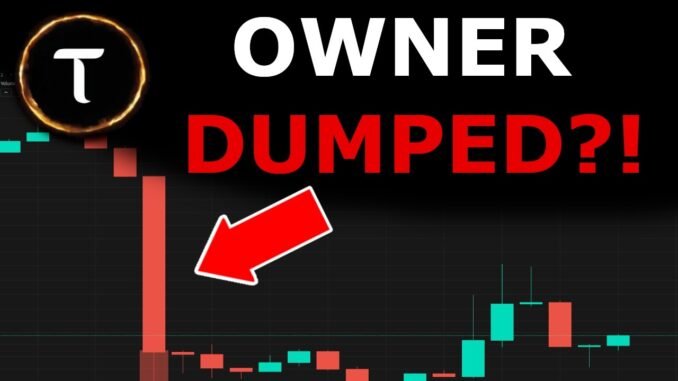
One source of recent controversy was a 3,000 TAO alpha sale by the subnet owner, occurring roughly nine days before the recording.
On-chain data shows:
- A significant alpha unstake.
- A sharp corresponding price drop.
- The token is now down ~80% from its December peak.
While this raised eyebrows, Travis notes that:
- Other major subnets (e.g., Ridges) have executed similar sales.
- Subnet teams need to fund development.
- Sales often come from their 18% emissions allocation.
In his view, this is not inherently bearish, but timing matters.
Current On-Chain and Market Conditions
A look at subnet metrics reveals:
- 14 active miners receiving emissions
- ~59% miner burn rate
- Minimal recent GitHub commits (at least on the tracked repo)
- Active Discord presence
- Low whale concentration (largest holder could move price ~9%)
That final point is notable. With fewer dominant whales, the token may experience less violent downside volatility going forward.
Almanac also recently rebranded from SportsTensor, which may signal a broader strategic repositioning.
The Investment Angle
Travis makes it clear this is not financial advice. However, he outlines his framework:
He looks for:
- Subnets that are undervalued.
- Projects quietly building.
- Mechanisms that can sustain long-term demand for alpha.
Before the owner sale, he was cautiously interested due to price compression. After the sale, the need to deeply understand the value mechanism became even more important.
The key questions moving forward:
- Will fee revenue meaningfully offset emissions?
- Can Almanac demonstrate superior predictive accuracy?
- Will miners with real alpha migrate over?
- Does the flywheel actually spin?
Final Thoughts: Difficult, But Interesting
Almanac is attempting something notable: engineering incentive alignment inside prediction markets to extract real signal.
Whether that justifies its existence as a Bittensor subnet remains an open question. But if the mechanism works, it could become a powerful example of how decentralized incentive systems outperform traditional platforms.
As Travis concludes, this was one of the hardest subnets to wrap his head around. And perhaps that alone makes it worth watching.


Be the first to comment